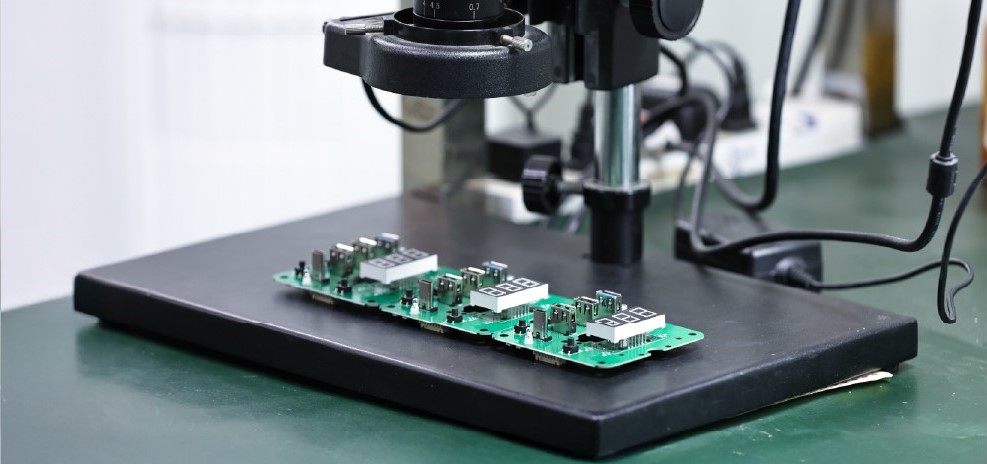
Medical SMT Assembly

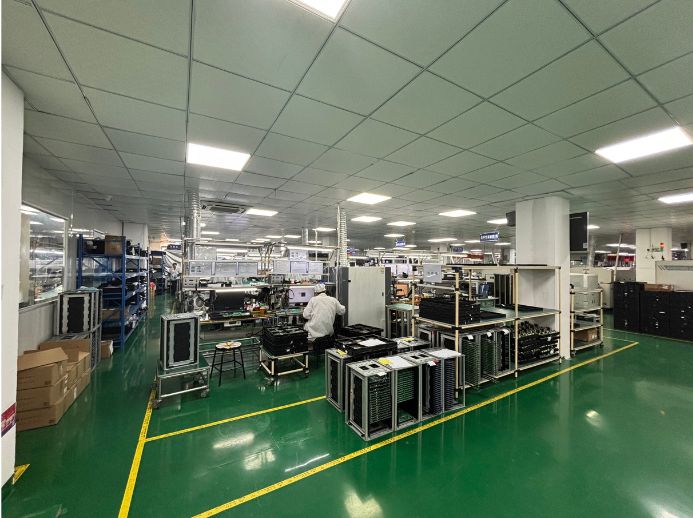
PCBMay’s Surface Mount Technology (SMT) assembly services deliver the extreme precision and reliability required by modern medical devices. Under a strict ISO 13485 quality system, we execute automated, high-density placement of components onto flexible, rigid, and rigid-flex substrates. From initial prototype validation to high-volume medical electronics manufacturing, our high-speed SMT lines support consistent assembly quality for critical healthcare applications.

• ISO 13485 Certified Quality Management
• 01005 Component Placement & Ultra-Fine Pitch BGA (0.2 mm)
• 3D SPI & 3D AOI Inline Inspection System
• IPC-A-610 Class 3 High-Reliability Assembly Standards
• Fully Traceable Component Sourcing & Serialization
• No Minimum Order Quantity (Starting from 1 Piece)

Medical SMT Assembly
Certifications
What is Medical SMT Assembly
introduction

What is SMT Assembly?

Surface Mount Technology (SMT) assembly is an automated assembly method in which electronic components are mounted directly onto a Printed Circuit Board (PCB). Compared to the conventional through-hole technique, which involves the use of lead wires that pierce the holes in the board, SMT uses printed solder paste on flat copper pads. High-speed robotic pick-and-place machines position the components, which are then permanently bonded in a controlled reflow oven.

SMT is the foundation of hardware development in the medical device industry. It allows engineers to pack complex processing power, advanced wireless connectivity, and vital sensory modules into incredibly small form factors—such as wearable cardiac monitors and implantable medical devices.

Products

Benefits of SMT Assembly

  • Higher Component Density and Miniaturization
  • Cost-Efficiency
  • Improved Electrical Performance
  • Faster Prototyping
  • Consistent Production Quality
Higher Component Density and Miniaturization
SMT enables double-sided component placement and supports miniature packages such as 01005, QFN, and BGA. This allows medical designers to integrate more functions into compact devices such as wearable monitors, portable diagnostic equipment, and implantable electronics.
Cost-Efficiency
Automated SMT production improves manufacturing efficiency and reduces labor-intensive processes, helping control production costs during prototype builds and volume manufacturing.
Improved Electrical Performance
Surface-mount packages such as BGAs and QFNs minimize electrical path lengths compared with traditional through-hole components, reducing parasitic effects and improving signal integrity.
Faster Prototyping
Modern SMT production lines leverage BOM and centroid placement files to auto-generate pick-and-place machine programs. Combined with finalized Gerber PCB fabrication data, this streamlined pre-production workflow cuts medical prototype turnaround time and accelerates medical device design validation.
Consistent Production Quality
Automation reduces operator-dependent variation and helps maintain consistent assembly quality across production batches. This automation helps reduce human error, supporting consistent performance and reliability for your medical electronics.
Why Choose Us

Why Choose PCBMay?

  • High-Precision Placement

    High-Precision Placement

    Our state-of-the-art pick-and-place lines feature high-resolution vision systems capable of placing miniature 01005 components and complex fine-pitch BGAs down to 0.2 mm with a placement accuracy of ±0.035" mm"  at C pk≥1.0.

  • Advanced Inspection & Traceability

    Advanced Inspection & Traceability

    We employ inline 3D Solder Paste Inspection (SPI), inline Automated Optical Inspection (AOI), and high-resolution 3D X-ray inspection. Every component batch is fully mapped, ensuring end-to-end material and process traceability for medical compliance.

  • ISO 13485 Certified Manufacturing

    ISO 13485 Certified Manufacturing

    Our facilities operate under strict medical-grade quality controls. We strictly adhere to IPC-A-610 Class 3 standards, supporting reliable manufacturing for high-reliability medical electronics.

  • Traceable Component Sourcing & BOM Optimization

    Traceable Component Sourcing & BOM Optimization

    We source exclusively from authorized distributors and verified manufacturers. Our engineering team performs complete Bill of Materials (BOM) life-cycle checks to identify end-of-life (EOL) or obsolete parts, providing qualified alternative components that meet your technical and supply requirements.

Specs

Technical Specifications


Order Quantity ≥1 PCS (Prototype to Mass Production)
Assembly Technologies SMT (Surface Mount), THT (Through-Hole), Mixed-Technology
Board Substrates Rigid (FR-4, High-Tg), Flex, Rigid-Flex, Metal Core (Alum)
Component Placement Accuracy ±0.035 mm (±0.025 mm) Cpk≥1.0
Minimum Component Size 01005 (0.4 mm × 0.2 mm)
BGA / QFN Capability Down to 0.2 mm pitch with 3D X-Ray Inspection
Solder Paste Chemistry Lead-free (RoHS compliant), Water-soluble, No-clean options
Inspection Standards Inline 3D SPI, Inline 3D AOI, 3D X-ray (AXI), First Article Inspection (FAI)
Conformal Coating Acrylic (AR), Silicone (SR), Polyurethane (UR), UV Cure
Quality Compliance ISO 13485, ISO 9001:2015, IPC-A-610 Class 3, RoHS, REACH
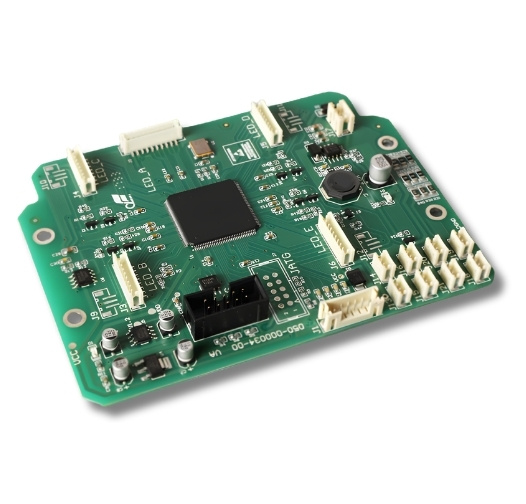
Medical SMT Assembly Sample
Capabilities

Our Medical SMT Assembly Process

Engineering Review & Manufacturing Preparation
Solder Paste Printing & SPI Inspection
Solder paste is applied to the bare PCB pads using an automated screen printer. The board immediately passes through an inline 3D Solder Paste Inspection (SPI) system. This system measures solder volume, height, alignment, and bridging in real time helping detect solder paste-related defects before component placement.
Pick-and-Place
High-speed, dual-gantry pick-and-place robots feed from tape, reel, tray, or tube feeders. Optical recognition systems verify component dimensions, polarity, and orientation instantly as the machines deposit micro-passives, chips, ICs, and BGAs onto the wet solder paste.
Reflow Soldering
The populated boards travel through multi-zone convection reflow ovens. We generate custom thermal profiles based on the board's mass and component mix to prevent thermal shock to sensitive medical sensors while ensuring reliable intermetallic joints.
Inspection (AOI/X-Ray)
Every board undergoes inline 3D AOI to check for component presence, value, polarity, and solder joint quality. For complex bottom-terminated components, fine-pitch BGAs, or QFNs, we use 3D X-Ray (AXI) to visually inspect the hidden solder joints for voids, bridges, or poor wetting.
Quality Control

Medical SMT Assembly Challenges and Our Solutions

  • Component Handling and Placement

    Component Handling and Placement

    The continuous miniaturization of SMT components creates higher requirements for handling, placement accuracy, and manufacturing control.

    Miniaturization: Miniature packages such as 01005 components require advanced pick-and-place equipment and precise vision alignment systems to maintain placement accuracy.
    Placement Accuracy: The alignment should be done with high precision to prevent misalignment. Misaligned parts can lead to functional failures and reliability problems.
    Static Sensitivity: Careful handling is required for some SMT components because they are sensitive to static electricity. To protect components from damage, the use of ESD (Electrostatic Discharge) protection measures is necessary.

    Our Solution: Our factory is equipped with advanced SMT lines integrated with high-resolution vision systems and precision pick-and-place equipment.

    This precision hardware supports reliable mounting of miniature components and maintains strict placement accuracy for your high-density medical PCB assembly project.

  • Gerber Files

    Solder Joint Reliability

    Medical electronics are frequently subjected to physical stress, making the durability of the connections a critical safety factor.

    Mechanical Stress: Devices are often exposed to shocks, vibrations, or continuous bodily movement. Robust joints are required to prevent micro-cracks from developing under structural stress.
    Thermal Profiling: Precise temperature control ensures proper wetting and bonding without damaging sensitive medical components.

    Our Solution: Our facility utilizes advanced multi-zone reflow ovens that maintain precise thermal profiles to help ensure stable solder bond formation. Furthermore, integrated 3D automated optical inspection (AOI) and X-ray systems assist in verifying solder joint integrity, supporting the structural durability needed for medical electronics.

  • BGA Inspection Challenges

    BGA Inspection Challenges

    High-density medical processors often utilize Ball Grid Arrays (BGAs), which conceal their connections beneath the component package.

    Hidden Solder Joints: Manual visual inspection of BGA connections is impossible. Hidden defects like solder voids or bridging cannot be detected with standard optical tools.
    Advanced Verification: Resolving this requires high-resolution 3D X-ray inspection. This technology allows engineers to inspect hidden solder joints beneath the package to analyze the internal joint structures.

    Our Solution: Our facility utilizes high-resolution 3D X-ray inspection systems to analyze the internal structure of BGA connections. This technology helps identify hidden defects, such as solder voids or bridging beneath the component package, supporting the quality assurance standards required for high-density medical electronics.

  • Reflow Thermal Profile Control

    Reflow Thermal Profile Control

    Medical SMT assembly often involves temperature-sensitive components that require precise soldering control.

    Component Protection: Improper reflow temperatures can damage sensitive ICs, sensors, and miniature components. Accurate thermal profiling helps prevent overheating and maintains component reliability.
    Process Consistency: Automated thermal profiling and monitoring ensure every PCB assembly follows the validated soldering parameters required for medical-grade manufacturing.

    Our Solution: Our facility utilizes advanced multi-zone reflow ovens equipped with precise thermal profiling software. This allows for the development and real-time monitoring of custom thermal profiles tailored to the specific requirements of temperature-sensitive medical components, supporting consistent solder bond formation while helping to protect the integrity of the PCB assembly.

Our Medical Prototype Assembly Process
Specs

SMT vs. THT (Through-Hole Technology)

Many medical designs use a hybrid approach, combining SMT’s high-density efficiency with THT’s mechanical durability.

Feature

Surface Mount Technology (SMT)

Through-Hole Technology (THT)

Component Size

Extremely small (down to 01005)

Larger, leaded parts

Component Density

High (components can be placed on both sides)

Low to moderate (single-sided placement)

Mechanical Bond Strength

Moderate (relies on surface tension and solder)

High (physical lead runs through the board)

Assembly Speed

Fast, fully automated high-speed runs

Slower, often requires manual insertion

Typical Medical Use

Wearables, pacemakers, high-frequency circuits

Power supplies, connectors, heavy-duty switches

Accelerate your medical device launch with our ISO 13485-certified SMT assembly services. Contact us today to discuss your project specifications and receive a tailored quote.

Case Study

Medical SMT Assembly Cases

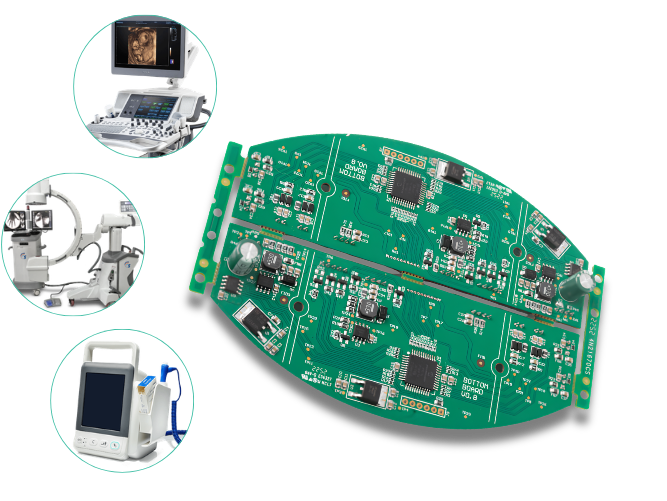
  • Wearable ECG Monitor PCBA
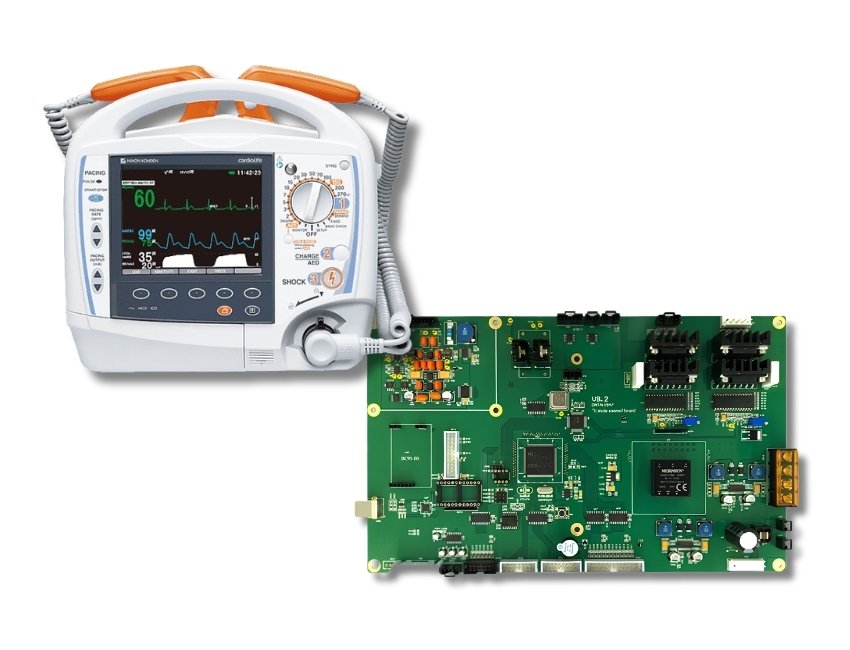
    Wearable ECG Monitor PCBA Automated External Defibrillator (AED) Turnkey Assembly

    Wearable ECG Monitor PCBA

    Successfully assembled double-sided SMT boards using 0201 passives and ultra-thin rigid-flex materials, meeting strict weight limits and achieving 99.8% first-pass yields.

  • Portable Ultrasound Control Board
    Portable Ultrasound Control Board Point-of-Care Blood Analyzer Board Assembly

    Portable Ultrasound Control Board

    Sourced and assembled high-density multi-layer boards utilizing a combination of high-pin-count fine-pitch BGAs and high-speed processors, complete with 3D X-ray validation.

  • Blood Analyzer PCB Assembly
    Blood Analyzer PCB Assembly Blood Analyzer PCB Assembly

    Blood Analyzer PCB Assembly

    Optimized an complex diagnostic board layout, transitioning key passive components to smaller SMT packages to improve signal response times and optimize PCB layout space.

  • Patient-Monitoring Device PCBA
    Patient-Monitoring Device PCBA Patient-Monitoring Device PCBA

    Patient-Monitoring Device PCBA

    Delivered multi-board assemblies for bedside ICU monitors, implementing complete serialization, IPC Class 3 inspection, and conformal coating for chemical and fluid resistance.

  • Implantable Electronics Assembly
    Implantable Electronics Assembly Implantable Electronics Assembly

    Implantable Electronics Assembly

    Provided precision placement and custom high-temperature reflow profiling for biocompatible substrates, supporting reliable solder joint quality for critical BGA assemblies.

Faqs

Frequently Asked Questions

Our Medical SMT Assembly FAQ addresses essential questions regarding your surface-mount manufacturing requirements. We cover our SMT capabilities for complex medical electronics, precise component placement, rapid assembly timelines, rigorous quality inspection protocols (including Automated Optical Inspection), and our capacity to scale from initial prototype runs to volume production batches. For every medical device project, we guarantee precision-focused, medical-grade SMT assembly standards.

1. What Files and Documents are Required for my PCB SMT Assembly Order?

To initiate an SMT assembly quote, we need your PCB Gerber files in RS-274X format, a Bill of Materials (BOM) in Excel format having the manufacturer part number, and the Centroid (Pick-and-Place / XY) file having rotation and coordinate data.

2. What Is the Smallest Component Size You Can Handle?

Our sophisticated automated high-speed pick-and-place machines are certified to reliably place 01005 passive components (0.4 mm × 0.2 mm) as well as fine-pitch ICs.

3. Do You Offer X-Ray Inspection?

Yes. We carry out inline 3D Automated X-ray Inspection (AXI) to inspect for voids, bridging, misalignment, and solder defects underneath BGAs, QFNs, and other leadless components.

4. How Do You Handle Moisture Sensitive Level (MSL) Components?

We strictly follow J-STD-033 standards. All MSL-rated components are stored in temperature and humidity-controlled dry cabinets, baked before assembly when required, and tracked to monitor exposure times during the manufacturing run.

5. Can You Handle Complex BGA Layouts?

Definitely. We are specialists in fine-pitch BGAs with pitches down to 0.2 mm. With our vision alignment system and thermal profiling software, we guarantee that fine pitch ball-to-pad registration is perfect.

6. What Factors Influence SMT Lead Time?

The time it requires to assemble leads of SMT is primarily driven by sourcing of components availability for long-lead-time or specialized medical microcontrollers. Once you have everything (i.e. all components, stencils, and PCBs) in-house, the actual SMT assembly can take as little as 24 to 48 hours.

7. When Should I Mix SMT And THT?

You should use a combination of SMT and THT if your design needs high-density computing, which is best served by SMT. Use THT for heavy, high-stress components that require mechanical strength. These include connection blocks, power transformers, large capacitors, or interface connectors.

8. How Do You Control Component Traceability for Medical SMT Assembly?

We use complete manufacturing execution software (MES) to trace component reel barcodes to their placement run. We retain complete build files, test logs, and batch certificates of the material for 100% downstream traceability.

Product Related