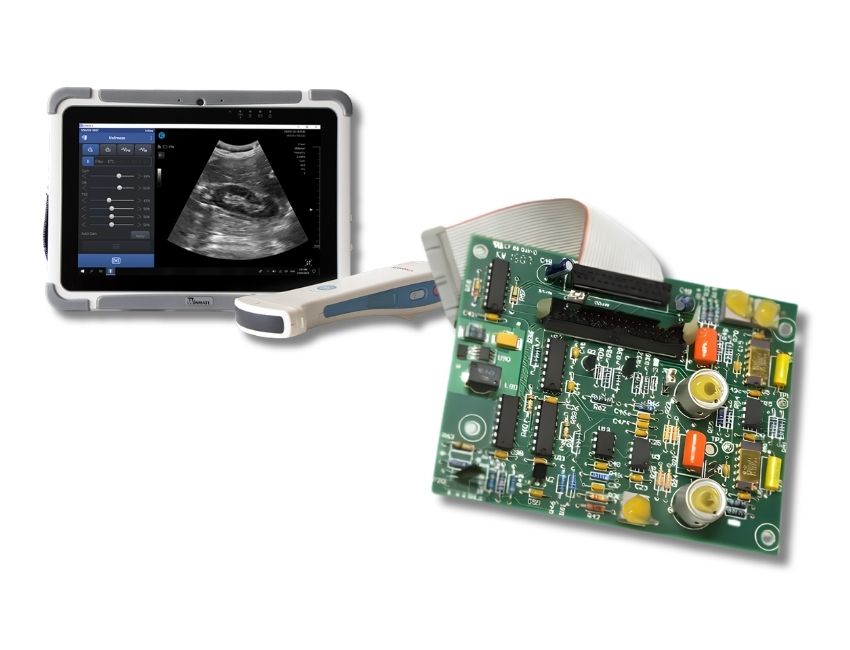
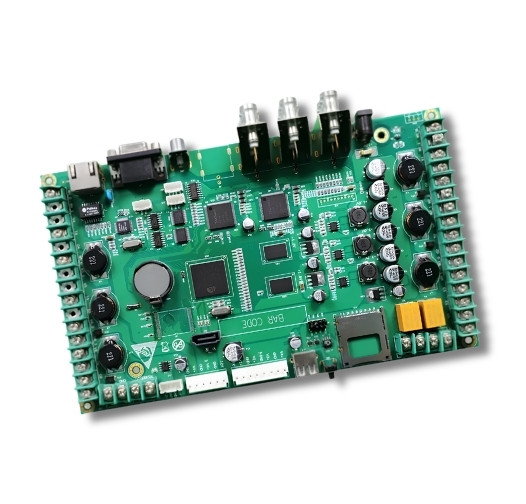
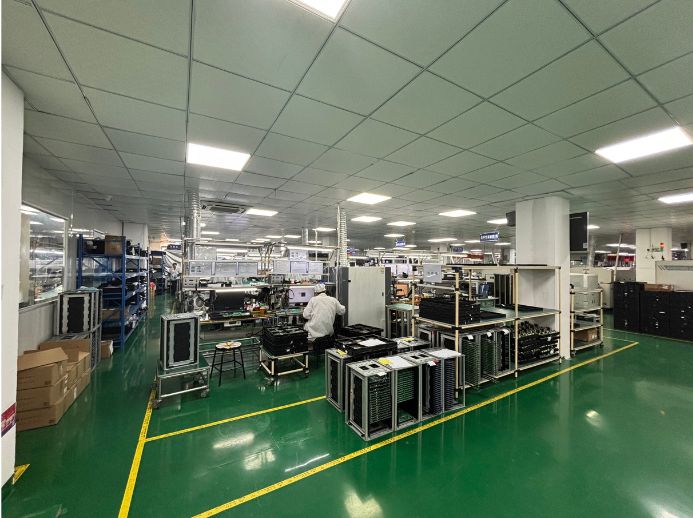
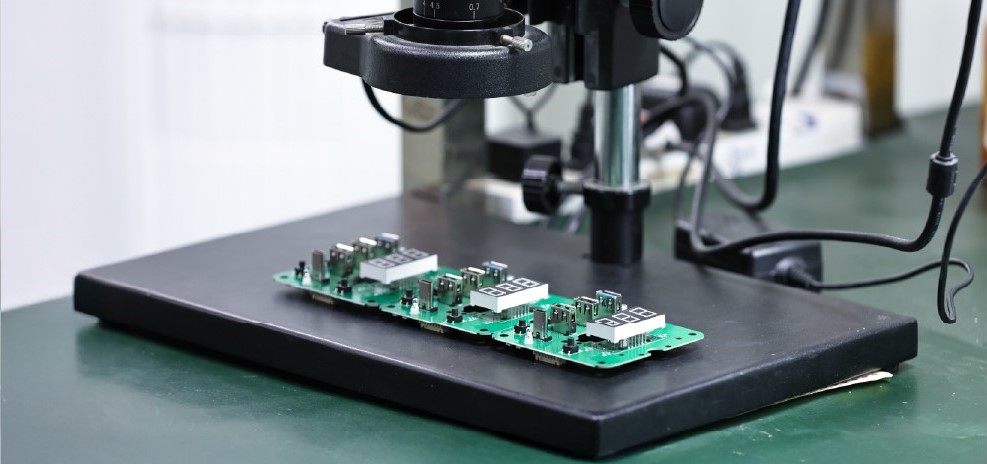
A medical turnkey PCB assembly is a one-stop solution where the manufacturer takes care of end-to-end production. The process includes PCB (printed circuit board) fabrication, parts procurement, surface mount and through-hole assembly, and final testing. Instead of managing multiple vendors and juggling complex supply chains, you rely on a single trusted partner. This simple process means less delay in the supply chain, less internal cost, and constant, strict medical standards from raw materials to the finished product.
| Order Quantity | ≥1PCS |
| Service Options | Full Turnkey PCB Assembly, Partial Turnkey, Component Sourcing, PCB Fabrication |
| Board Type | Rigid PCB, Flexible PCB, Rigid-Flex PCB, Metal Core PCB |
| Assembly Types | Surface Mount Technology (SMT), Through-Hole Technology (THT), Mixed Technology |
| Component Sourcing | Turnkey (All components sourced by us), Trusted Global Supply Network |
| Mounting Accuracy | ±0.035mm(±0.025mm) Cpk≥1.0 (3σ) |
| Min Package | 01005 (0.4mm*0.2mm) |
| BGA Package | Down to 0.2mm pitch with fine-pitch X-ray inspection |
| Testing & Validation | Automated Optical Inspection (AOI), X-Ray, Flying Probe, Functional Testing (FCT), FAI |
| Conformal Coating | Acrylic (AR), Silicone (SR), Polyurethane (UR), UV |
| Certificate | ISO 13485, ISO 9001:2015, IPC Class 3, RoHS, REACH |


The bill of materials or BOM includes part numbers, manufacturers, parameters, etc., that is needed to obtain components and build the PCB product.

The standard design files for PCB manufacturing. The files will contain data for the copper layers, solder mask layers, screen printing, drill holes, component placements notations, and other relevant physical data for the board.

Also known as XY Files, these provide the exact position and orientation of each electronic component on the PCB. They include the component reference designator and package type to precisely guide the automated pick-and-place machines during the assembly step.

Additional Manufacturing Files: Depending on the complexity of your board, other important files may be needed.
· Test Specifications / Functional Test Documents: If functional testing is required, you may need to provide test specifications, testing procedures, acceptance criteria, or related documents. These files help our engineering team develop or perform appropriate verification processes to confirm your PCBA meets the required electrical and functional performance.

The choice of manufacturing type for medical electronic products depends on your internal resources, supply chain, project requirements, delivery times, and other factors. The main types are Turnkey PCB Assembly and Consigned PCB Assembly.
Turnkey Assembly: The manufacturer manages most or all production activities, including component sourcing, PCB fabrication coordination, assembly, inspection, and testing.
As a professional full-service PCB assembly manufacturer, PCBMay is committed to providing our customers with one-stop services ranging from component procurement to PCB production and assembly. We help you accelerate your medical device R&D process. Send us your Gerber files and BOM today to receive a quick quote and evaluation.
Our Medical Turnkey PCB Assembly FAQ addresses essential questions regarding your manufacturing requirements. We cover our capabilities for complex medical electronics, supply chain management, assembly timelines, rigorous quality inspection protocols, and our capacity to scale from initial builds to production batches. For every medical device project, we guarantee precision-focused, medical-grade assembly standards.
For an accurate estimate, turnkey providers typically ask for a standard set of electronic files. This includes Gerber files for manufacturing the bare circuit board, a detailed Bill of Materials (BOM) that lists all component part numbers, and Centroid (or pick-and-place) data, which specifies the X-Y coordinates and rotation for each component on the board.
Lead time is probably the most variable element of turnkey PCBA and can be affected by many factors. The most significant factors are the procurement time for all components on the BOM (especially for parts with long lead times or those that are hard to find), the complexity of the PCB fabrication, the assembly process itself, and the extent of required quality testing.
Yes. We can accelerate parts procurement and prioritize assembly for you by utilizing our global supply chain network. Standard lead times for urgent medical prototypes can be reduced to just a few days, depending on immediate BOM availability.
We manufacture under a strict ISO 13485-certified quality management system specifically designed for medical devices. Depending on project requirements, PCBAs can undergo AOI, X-ray inspection, Flying Probe Testing, and Functional Testing to verify assembly quality and electrical performance.
No. We maintain a no Minimum Order Quantity (≥1 PCS) policy. We are entirely equipped for single-unit engineering validations, low-volume pilot runs, and smooth high-volume mass production.
Panelization involves grouping multiple identical PCBs onto a single, larger board array. This maximizes the speed and efficiency of automated SMT placement machines, which significantly lowers your per-unit labor and manufacturing costs during production.
Yes. Our advanced automated SMT lines are built for high-precision layouts. We reliably source and assemble miniature 01005 components and ultra-fine 0.2mm pitch BGAs, using X-ray inspection to verify BGA solder joint quality.
Choose a full turnkey solution when you want to eliminate internal procurement workloads, avoid supply chain delays, and accelerate your time-to-market. If you already have stock of highly specialized or difficult-to-source medical components, that is when partial turnkey is recommended.
English
French
German
Japanese
Korean