Certified by
Capabilities

Medical-Grade Rigid-Flex PCB Manufacturing

From prototype to mass production, we deliver highly reliable rigid-flex PCBs designed for critical medical applications — where failure is not an option.

introduction

Medical Rigid-Flex PCBs

In medical electronics, every connection matters.
Rigid-flex PCBs are widely used in compact, high-reliability devices such as diagnostic equipment, wearable monitors, and surgical systems.

At PCBMay, we combine advanced manufacturing processes with strict quality control to ensure your designs perform flawlessly in demanding medical environments.

capabilities

Our Rigid-Flex PCB Manufacturing Capabilities

Specifications Rigid-Flex PCB Capabilities
PCB Layers 2 ~20 layers
Board Thickness 0.3mm‐4.0mm
Min. Board Size 10mm*15mm
Max. Board Size 406.4mm*558.8mm
Impedance Control Tolerance

Single‐ended: ±5Ω(≤50Ω),±10%(>50Ω)

Differential: ±5Ω(≤50Ω),±10%(>50Ω)

Min. Line width/spacing 3.0/3.0mil
FCCL Materials Shengyi SF305, Panasonic R‐ F775(ER), DuPont Pyralux AP
CCL Materials  ITEQ: IT‐ 180A; Shengyi: S1141& S1000‐2
Other CCL Materials Arlon: 85N; Rogers: RO4000 series; Nelco:N4000‐ 13 series; Ventec: VT‐901
Production Capability 1000m² per day

Max. Copper Thickness(Inner Layer)

3oz
Max. Copper Thickness(Outer Layer) 4oz
Aspect Ratio (Mechanical Drill) 12:1
Silkscreen White, Black, Red,etc.
Soldermask Green, Blue, Purple, White, Black, Pink, Orange
Surface Finishes HASL/LF HASL, ENIG, ENEPIG, Electrolytic Nickel Gold, Soft Gold, Hard Gold, Immersion Silver, Immersion Tin, and OSP

Get Instant Quote

Advantages

Reasons to Choose Our Rigid-Flex PCB

  • Manufacturing Processes

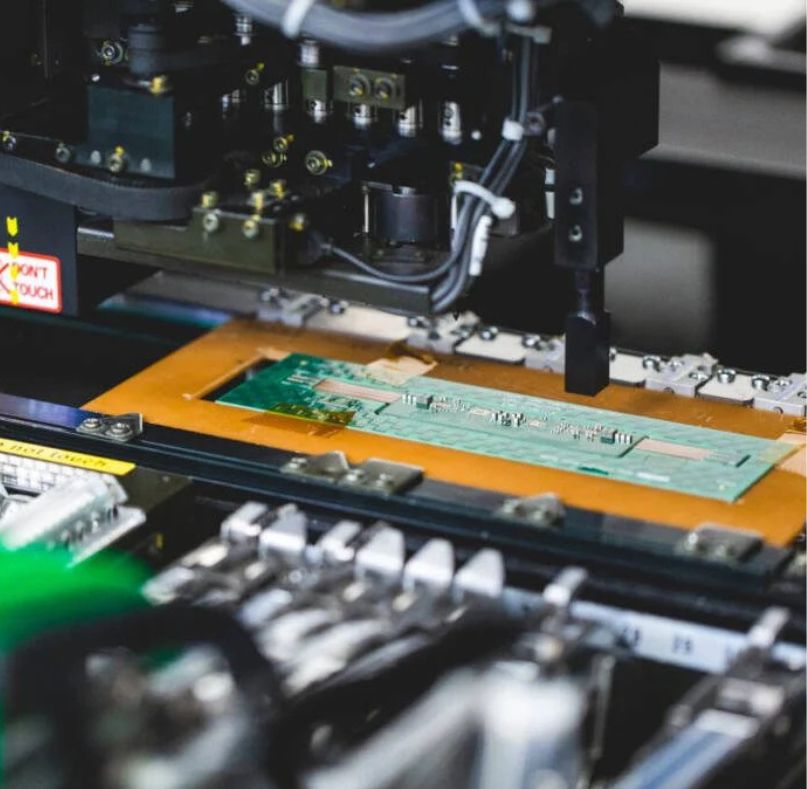
    Every stage of our PCB manufacturing is carefully managed to ensure precision and reliability. From material preparation to lamination, drilling, and plating, we maintain strict process control.

    Imaging, etching, and comprehensive testing follow, culminating in a final inspection that guarantees each board meets the highest standards for performance and quality.

    Get Instant Quote
  • Key Testing & Inspection:

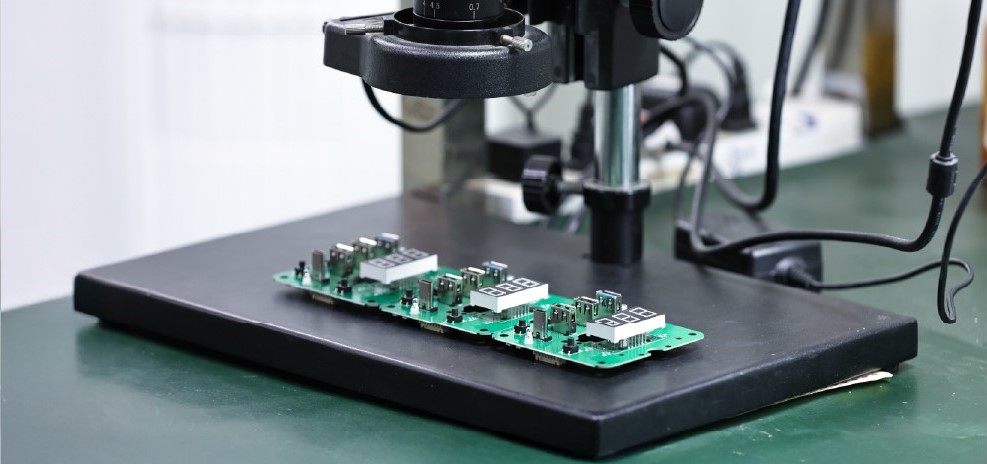
    PCBMay conducts rigorous testing to ensure every PCB meets strict quality standards. Microsection analysis and peel strength testing verify internal structure and layer adhesion.

    Bending and flex life tests, along with AOI, Flying Probe, and X-ray inspections, confirm mechanical durability and electrical reliability, guaranteeing high-performance boards for critical medical applications.

    Get Instant Quote
  • Engineering Support for Your PCBs

    We collaborate with your engineering team to optimize design for manufacturability and reliability. Our experts provide stack-up recommendations and select the best materials, including PI and High-Tg FR4.

    We perform DFM and DFA analysis, control impedance, and optimize flex bending areas, ensuring your rigid-flex PCBs meet performance and durability requirements.

    Get Instant Quote
  • Designed for Critical Medical Applications

    Our rigid-flex PCBs are designed for critical medical applications, providing reliable performance in patient monitoring systems and wearable medical devices.

    They are also used in imaging and diagnostic equipment, implantable and portable devices, as well as surgical instruments, ensuring durability, precision, and safety in demanding healthcare environments.

    Get Instant Quote
testimonials

Hear from Our Customers

  • “The rigid-flex PCBs delivered outstanding reliability for our implantable devices. Their durability and precision are critical for long-term medical applications.”

    Dr. Olivia Martin

    Biomedical Engineer

  • “Their rigid-flex solutions allowed us to simplify complex designs, reduce weight, and maintain performance for high-density diagnostic systems.”

    Daniel Kim

    R&D Manager, Medical Equipment

  • “Working with their team, we optimized rigid-flex PCB designs for compact wearables. The results were consistent, high-quality, and fully compliant with medical standards.”

    Emily Chen

    Product Development Lead, Wearable Health Tech

  • “Reliable production, strict quality control, and on-time delivery make their rigid-flex PCBs an essential component in our medical device manufacturing process.”

    James Thompson

    Supply Chain Director, Medical Devices

Faqs

Frequently Asked Questions

Our engineers often receive detailed technical questions regarding the design, manufacturing, and reliability of rigid-flex PCBs. This FAQ addresses the most common inquiries, helping you understand capabilities, optimize designs, and ensure high-performance outcomes for medical and other critical applications.

1. What is the minimum bend radius for rigid-flex PCBs, and how does it affect reliability?
The minimum bend radius depends on layer count and material type. Following recommended radii prevents copper cracking, delamination, and signal failures, ensuring long-term reliability under repeated bending.
2. How many flex layers can be integrated into a multi-layer rigid-flex board?
We can integrate 1–6 flex layers within a 2–20 layer rigid-flex stack-up. Each design is optimized for mechanical stress, flexibility, and electrical performance.
3. What materials are recommended for high-reliability medical applications (PI vs. High-Tg FR4)?
Polyimide (PI) is preferred for flexible areas due to its durability and thermal stability, while High-Tg FR4 ensures rigid sections maintain structural integrity under high temperatures.
4. How do you control impedance and ensure signal integrity in complex designs?
We optimize trace width, spacing, dielectric thickness, and stack-up design. Controlled impedance is verified during fabrication and through impedance testing to guarantee high-speed signal performance.
5. Can small-batch prototypes be produced while maintaining IPC Class 3 quality standards?
Yes. Our processes support low-volume prototypes with the same IPC Class 3 compliance, ensuring reliability, traceability, and performance for critical medical applications.