
Medical Device Regulations for PCB Assembly: What Every OEM Must Know
-

-
August 18, 2026


For medical device OEMs, PCB assembly affects product reliability, electrical performance, and regulatory compliance. Medical PCBA must meet application-specific requirements for materials, manufacturing, testing, documentation, and traceability. This guide explains the key standards and manufacturing considerations you should evaluate when selecting a medical PCB assembly partner.
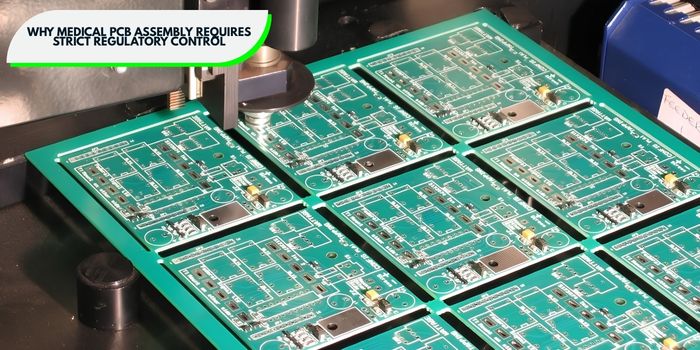
Medical PCB assemblies operate in applications where reliability, safety, and traceability can directly affect device performance and patient care. A failed board can delay treatment, corrupt data, or harm a patient. These risks make manufacturing controls, testing, documentation, and traceability important parts of medical device quality systems.
Medical device manufacturers need objective records to demonstrate that applicable quality and manufacturing requirements are being met. For high-reliability medical applications, OEMs may specify IPC-A-610 Class 3 workmanship requirements based on device risk and reliability needs. High-reliability medical PCBA depends on controlled soldering, material selection, inspection, and testing.
Medical device manufacturers may need component and production traceability appropriate to the device, risk level, and applicable quality requirements. Risk management in medical PCBA starts with that chain. Depending on the device, risk level, and customer requirements, traceability may include component lot numbers, date codes, supplier certificates, and production records. This traceability data helps identify affected production lots and units when a field issue occurs.
Choosing a supplier with proven ISO 13485 experience, documented process controls, full traceability, and robust inspection capabilities streamlines supplier qualification. This helps you meet your quality and regulatory-compliance requirements.
Manufacturers often confuse these two concepts. Regulations carry legal force. Standards describe accepted technical practices. Authorities write regulations; ISO and IPC publish standards. In practice, you follow standards to satisfy regulations.
| Type | Document | What It Covers | Who Enforces It |
| Regulation | FDA QMSR (21 CFR 820) | US quality system requirements for medical device manufacturers | FDA |
| Regulation | EU MDR 2017/745 | Safety and performance requirements for devices sold in the EU | Regulatory authorities and, where applicable, notified bodies |
| Standard | ISO 13485 | Quality management system for medical device manufacturing | Certification bodies |
| Standard | ISO 9001 | General quality management foundation | Certification bodies |
| Standard | IPC-A-610 and IPC-6012 | Assembly workmanship and bare board performance criteria | Contractual, customer specified |
| Standard | IEC 60601-1 | Safety and essential performance of medical electrical equipment | Test labs and NRTLs |
| Material | UL 94 V | Flammability classification of plastics and polymeric materials | Used by manufacturers and applicable safety standards |
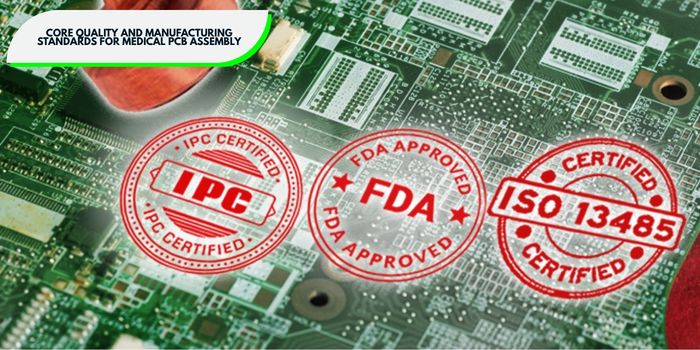
Medical PCB assembly may involve several quality, manufacturing, workmanship, and electrical safety standards, depending on the device and market.
ISO 13485 is a medical-device-specific quality management standard. It places greater emphasis on regulatory requirements, risk-based processes, production controls, and documentation relevant to medical devices. Certification indicates that the organization’s quality management system has been assessed against ISO 13485 requirements. You should still verify the supplier’s specific controls for purchasing, process validation, cleanliness, traceability, and records.
The FDA Quality Management System Regulation (QMSR) took effect in February 2026. It incorporates ISO 13485:2016 by reference, aligning US requirements with the global standard. You should review their quality agreements and supplier controls to ensure they align with applicable QMSR and ISO 13485 requirements.
IPC-A-610 judges the assembly, and IPC 6012 judges the bare board. IPC 6012 medical PCB performance covers plating thickness, hole quality, and laminate integrity. For a Class III medical PCB, you typically specify Class 3 criteria, the highest tier in both documents.
IEC 60601-1 is the core medical electrical equipment safety standard. IEC 60601-1 addresses electrical safety and essential performance at the medical electrical equipment level. PCB layout and assembly can affect requirements such as creepage, clearance, insulation, and dielectric strength, so these considerations should be addressed during design and verification. Your board must respect isolation barriers and survive test voltages. A good assembler preserves all of that through soldering, cleaning, and conformal coating.
UL 94 provides flammability classifications for materials used in electronic products. Whether a specific material rating is required depends on the device design and applicable safety requirements.
The FDA regulates devices by risk class. Class II medical PCB assemblies usually follow the FDA 510(k) clearance pathway. Class III medical PCB work supports implants and life support, needing premarket approval. The higher the class, the deeper the documentation, inspection, and traceability.
Regulations reshape every station on a medical assembly line. They lock materials, validate processes, and generate records at each step.
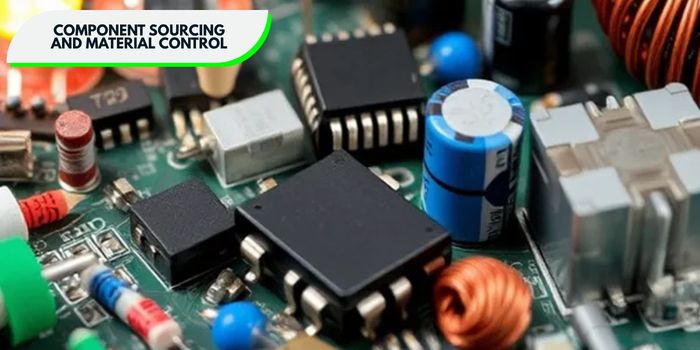
It all starts with components. Medical assemblies demand demand-controlled supply chains, so we buy from authorized distributors with full certificates of conformance and lot data. Medical device BOM validation catches unapproved substitutions, counterfeit risk, and obsolescence before boards run. Biocompatible PCB materials and flame-rated laminates arrive with documented material certificates.
Medical soldering demands validated processes. We control stencil design, paste storage, and reflow profiles against documented parameters. Reflow profiles must balance solder joint quality with the thermal limits of components and PCB materials. Line technicians log every lot change. That stability shows up in audits and field reliability alike.
Residue on a medical board invites leakage currents and corrosion. That’s why cleanroom PCB assembly reduces contamination from the start. We match fluxes to your cleanliness requirements and verify ionic cleanliness. Cleanroom assembly matters most for implantable medical device PCB builds and high impedance circuits. Clean boards also let conformal coating medical PCB applications bond properly.

Medical device PCB testing never stops at a continuity check. AOI catches placement and solder defects. X-ray inspection of medical PCB work verifies hidden joints under BGAs and QFNs. Flying probe or ICT plus functional testing confirms electrical behavior.
Every medical build generates a paper trail any inspector can follow, and medical device traceability PCBA is what makes that trail real. It links each serial number to component lots, machine settings, and test data. We retain records for the period your rules demand, often years beyond production. Audits run smoother when records live in one retrievable system.
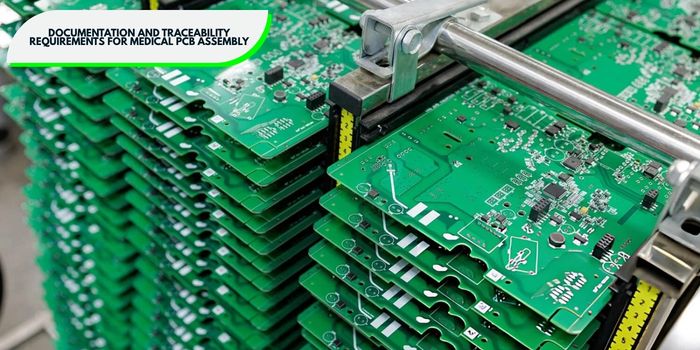
Documentation proves your boards meet the claims you make. Agencies review records, not intentions. Medical PCB documentation requirements cover materials, processes, tests, and full genealogy from reel to final board.
Your BOM anchors the component genealogy. Each line carries manufacturer, part number, lot, and date code. We confirm approved vendor status and flag any substitution before boards run. Certificates of conformance for every reel stay archived with your project. The BOM provides a complete, auditable record that resolves traceability questions for years after production.
We log AOI, X-ray, ICT, and functional results against each serial number. Failed boards get disposition evidence showing repair or scrap decisions. Pass rates feed your process monitoring and supplier scorecards. You receive complete, readable test reports with every shipment.
Process traceability connects each board to machine settings and operator actions. Solder paste lots, reflow profiles, and cleaning batches all carry identifiers. Lot traceability groups boards by shared materials and production runs, so a recall becomes a targeted search instead of a blanket stop. For regulated medical products, this traceability supports investigation, containment, and corrective actions when production issues occur.
Your device history record (DHR) depends on what your supplier hands you. We supply the traveler records, test data, and material certificates that feed your DHR. Supplier documentation also includes audit reports, calibration certificates, and validation files. Request all of it during evaluation, not after first article. Organized records signal an organized production floor.
Selling outside the United States adds another layer of rules. The EU enforces MDR with CE mark medical circuit board requirements. Environmental rules like RoHS and REACH apply across regions. Your supplier must support the documentation each market demands.
EU MDR 2017/745 governs medical devices sold in Europe. The CE mark medical circuit boards path requires technical documentation proving safety and performance. Your assembler must cooperate with technical file reviews. Choose a partner who has walked that path before.
RoHS limits hazardous substances like lead in electronics. REACH tracks chemicals of very great concern through the supply chain. A RoHS REACH medical PCB declaration confirms your boards meet both regimes. Lead-free construction requires supplier declarations for every laminate, mask, and finish. Keep certificates current; the substance lists change.
Medical devices placed on the EU market may be subject to the EU MDR as well as applicable RoHS and REACH requirements. The exact obligations depend on the product, materials, intended use, and applicable exemptions.

Verify certifications, inspect capabilities, and demand documentation samples.
ISO 13485 demonstrates that the supplier’s quality management system has been assessed against medical device quality management requirements. ISO 9001 medical PCB certification shows baseline quality discipline. Verify FDA registration status and cleanroom ratings directly rather than relying on marketing claims. EMS medical device certifications add credibility only when supported by documented audit reports. Certificates without process evidence mean little.
Match capabilities to your product class, not to a brochure. Rigid-flex medical PCB demand calls for flex handling experience and controlled lamination. Implantable and wearable builds benefit from cleanroom assembly and small form factor SMT. Ask about X-ray inspection, AOI, conformal coating, and thermal profiling. A proper medical PCB DFM review flags manufacturability issues early.
Expect material certificates, process validation records, and test reports with every build. A reliable supplier provides this documentation proactively, without repeated requests. Ask for a sample device history record before you sign a contract. Medical device contract manufacturing agreements should also define record retention and audit access. If you cannot obtain documentation easily, consider other suppliers.
MedPCB is an ISO 13485-certified, one-stop PCB and PCBA supplier. We support medical electronics from fabrication and component sourcing through final assembly. You get engineering support, quality control, and traceability at every step of high-reliability medical PCBA.
Our manufacturing and assembly capabilities include:
Planning a medical PCB or PCBA project? Send us your Gerber files, BOM, and requirements. MedPCB can review your project and provide a manufacturing assessment and quotation.
Medical PCB compliance rewards preparation, and it punishes shortcuts. Know your device class, define your standards, and choose a supplier who treats documentation as a product. The regulations change periodically, but the discipline stays constant.


Hello, I am Sony He, with extensive practical experience in medical PCB and PCBA manufacturing. Over the years, I have focused on medical circuit board manufacturing, rigid-flex PCB, SMT assembly, quality inspection and reliability compliance. I enjoy sharing hands-on expertise in medical PCB manufacturing and assembly through technical articles.


English

French

German

Japanese

Korean