Medical-Grade Flexible PCB Manufacturing

MedPCB provides ISO 13485-certified flexible PCB fabrication for life-saving medical devices, wearables, and implantable technology. We support up to 8-layer Flex PCBs and 20-layer Rigid-Flex PCBs, delivering reliable fabrication from prototype through volume production.

• ISO 13485 Certified Medical Manufacturing
• Up to 8-Layer Flex & 20-Layer Rigid-Flex
• Dynamic and Static Flex with High Bend Cycles
• Premium Medical-Grade Polyimide (Dupont, Shengyi)
• Precision Laser Profiling and Microvia Drilling

Medical Flexible PCB Manufacturing
Certifications
Why Choose Flexible PCBs for Medical Devices?
introduction

Why Choose Flexible PCBs for Medical Devices?

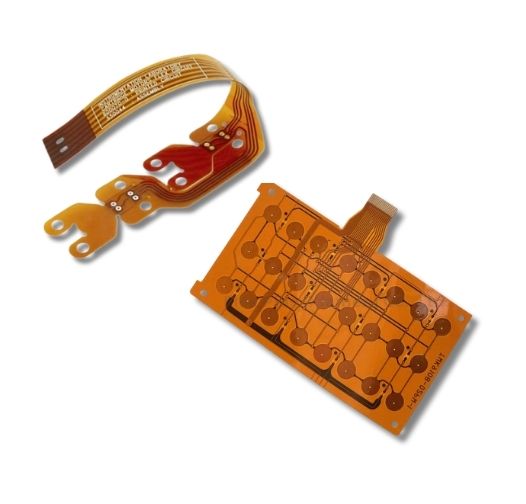
The medical industry is rapidly shifting toward smaller, lighter, and more patient-centric devices, making traditional rigid PCBs less suitable for many compact and dynamic medical applications. Flexible PCBs (FPCs) solve this by using ultra-thin polyimide substrates that can bend, fold, and twist to fit the natural contours of the human body or the tight confines of compact medical enclosures.

For medical device engineers, this means the freedom to design comfortable wearable sensors, highly maneuverable endoscopes, and ultra-compact implants without compromising on electrical performance. Flexible PCB technology helps maintain reliable signal integrity while eliminating bulky wire harnesses and connectors.

Quality

Benefits of Flex for Medical Devices

  • Compact & Lightweight Design for Portable Medical Devices
  • Dynamic Flexibility for Moving Medical Equipment
  • Superior Mechanical Reliability for Long-Term Medical Use
  • Reliable Signal Integrity for High-Precision Medical Electronics
  • Improved Thermal Management for Compact Medical Electronics
Compact & Lightweight Design for Portable Medical Devices
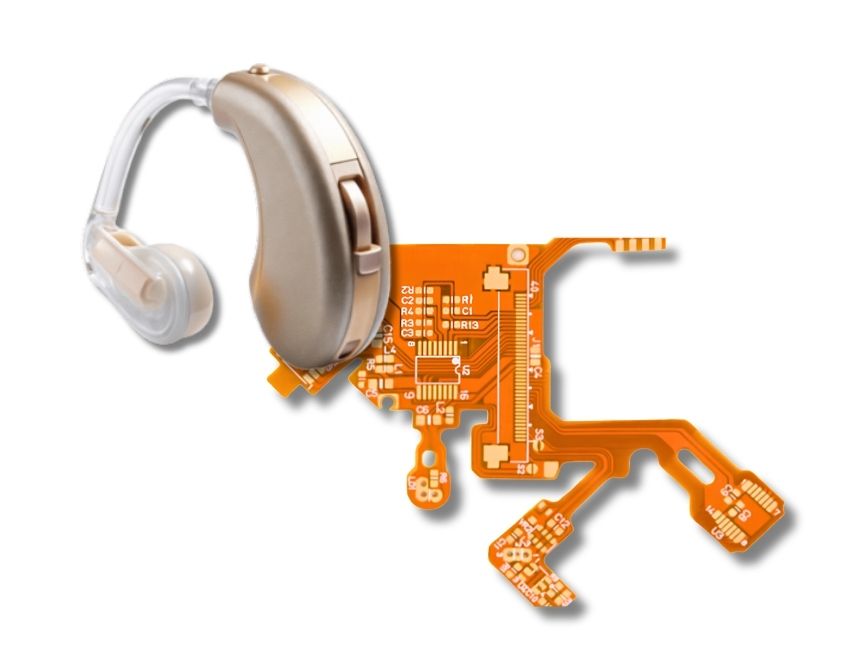
Flex circuits replace bulky connectors and traditional wiring, drastically reducing the overall weight and volume of the device. This is crucial for portable monitors, hearing aids, and wearable patches where every gram and millimeter matters for patient comfort and mobility.
Dynamic Flexibility for Moving Medical Equipment
Surgical robotics and articulating diagnostic tools require circuitry that can bend repeatedly without failing. Flex PCBs are engineered specifically for dynamic flexing, enduring millions of bend cycles without trace fracturing or loss of electrical continuity.
Superior Mechanical Reliability for Long-Term Medical Use
By eliminating mechanical connectors, solder joints between boards, and complex hand-wired assemblies, flex PCBs remove the most common points of failure in medical electronics. The result is a highly durable, vibration-resistant system ready for long-term patient monitoring.
Reliable Signal Integrity for High-Precision Medical Electronics
Advanced polyimide materials offer excellent dielectric properties, ensuring clean, high-speed signal transmission. This guarantees that critical diagnostic data, whether from an ultrasound probe or a cardiac monitor, remains accurate, stable, and interference-free.
Improved Thermal Management for Compact Medical Electronics
Thin polyimide substrates dissipate heat far more effectively than thick FR4 materials. This prevents localized overheating in miniaturized, high-power medical devices, keeping sensitive components stable and extending the product's operational lifespan.
Why Choose Us

Why Choose MedPCB?

  • ISO 13485 Certified Manufacturing

    ISO 13485 Certified Medical Manufacturing

    Our facility operates under a strict ISO 13485 quality management system entirely dedicated to medical device reliability. Every step of our flexible PCB fabrication is meticulously documented, controlled, and optimized to meet the uncompromising regulatory demands of the healthcare sector.

  • IPC-A-610 Class 3 Quality Acceptance

    Flexible Material Choices

    We source premium, medical-grade materials to match your specific bend radius, thermal, and environmental requirements. Our inventory includes:

    • Dupont Pyralux 
    • Shengyi SF305 
    • Shengyi SF202 
    • R-F775 
    • Adhesiveless Polyimide 
    • Adhesive Polyimide

  • Advanced Wave & Selective Soldering Technology

    Specialized Flex & Rigid-Flex PCB Fabrication

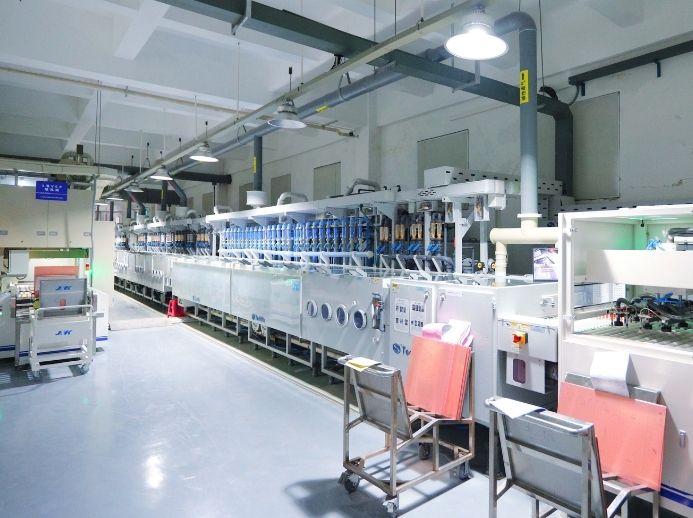
    Manufacturing polyimide requires fundamentally different process controls than standard rigid boards. We utilize dedicated flex production lines equipped with high-precision laser routing, plasma desmearing, and advanced lamination presses designed to handle the unique physical behaviors of flexible materials.

  • Medical-Grade Component Sourcing & BOM Support

    Free DFM Review & Engineering Support

    Before fabrication begins, our engineering team conducts a thorough Design for Manufacturability (DFM) review of your flex PCB files. We evaluate your stackup, trace layouts in bend zones, and stiffener positioning to resolve manufacturing issues early, ensuring first-pass success without altering your core engineering intent.

Specs

Technical Specifications


Order Quantity ≥1 PCS (Prototype, Low-Volume, Mass Production)
Layer Count 1 to 8 Layers
Base Materials Adhesive PI (Shengyi SF305), Adhesiveless PI (Panasonic R-F775, Taiflex MHK, DuPont Pyralux AP)
Copper Thickness 0.33 oz, 0.5 oz, 1 oz, 2 oz, 3 oz (Max finished copper up to 5 oz)
Min. & Max Board Size Min: 4x8mm (without bridge) / Max: 9x23 inches
Board Thickness (without stiffener) 0.05mm - 0.8mm
Min. Bend Radius (Static) 3-6x thickness (Single-layer), 6-10x (Double-layer), 10-15x (Multi-layer)
Min. Dynamic Bend Radius 20-40x board thickness (Single-layer)
Stiffener Types Polyimide (PI), FR4, 3M Adhesive Tape (9077, 6677, 9058)
Quality Compliance ISO 13485, IPC-A-600 Class 3, RoHS, REACH
Medical Flexible PCB
Capabillities

Our Medical Flexible PCB Production Process

Step 1: Engineering Review & DFM
We conduct a comprehensive review of your files to ensure they are fully optimized for flawless fabrication.
  • Stackup Review: We analyze your layer arrangement to strike the perfect balance between dynamic flexibility and robust electrical performance.
  • Material Selection: We verify the specified material against your design requirements. If lead time, availability, or manufacturing cost becomes an issue, our engineers may recommend equivalent alternatives for your approval.
  • Controlled Impedance Review: We rigorously verify trace widths and spacing to guarantee clean, high-speed signal transmission for sensitive diagnostic data.
  • Design for Manufacturability (DFM): Our engineers proactively identify and resolve potential fabrication bottlenecks before a single board is cut, saving you time and eliminating costly respins.
Step 2: Inner Layer Fabrication
Using advanced imaging and etching techniques, we create the precise circuitry on the ultra-thin polyimide core.
  • Circuit Imaging: We use high-resolution photolithography to accurately transfer your intricate circuit patterns onto the delicate polyimide substrate without distortion. 
  • Copper Etching: Precision chemical etching cleanly removes unwanted copper, leaving behind sharply defined traces that meet your exact dimensional tolerances. 
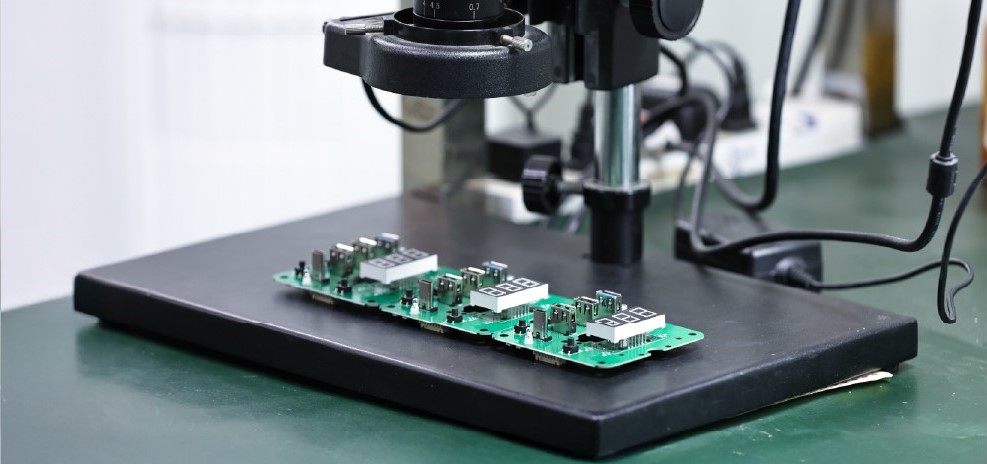
  • Inner Layer AOI: Automated Optical Inspection scans every inner layer for microscopic defects like shorts or opens, ensuring absolute structural integrity before the board moves to lamination.
Step 3: Lamination, Drilling & Plating
Layers are bonded under precise heat and pressure, followed by high-accuracy laser drilling to create clean, reliable vias.
  • Coverlay Lamination: We meticulously bond a protective polyimide coverlay over the active circuitry, shielding it from moisture, contamination, and physical wear during use.
  • Laser Drilling: State-of-the-art UV and CO2 laser systems vaporize the substrate to create ultra-precise microvias without tearing or heat-damaging the surrounding flexible materials.
  • Copper Plating: A highly controlled electroplating process coats the via walls, establishing rock-solid electrical connections between the flexible layers that can withstand repeated bending.
Step 4: Surface Finish & Profiling
Exposed copper is protected with medical-grade finishes, rigid stiffeners are applied where support is needed, and the board is accurately cut to its final shape.
  • Surface Finish: We apply premium, biocompatible finishes like ENIG or ENEPIG to protect exposed copper and provide a perfectly flat, highly solderable surface for component mounting.
  • Stiffener Lamination: FR4, polyimide, or stainless steel stiffeners are thermally bonded to specific zones, giving crucial mechanical support beneath connectors and heavy components without sacrificing overall flexibility.
  • Routing: We use specialized mechanical routing to cleanly separate the boards from the manufacturing panel without inducing stress fractures along the flexible edges.
  • Outline Profiling: High-precision laser profiling is deployed to cut the final, complex shapes and tight tolerances required to fit your custom medical enclosures perfectly.
Step 5: Inspection & Electrical Testing
Every medical flex board undergoes rigorous testing to guarantee absolute continuity and reliability.
  • AOI: A final, high-magnification Automated Optical Inspection confirms that the finished trace geometries, coverlay alignment, and pad definitions are virtually flawless.
  • Electrical Testing: We apply rigorous open and short testing across the entire board to verify that every single electrical connection performs exactly as designed under load.
  • Flying Probe: For prototypes and complex HDI designs, nimble flying probes test individual pads and microvias with micron-level accuracy without requiring custom testing fixtures.
  • TDR (when required): Time-Domain Reflectometry physically validates that your controlled impedance traces will maintain perfect signal integrity in real-world medical environments.
  • Final Inspection: Our quality assurance team performs a comprehensive visual, dimensional, and aesthetic check, ensuring the finished flex circuit is pristine and ready for immediate medical assembly.
Quality Control

Challenges in Medical Flexible PCB Fabrication

  • Through-Hole Solder Fill Reliability

    Maintaining Dimensional Stability

    Polyimide materials naturally shrink and stretch during etching and lamination, which can cause severe misregistration in multilayer medical boards.

    Our Solution: We utilize specialized baking cycles to release material stress prior to processing, combined with predictive scaling compensation during the tooling phase. This guarantees tight layer-to-layer registration across the entire panel.

  • Preventing Thermal Damage to Sensitive Components

    Ensuring High-Flex Cycle Reliability

    Dynamic applications like robotic surgical arms demand circuitry that won't fracture after thousands of bending cycles.

    Our Solution: We recommend and supply adhesiveless polyimide and rolled annealed (RA) copper, which offer superior ductility. Our DFM review also ensures traces are routed perpendicular to the bend line and staggered on double-sided boards to maximize mechanical lifespan.

  • Thermal Expansion and Warpage Control

    Achieving Precise Laser Drilling

    High-density medical wearables require microvias too small for mechanical drills, but drilling through heterogeneous flex materials cleanly is notoriously difficult.

    Our Solution: We deploy state-of-the-art UV and CO2 laser drilling systems that create ultra-precise, clean-walled microvias, ensuring reliable copper plating and strong interlayer connections without damaging the delicate substrate.

  • BGA Rework and Repair Challenges

    Ensuring Accurate Coverlay Alignment

    Applying polyimide coverlay to protect delicate flex circuits requires high precision; any adhesive squeeze-out can easily contaminate surface mount pads.

    Our Solution: We use automated vision-alignment systems and optimized lamination press cycles to control adhesive flow perfectly, ensuring pristine solder pads that are ready for complex, high-density SMT assembly.

Our PCB Factory
Types

Types of Medical Flexible PCBs Provided by MedPCB

Single-sided Flex

Ideal for compact medical sensors, wearable patches, and simple signal transmission circuits requiring maximum flexibility and low profile.

Double-sided Flex

It supports higher routing density while maintaining flexibility, making it suitable for portable diagnostic equipment and handheld medical devices.

Multilayer Flex

MedPCB supports up to 8-layer flexible PCB fabrication for complex medical electronics requiring controlled impedance, fine-pitch routing, and stable signal integrity.

Rigid-flex

We support up to 20-layer rigid-flex PCB fabrication, combining rigid sections for component mounting with flexible interconnects to eliminate connectors and improve long-term reliability.

HDI Flex

Features microvias, fine lines, and ultra-thin profiles designed specifically for cutting-edge micro-medical implants.

Ready to bring your medical device to life? Contact MedPCB today for a free DFM review and an instant quote on your flexible PCB project!

Case Study

Medical Flexible PCB Cases

  • Wearable Cardiac Monitor Flex Fabrication
    Wearable Cardiac Monitor Flex Fabrication Wearable Cardiac Monitor Flex Fabrication

    Wearable Cardiac Monitor Flex Fabrication

    Manufactured a 2-layer adhesiveless polyimide flex board for a continuous ECG patch. Navigated tight 3-mil trace/space requirements to ensure pristine signal clarity for accurate arrhythmia detection while maintaining maximum patient comfort.

  • HDI Flex for Endoscope Cameras
    HDI Flex for Endoscope Cameras HDI Flex for Endoscope Cameras

    HDI Flex for Endoscope Cameras

    Fabricated an ultra-miniature 4-layer HDI flex circuit utilizing advanced laser-drilled microvias. The board's extreme flexibility allowed it to route seamlessly through the articulating tip of a disposable surgical endoscope without trace fracturing.

  • 6-Layer Flex Circuit for Portable Ultrasound
    6-Layer Flex Circuit for Portable Ultrasound 6-Layer Flex Circuit for Portable Ultrasound

    6-Layer Flex Circuit for Portable Ultrasound

    Delivered a complex multilayer flex board capable of handling high-frequency diagnostic signals. We utilized premium Dupont Pyralux materials to ensure consistent controlled impedance across the entire flexible length.

  • Stiffener Integration for Blood Analyzers
    Stiffener Integration for Blood Analyzers Stiffener Integration for Blood Analyzers

    Stiffener Integration for Blood Analyzers

    Integrated variable-thickness FR4 and stainless steel stiffeners across a multi-zone flex board. This provided the necessary rigidity for heavy component mounting and robust connector mating, while keeping the interconnect zones highly flexible.

Faqs

Frequently Asked Questions

Our Medical Flexible PCB FAQ addresses essential questions regarding your manufacturing requirements. We cover our capabilities for single-layer to multilayer flex circuits, adhesiveless polyimide material selection, dynamic bend reliability, strict ISO 13485 quality standards, and seamless scalability from quick-turn prototypes to mass production. For every medical flex project, we guarantee high-precision fabrication tailored for critical healthcare applications.

1. Can MedPCB Provide Flexible PCB Fabrication and Assembly?
Yes. While our primary focus is expert bare-board fabrication, we offer full turnkey manufacturing, seamlessly transitioning your medical flex boards from fabrication to high-precision SMT assembly under one roof to simplify your supply chain.
2. What Is the Difference Between Rigid PCB and Flexible PCB for Medical Devices?
Rigid PCBs use inflexible substrates (like FR4) which provide strong structural support but dictate the device's physical shape. Flexible PCBs use thin polyimide, allowing the circuitry to fold, twist, and conform to tight spaces or human contours, drastically reducing weight and eliminating bulky mechanical connectors.
3. Are Flexible PCBs More Expensive Than Rigid PCBs?
Generally, the initial fabrication cost of a flex PCB is higher due to specialized polyimide materials and complex manufacturing processes. However, they often lower the total system cost by eliminating the need for wire harnesses, connectors, and manual assembly labor, while greatly improving overall device reliability.
4. Can You Manufacture Rigid-Flex PCBs for Complex Medical Equipment?
Absolutely. We specialize in rigid-flex fabrication, merging FR4 rigid sections with polyimide flex layers into a single, cohesive board. This is highly recommended for complex devices where you need rigid zones for dense component placement and flexible zones for robust, connector-free interconnection.
5. What Materials Are Best for Medical Flexible PCBs?
For medical devices, we highly recommend adhesiveless polyimide (such as Dupont Pyralux or Shengyi SF305) paired with rolled annealed (RA) copper. This combination offers the highest dynamic bending lifespan, excellent thermal stability, and exceptional long-term reliability.
6. How Do You Ensure Circuit Reliability in Dynamic Flexing Applications?
We ensure dynamic reliability through meticulous DFM review. We optimize trace routing to run perpendicular to the bend axis, stagger traces on double-sided boards to prevent localized stress (the "I-beam effect"), and specify the correct polyimide coverlay to maximize the board's flex cycles.
7. What Surface Finishes Are Recommended for Medical Flex Boards?
Electroless Nickel Immersion Gold (ENIG) and Electroless Nickel Electroless Palladium Immersion Gold (ENEPIG) are the gold standards for medical flex. They provide incredibly flat surfaces for fine-pitch medical components, excellent shelf life, and highly robust wire-bonding capabilities.
8. Can MedPCB Fabricate High-Density Interconnect (HDI) Flex Boards?
Yes. We regularly fabricate HDI flex boards featuring ultra-fine lines (down to 2 mil), stacked microvias, and incredibly thin layer stackups, capabilities essential for next-generation wearables and implantable healthcare devices.
9. How Do You Manage Stiffener Application and Laser Routing?
We use precision tooling and thermal bonding to apply FR4, polyimide, or stainless steel stiffeners exactly where rigid support is needed (such as beneath ZIF connectors). After lamination, we utilize advanced laser routing to cut the complex outlines of the flex board without inducing any mechanical stress to the delicate edges.
10. Are Your Flex PCBs Compliant with Medical RoHS and REACH Standards?
Yes. We offer fully RoHS and REACH-compliant material sets and lead-free surface finishes, ensuring your medical devices easily meet strict global environmental and biocompatibility regulations.
11. How Is Traceability Maintained During Flex PCB Manufacturing?
Under our ISO 13485 system, every manufacturing lot is strictly controlled. We maintain detailed digital records of material lot numbers, process parameters, and inspection results, ensuring full forward and backward traceability for your medical product.
12. Can You Support Low-Volume, High-Mix Prototyping for Medical Devices?
Yes, absolutely. We understand that bringing a groundbreaking medical device to market requires multiple design iterations, rigorous physical testing, and specialized short runs for clinical trials. That’s why our manufacturing lines are intentionally built to be agile.
13. Can Flexible PCBs Be Sterilized?
Yes, depending on the sterilization method and the specific materials chosen. Polyimide is inherently robust and can withstand high temperatures and harsh chemicals, making it suitable for autoclaving, EtO (Ethylene Oxide), or gamma radiation sterilization, provided the overall assembly and components are also compatible.

Product Related