Shengyi S1000-2 PCB Manufacturer

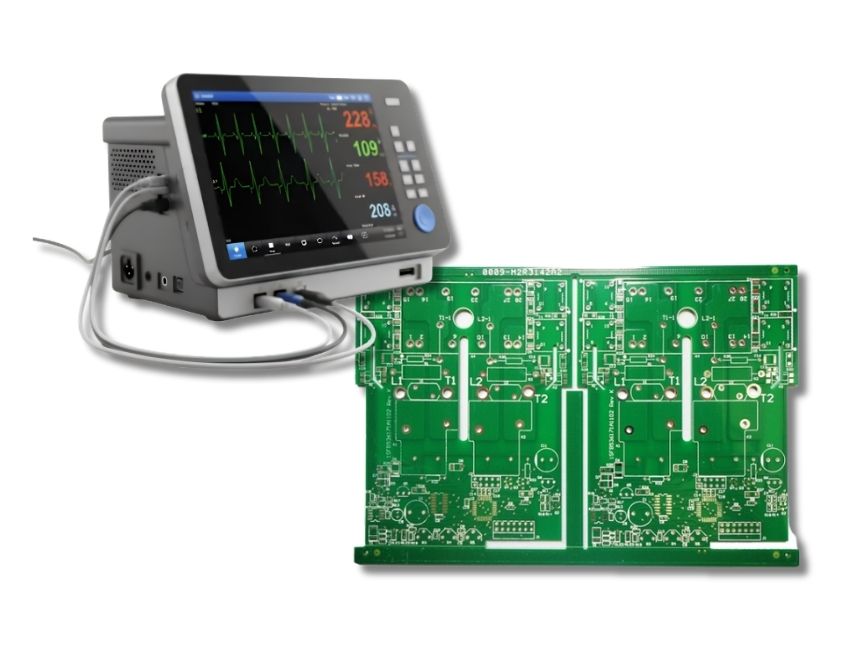
MedPCB manufactures medical PCBs using Shengyi S1000-2 high-Tg FR-4 laminates, with multilayer and HDI capabilities up to 40 layers.

• ISO 13485 Certified S1000-2 Medical PCB Manufacturing
• Shengyi S1000-2 with 180°C Tg (DSC) for Lead-Free Assembly
• Up to 40-Layer S1000-2 Multilayer PCB Manufacturing
• Excellent CAF Resistance & Low Z-Axis CTE

Shengyi S1000-2 PCB Manufacturer
Certifications
What Is Shengyi S1000-2 PCB Material?
introduction

What Is Shengyi S1000-2 PCB Material?

Shengyi S1000-2 is a high-performance FR-4 laminate produced by Shengyi Technology, with a Tg of 180°C by DSC. It is ideal for lead-free assembly and high-reliability multilayer PCBs, with low Z-axis CTE, excellent Anti-CAF performance, and low water absorption.

Medical electronics such as infusion pumps, patient monitors, and imaging systems can require higher thermal and reliability margins than standard FR-4 designs. The S1000-2 PCB material solves this with a proven high-Tg resin system and stable electrical and mechanical performance.

MedPCB provides high-precision S1000-2 PCB manufacturing and S1000-2 PCB fabrication for medical applications, supporting both prototypes and production orders.

Quality

Key Advantages of Medical-Grade S1000-2 PCBs

  • High Glass Transition Temperature for Lead-Free Assembly
  • Excellent CAF Resistance for Long-Term Field Reliability
  • Low Z-Axis Expansion for Reliable Plated Through-Holes
  • Proven Performance in High-Layer-Count Multilayer Designs
  • Low Water Absorption and Reliable Long-Term Performance
High Glass Transition Temperature for Lead-Free Assembly
The S1000-2 Tg of 180°C (DSC) provides a higher thermal margin for lead-free assembly and repeated thermal exposure. This lead-free compatible FR-4 material supports reliable medical multilayer PCB assembly under demanding thermal conditions.
Excellent CAF Resistance for Long-Term Field Reliability
Low Z-Axis Expansion for Reliable Plated Through-Holes
With a Z-axis CTE of 45 ppm/°C before Tg, S1000-2 helps limit Z-axis expansion during thermal cycling and reduce stress on plated through-hole barrels. This can help reduce thermomechanical stress on plated through-hole barrels and support long-term interconnection reliability.
Proven Performance in High-Layer-Count Multilayer Designs
S1000-2 FR4 is engineered for stable lamination and consistent registration, making it a proven multilayer PCB project. Complex medical main boards and backplanes benefit from reliable layer-to-layer alignment and consistent dielectric thickness in every multilayer S1000-2 stackup.
Low Water Absorption and Reliable Long-Term Performance
With water absorption of only 0.10%, the S1000-2 substrate minimizes moisture uptake that can degrade insulation resistance and promote CAF. Your medical PCBs retain stable S1000-2 thermal properties and dependable electrical performance over extended service life.
Why Choose Us

Why Choose MedPCB?

  • ISO 13485 Certified Manufacturing

    ISO 13485 Certified S1000-2 PCB Production

    We manufacture every medical bare board under a strict ISO 13485 quality system. Our team tracks every step of the S1000-2 PCB fabrication process to ensure full compliance with healthcare regulations.

  • Free DFM Review

    Free DFM Review

    Our engineering team reviews your Gerber files, stackup, and impedance requirements to identify potential manufacturing issues before production. We can also confirm whether the S1000-2 PCB material is the right choice for your design and recommend alternatives when needed.

  • Extensive S1000-2 Laminate and Prepreg Inventory

    Extensive S1000-2 Laminate and Prepreg Inventory

    We maintain established relationships with qualified material suppliers and flexible sourcing channels for S1000-2 laminates and prepregs. This helps us respond to material shortages and support your prototype and production requirements with greater supply flexibility.

  • Advanced Multilayer and HDI Capability

    Advanced Multilayer and HDI Capability

    We fabricate S1000-2 PCBs ranging from simple double-sided boards to 40-layer stacks with blind, buried, and stacked microvias, the equipment adapts to different S1000-2 PCB manufacturing needs.

  • Full In-House Quality Assurance and Reliability Testing

    Full In-House Quality Assurance and Reliability Testing

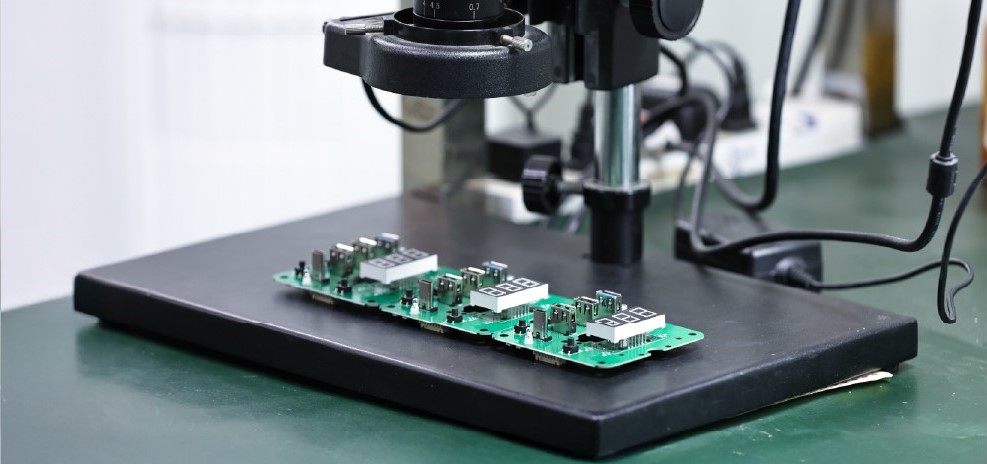
    Every lot passes AOI, electrical testing, and microsection analysis. We also support thermal stress testing, solder float testing, and other reliability verification under our ISO 13485 system.

Specs

Technical Specifications

Layer Count 1 to 40 Layers
Material Options Shengyi S1000-2 laminate and matching prepreg
Finished Board Thickness 0.2 mm to 10.0 mm
Board Size • Min: 4 mm × 8 mm (Standard: 5 mm × 10 mm)
• Max: 9 in × 23 in (Standard: 9 in × 14 in)
Minimum Trace and Space 3 mil by 3 mil
Impedance Control Tolerance Plus or minus 5 to 10 percent
Quality Standard ISO 13485, IPC Class 2 and Class 3
Via Technology Through-Hole, Blind, Buried, and Stacked Microvias
Recommended Surface Finishes ENIG, ENEPIG, HASL Lead-Free, and Immersion Silver
Available Alternative Materials KB, Shengyi, Shengyi SF305, FR408, FR408HR, IS410, FR406, GETEK, 370HR, IT180A, Rogers RO4350B, Rogers RO4000 series, and selected PTFE laminates
Medical S1000-2 PCB
Capabillities

Our Medical S1000-2 PCB Production Process

Step 1: Engineering Review & Material Verification
Our engineering team evaluates your files immediately after submission. We verify your stackup, layer count, and S1000-2 impedance control requirements, then confirm the S1000-2 laminate and prepreg thicknesses against your design before moving forward. Incoming materials are checked against supplier documentation and internal material requirements.
Step 2: Inner Layer Imaging & S1000-2 Prepreg Lamination
Step 3: Drilling, Copper Plating & Outer Layer Fabrication
Step 4: Surface Finish & Electrical Testing
Step 5: Final Inspection, Reliability Testing & Traceability
Quality Control

Common Challenges in S1000-2 Medical PCB Manufacturing

  • Lamination Process Control

    Lamination Process Control

    High-Tg resin systems require controlled temperature, pressure, and lamination time to achieve consistent curing and bonding quality.

    Our Solution: We use controlled lamination profiles for S1000-2 and monitor key process parameters to maintain consistent bonding quality and cured thickness.

  • PTH Reliability During Thermal Cycling

    PTH Reliability During Thermal Cycling

    Differences in thermal expansion between copper and the laminate can stress plated through-hole barrels during assembly and field temperature cycling.

    Our Solution: We control drilling parameters, desmear, and copper plating thickness, then verify PTH quality with microsection analysis and thermal stress testing (288°C solder dip per IPC-TM-650 2.4.13.1).

  • Registration Accuracy in High-Layer-Count Boards

    Registration Accuracy in High-Layer-Count Boards

    Material movement during lamination can shift layers and reduce alignment accuracy in complex multilayer S1000-2 stackups.

    Our Solution: We apply scale-factor compensation, use laser direct imaging with fiducial alignment, and verify layer-to-layer registration with X-ray inspection after lamination.

  • CAF and Moisture-Related Reliability

    CAF and Moisture-Related Reliability

    CAF formation requires moisture, electrical bias, and a conductive path along glass fibers. Poor drilling or desmear control can create that path.

    Our Solution: We control material handling, drilling, desmear, and hole spacing to reduce CAF-related reliability risks. CAF testing can also be arranged when required for design qualification.

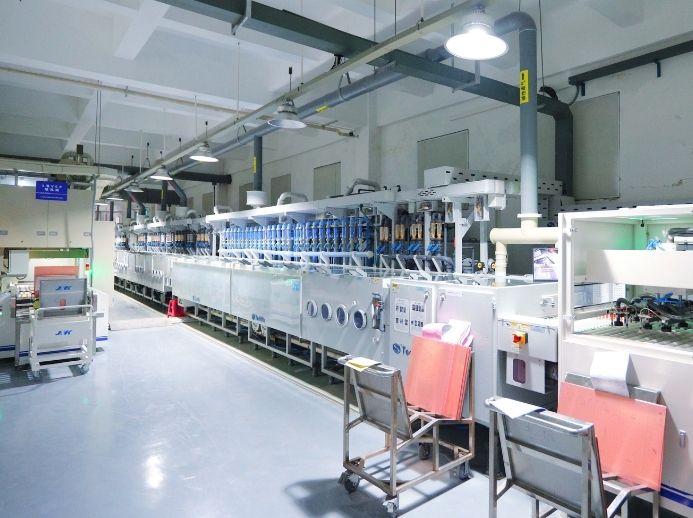
Our PCB Factory
Specifications

Shengyi S1000-2 Material Properties

The table below outlines the key S1000-2 material specifications and performance characteristics, extracted directly from the official Shengyi S1000-2 datasheet. Electrical values such as the S1000-2 dielectric constant and S1000-2 loss tangent are included for reference:

Property / Item Test Condition / Method Typical Value
Glass Transition Temp (Tg) DSC (IPC-TM-650 2.4.25) 180°C
Decomposition Temp (Td) 5% wt. loss (IPC-TM-650 2.4.24.6) 345°C
CTE (Z-axis) Before Tg (IPC-TM-650 2.4.24) 45 ppm/°C
Thermal Time to Delamination T288 via TMA (IPC-TM-650 2.4.24.1) 20 min
Dielectric Constant (Dk) 1MHz (IPC-TM-650 2.5.5.9) 4.8
Dissipation Factor (Df) 1MHz (IPC-TM-650 2.5.5.9) 0.013
Water Absorption E-1/105+D-24/23 (IPC-TM-650 2.6.2.1) 0.10%
Flammability UL94 (E-24/125) V-0

Need a Shengyi S1000-2 PCB for your medical device? Send us your Gerber files for a free DFM review and quote.

Case Study

Medical S1000-2 PCB Case Studies

  • High-Tg Multilayer Main Board for Portable Patient Monitor
    High-Tg Multilayer Main Board for Portable Patient Monitor High-Tg Multilayer Main Board for Portable Patient Monitor

    High-Tg Multilayer Main Board for Portable Patient Monitor

    A client needed a dense 12-layer main board that could withstand lead-free assembly and constant field use. We fabricated it on S1000-2 with ENIG finish, and it passed full thermal stress testing and 100% electrical test with zero defects.

  • Halogen-Free Backplane for Ultrasound Imaging Console
    Halogen-Free Backplane for Ultrasound Imaging Console Halogen-Free Backplane for Ultrasound Imaging Console

    Halogen-Free Backplane for Ultrasound Imaging Console

    We built a 16-layer halogen-free S1000-2 backplane for a diagnostic imaging console. Controlled lamination parameters and X-ray registration checks delivered accurate layer alignment across the full panel.

  • Ultra-Thin HDI PCB for Wearable Cardiac Telemetry Patch
    Ultra-Thin HDI PCB for Wearable Cardiac Telemetry Patch Ultra-Thin HDI PCB for Wearable Cardiac Telemetry Patch

    Ultra-Thin HDI PCB for Wearable Cardiac Telemetry Patch

    A wearable cardiac monitor required a compact HDI board. We delivered an ultra-thin S1000-2 design with laser-drilled stacked microvias, meeting tight thickness targets while preserving full electrical performance.

  • CAF-Resistant Control Board for Smart Infusion Pump
    CAF-Resistant Control Board for Smart Infusion Pump CAF-Resistant Control Board for Smart Infusion Pump

    CAF-Resistant Control Board for Smart Infusion Pump

    For a safety-critical infusion pump, we fabricated a CAF-resistant control board on S1000-2 and supported qualification with 85°C/85% RH testing. The boards passed without shorts, confirming long-term reliability in humid environments.

Faqs

Frequently Asked Questions

Our Medical S1000-2 PCB FAQ addresses key questions regarding material properties and fabrication standards. We cover high-Tg FR-4 characteristics (180°C Tg), lead-free assembly performance, CAF resistance, Z-axis thermal expansion, multilayer and HDI capabilities up to 40 layers, strict ISO 13485 quality compliance, and DFM support. For every medical S1000-2 PCB project, we guarantee high-precision bare board manufacturing engineered for critical healthcare applications.

1. Why Is S1000-2 Suitable for Medical Device PCBs?
Medical devices require bare boards that survive lead-free assembly and years of continuous operation. The S1000-2 PCB material combines a 180°C glass transition temperature, low Z-axis expansion, excellent CAF resistance, and low water absorption, making it a proven high reliability PCB substrate for medical electronics.
2. What Is the Glass Transition Temperature of S1000-2?
The S1000-2 glass transition temperature is 180°C measured by DSC per IPC-TM-650 2.4.25, with a decomposition temperature of 345°C. This high Tg keeps the laminate rigid and stable during lead-free reflow soldering.
3. What Is the Difference Between S1000-2 and S1000-2M?
Both Shengyi S1000-2 and S1000-2M are high-Tg FR-4 materials. S1000-2 is designed for high-reliability multilayer PCB applications, while S1000-2M is optimized for HDI applications. The best choice depends on your layer structure, microvia design, electrical requirements, and manufacturing process. PCBMay can review your stackup and recommend the more suitable material.
4. How Does S1000-2 Compare to Standard FR4?

Standard FR-4 typically has a Tg of 130°C-150°C with higher Z-axis thermal expansion, limiting thermal tolerance during lead-free assembly. Shengyi S1000-2 offers 180°C Tg and lower Z-axis CTE, expanding your process window and preserving via integrity through multiple reflow cycles. It provides strong CAF performance and long-term reliability suitable for medical electronics.

Criteria Standard FR-4 S1000-2
Tg (DSC) 130 to 150°C 180°C
Dk / Df @ 1 MHz 4.5 to 4.8 / 0.017 to 0.020 4.8 / 0.013
Lead-Free Assembly Marginal Excellent
CAF Resistance Moderate Excellent
Cost Low Moderate
Best For Consumer and simple designs Reliable medical multilayer PCBs
5. Is S1000-2 Suitable for Multilayer and HDI PCBs?
Yes. S1000-2 supports up to 40 layers, and its thin S1000-2 prepreg options enable laser drilling of blind, buried, and stacked microvias for HDI designs.
6. What Is CAF Resistance and Why Does It Matter for Medical PCBs?
CAF (conductive anodic filament) is a failure mode where copper filaments grow along glass fiber interfaces under humidity and electrical bias, causing short circuits. Medical devices that operate for years in humid environments cannot tolerate this. The S1000-2 substrate's strong resin-to-glass bonding resists CAF formation.
7. Are S1000-2 Medical PCBs RoHS and REACH Compliant?
Yes. S1000-2 is a halogen-free, RoHS compliant PCB laminate and fully compatible with lead-free assembly processes and finishes. All our boards comply with RoHS and REACH environmental regulations.
8. How Do You Ensure PTH Reliability in Thick S1000-2 Multilayer Boards?
We control drilling parameters, desmear, and copper plating thickness throughout the process. Every lot is verified with microsection analysis and thermal stress testing at 288°C per IPC-TM-650 2.4.13.1, and IST testing is available on request.
9. If We Are Unsure of Our Tg Requirements, Can Your Experts Help Us?
Absolutely. Our engineering team reviews your application, assembly process, and reliability requirements during DFM and recommends the right laminate. If your design doesn't need 180°C Tg, we'll tell you and suggest cost-effective alternatives.

Product Related