Medical-Grade Through-Hole Assembly

MedPCB provides ISO 13485-certified through-hole PCB assembly services for medical devices requiring high mechanical strength, secure connector mounting, and reliable power handling. Our precision wave and selective soldering processes deliver consistent IPC-A-610 Class 3 quality for medical electronics.

• ISO 13485 Certified Medical Manufacturing
• Precision Selective and Dual-Wave Soldering
• Automated Optical (AOI) and X-Ray Inspection
• Custom Lead Forming and Component Staking
• Complete Traceability and Quality Documentation

Medical-Grade Through-Hole PCB Assembly
Certifications
Why Choose Through-Hole Assembly for Medical Devices?
introduction

Why Choose Through-Hole Assembly for Medical Devices?

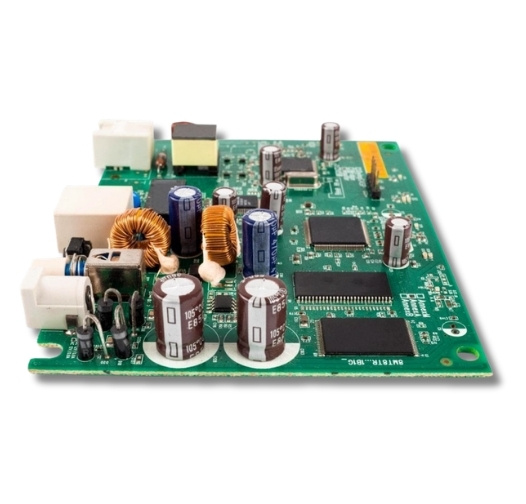
While Surface Mount Technology (SMT) dominates miniaturized electronics, Through-Hole Technology (THT) remains indispensable for medical devices that endure high physical stress, elevated voltages, or extreme operating environments. THT involves inserting component leads through drilled, plated holes in the printed circuit board (PCB) and soldering them to pads on the opposite side.

For medical engineers, this means unparalleled mechanical strength for user-facing connectors and superior thermal mass for high-power components. Through-hole assembly helps maintain reliable electrical and mechanical connections in demanding medical environments, including patient monitoring systems, surgical equipment, and high-power diagnostic devices.

Quality

Benefits of Through-Hole PCB Assembly for Medical Devices

  • Enhanced Mechanical Strength for Medical Connectors
  • High-Power and High-Voltage Reliability
  • Long-Term Reliability Under Mechanical and Thermal Stress
  • Support for Legacy, Custom, and Large Components
Enhanced Mechanical Strength for Medical Connectors
Cables, plugs, and interfaces in medical environments are constantly plugged, unplugged, and sometimes accidentally pulled by clinical staff. Through-hole soldering anchors these connectors securely through the PCB, preventing pad lift and mechanical failure that would easily tear a surface-mount component off the board.
High-Power and High-Voltage Reliability
Long-Term Reliability Under Mechanical and Thermal Stress
Support for Mixed-Technology Medical Assemblies
Why Choose Us

Why Choose MedPCB?

  • ISO 13485 Certified Manufacturing

    ISO 13485 Certified Manufacturing

    Our entire facility operates under a strict ISO 13485 quality management system dedicated to medical device manufacturing. Every stage of our through-hole assembly process is documented, controlled, and optimized to support the rigorous demands of the healthcare sector.

  • IPC-A-610 Class 3 Quality Acceptance

    IPC-A-610 Class 3 Quality Acceptance

    Medical electronics allow zero room for error. We manufacture and inspect all medical assemblies to IPC-A-610 Class 3 standards, mandating perfect solder fill, proper wetting, and strict tolerances for component placement to ensure absolute reliability.

  • Advanced Wave & Selective Soldering Technology

    Advanced Wave & Selective Soldering Technology

    We utilize computer-controlled dual-wave soldering machines for highly efficient mass production, alongside advanced multi-axis selective soldering systems. Selective soldering allows us to precision-solder through-hole pins on densely populated, mixed-technology (SMT/THT) boards without thermally stressing adjacent sensitive medical microprocessors.

  • Medical-Grade Component Sourcing & BOM Support

    Medical-Grade Component Sourcing & BOM Support

    We source components from authorized distributors and qualified suppliers with full lot traceability. Our engineering team reviews every BOM for lifecycle status, availability, and approved alternatives to reduce supply risks while maintaining compliance with medical manufacturing requirements.

Specs

Technical Specifications

Order Quantity ≥1 PCS (Prototype, Low-Volume, Mass Production)
Soldering Technology Manual Soldering, Dual-Wave Soldering, Selective Soldering
Component Types Axial, Radial, SIP, DIP, Connectors, Relays, Transformers, Custom Heavy Parts
PCB Technologies Rigid, Flex, Rigid-Flex, High-TG, Heavy Copper (up to 10oz+)
Solder Chemistry Lead-Free (RoHS), Tin-Lead (for exempt medical devices), Water-Soluble, No-Clean
Mechanical Reinforcement Component staking, custom heat sink mounting
Additional Services Conformal Coating, Potting
Inspection Standards High-Mag Visual, AOI, X-Ray (for barrel fill verification), FAI
Quality Compliance ISO 13485, ISO 9001:2015, IPC-A-610 Class 3, RoHS
Medical Through-Hole PCB Assembly
Capabilities

Our Medical Through-Hole PCB Assembly Process

Engineering Review & Component Preparation
Our engineers perform a comprehensive Design for Manufacturability (DFM) review, analyzing hole sizes, thermal reliefs, and component clearances. Components are then prepped, which includes baking moisture-sensitive parts and clipping/forming leads to exact specifications to reduce stress on the medical PCB during insertion.
Manual Component Preparation & Insertion
Precision Wave and Selective Soldering
Depending on your PCB design, we use automated wave soldering or precision selective soldering for through-hole components. We optimize the soldering profile for each medical PCB to ensure reliable through-hole solder joints while minimizing thermal stress on sensitive components.
Post-Solder Cleaning and Ionic Contamination Testing
Boards are processed through high-pressure aqueous inline cleaners to strip away all active flux residues. We conduct strict ionic contamination testing to guarantee the board meets medical cleanliness standards, eliminating the risk of long-term electrochemical migration.
Final Inspection, Trimming and Functional Validation
Excess leads are trimmed to required IPC tolerances. Boards undergo rigorous visual and automated inspections before advancing to custom In-Circuit Testing (ICT) or Functional Testing (FCT), ensuring the assembly performs exactly as required by the medical device manufacturer.
Quality Control

Challenges in Medical Through-Hole PCB Assembly

  • Through-Hole Solder Fill Reliability

    Through-Hole Solder Fill Reliability

    Thick medical PCBs and heavy copper layers act as heat sinks, making it difficult for solder to wick entirely up the plated through-hole, risking a weak joint.

    Our Solution: We engineer precise pre-heating profiles and utilize specialized wave/selective soldering nozzles to ensure optimal thermal energy transfer, guaranteeing the 75%+ vertical solder fill required by IPC Class 3.

  • Preventing Thermal Damage to Sensitive Components

    Preventing Thermal Damage to Sensitive Components

    Modern medical boards often mix dense SMT microprocessors with heavy THT power connectors. Traditional wave soldering risks remelting or damaging the sensitive SMT parts.

    Our Solution: We utilize highly precise, multi-axis selective soldering robots that apply molten solder only to specific through-hole pins, completely isolating and protecting the surrounding miniaturized components.

  • Thermal Expansion and Warpage Control

    Complete Flux Removal for Patient Safety and Board Lifespan

    Any remaining flux on a medical device can absorb moisture and cause catastrophic electrical shorts. High-density component placement makes thorough cleaning difficult.

    Our Solution: We use multi-stage DI water wash systems with precision spray angles and saponifiers designed specifically to penetrate under heavy components. We validate cleanliness with continuous ionic testing.

  • BGA Rework and Repair Challenges

    Mechanical Reliability of Heavy Components

    Large transformers and tall capacitors used in medical power supplies can vibrate or break their solder joints if the device is dropped or moved frequently.

    Our Solution: We provide medical-grade potting, epoxy component staking, and conformal coating services. These structural reinforcements secure heavy components to the board, helping reduce mechanical stress on solder joints during long-term operation.

Our Medical Prototype Assembly Process
quality

Quality Inspection Methods for Medical Through-Hole PCB Assembly


Automated Optical Inspection (AOI)

We run inline AOI scanning after soldering to confirm through-hole component placement and polarity, identifying missing parts, solder bridges and other surface defects.

Advanced X-Ray Inspection

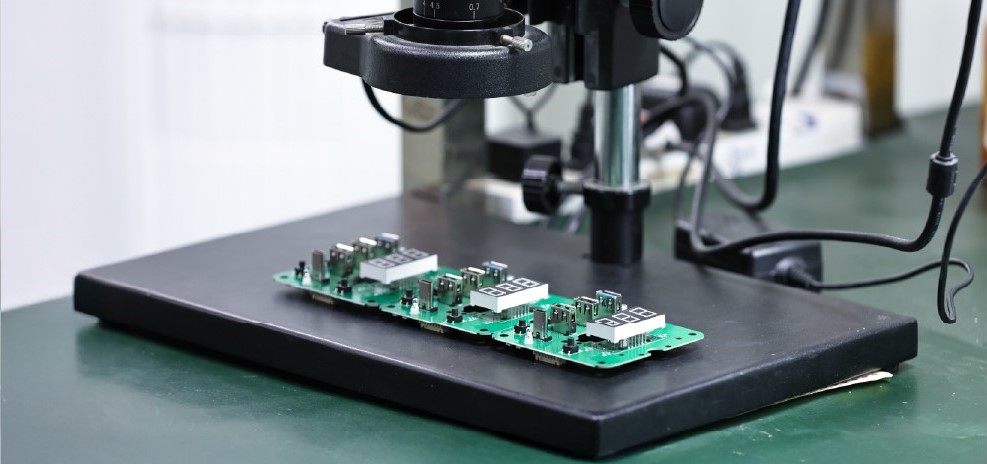
We use 3D X-ray equipment to inspect hidden barrel solder fill on thick multi-layer medical through-hole pins that visual checks cannot reach.

Electrical Testing & ICT & FCT

We offer comprehensive In-Circuit Testing (ICT) to verify individual component values, as well as Custom Functional Testing (FCT) designed to simulate the board's real-world medical application, ensuring flawless power delivery and signal integrity.

Looking for a dependable assembly partner with integrated testing solutions? Share your project details with us today for a quotation.

Case Study

Medical Through-Hole PCB Assembly Cases

  • Dialysis Machine High-Current Power PCBA
    Dialysis Machine High-Current Power PCBA Dialysis Machine High-Current Power PCBA

    Dialysis Machine High-Current Power PCBA

    We manufactured a complex, heavy-copper power distribution board for a clinical dialysis machine. By utilizing custom titanium wave soldering pallets and optimized pre-heating profiles, we achieved 100% IPC Class 3 solder fill on massive through-hole inductors without warping the substrate.

  • EMS Field Monitor Connector Reinforcement
    EMS Field Monitor Connector Reinforcement EMS Field Monitor Connector Reinforcement

    EMS Field Monitor Connector Reinforcement

    A client's portable vital signs monitor was experiencing field failures due to surface-mount connectors tearing off during emergency use. We redesigned the interface to utilize through-hole connectors with specialized epoxy staking, completely eliminating mechanical failure during drop tests.

  • 14-Layer MRI Controller Solder Optimization
    14-Layer MRI Controller Solder Optimization 14-Layer MRI Controller Solder Optimization

    14-Layer MRI Controller Solder Optimization

    Tasked with assembling a mixed-technology 14-layer board, standard wave soldering risked destroying the sensitive SMT processors. We deployed our robotic selective soldering system, safely securing the THT interface ports while protecting the core processing chips.

  • Infusion Pump Legacy Component Assembly
    Infusion Pump Legacy Component Assembly Infusion Pump Legacy Component Assembly

    Infusion Pump Legacy Component Assembly

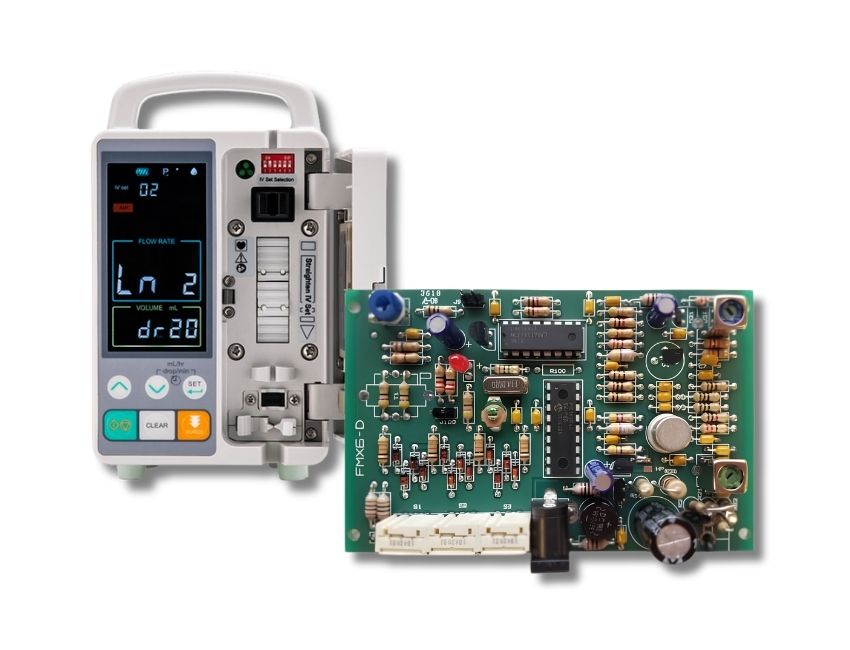
    A manufacturer of a widely used, FDA-approved infusion pump required assembly of a legacy design relying heavily on obsolete axial and radial components. We secured the supply chain for these parts and utilized precision manual insertion and wave soldering to keep their critical production line running seamlessly.

Faqs

Frequently Asked Questions

Our Medical Through-Hole PCB Assembly FAQ addresses essential questions regarding your manufacturing requirements. We cover our capabilities for high-reliability medical electronics, manual and automated leaded component insertion, wave and selective soldering, mechanical component securing, rigorous quality inspection protocols, and our capacity to scale from prototype builds to volume production batches. For every medical device project, we guarantee precision-focused, medical-grade assembly standards.

1. What Is the Difference Between SMT And Through-Hole for Medical PCBs?

The primary difference between Surface Mount Technology (SMT) and Through-Hole Technology (THT) lies in how the components are physically attached to the circuit board, which dictates their mechanical strength, size, and power capabilities in medical applications.

Here is the breakdown of how they compare:

Feature

Surface Mount Technology (SMT)

Through-Hole Technology (THT)

Mounting Style

Soldered directly to surface pads

Leads fed through drilled board holes

Primary Benefit

Miniaturization and speed

Mechanical strength and power handling

Best Medical Uses

Implantables, wearables, microprocessors

Defibrillators, power supplies, I/O ports

Heat/Power

Lower thermal mass, lower power

High thermal mass, high voltage

Assembly Speed

Extremely fast, fully automated

Slower, often requires selective/wave

2. How Do You Guarantee IPC Class 3 Solder Fill Requirements?

We achieve the required 75%+ vertical solder fill through meticulous thermal profiling, optimized flux application, and strict control of our wave and selective soldering pre-heaters. We verify this via X-ray inspection on heavy thermal-mass boards.

3. Do You Offer Mixed-Technology (SMT And THT) Medical PCB Assembly?

Yes, the vast majority of modern medical boards are mixed-technology. We seamlessly integrate both processes, placing SMT components first, followed by automated selective soldering to attach the THT components without melting the SMT joints.

4. How Do You Clean Medical PCBs to Prevent Ionic Contamination?

We use closed-loop aqueous cleaning systems with medical-grade saponifiers. To guarantee cleanliness, we perform Resistivity of Solvent Extract (ROSE) testing to ensure ionic residues are well below the strict thresholds required for medical safety.

5. Can You Safely Assemble Heavy or Custom Through-Hole Components?

Yes. For unusually heavy components like large transformers, we offer custom lead forming, manual insertion, and mechanical reinforcement techniques such as epoxy staking and potting to ensure they survive mechanical shock.

6. Do You Handle Lead-Free (RoHS) Through-Hole Soldering for Healthcare Devices?

Yes. We have dedicated lead-free (RoHS compliant) wave and selective soldering lines to prevent cross-contamination. However, if your specific medical device has an FDA exemption requiring traditional tin-lead solder, we have dedicated leaded lines available as well.

7. How Is Traceability Maintained During the Manual Through-Hole Assembly Process?

Our Manufacturing Execution System (MES) tracks every step of the process. Even for manual insertions, operators scan component barcodes and link them to the specific PCB serial number, ensuring complete batch traceability for ISO 13485 compliance.

8. Do You Offer Conformal Coating or Potting for Medical Through-Hole Boards?

Yes, we offer both. Conformal coating protects the THT joints from moisture, bodily fluids, and chemical sterilization, while potting is used to fully encapsulate high-voltage areas or secure heavy components against extreme vibration.

9. Can Your Facility Support Low-Volume, High-Mix Medical Manufacturing?

Yes, we specialize in low-volume, high-mix production common in specialized medical device manufacturing. Our selective soldering systems and agile changeover protocols allow us to efficiently produce complex THT prototypes and small clinical-trial batches.

Product Related