1. Is SF305 a Rigid or Flexible Laminate?
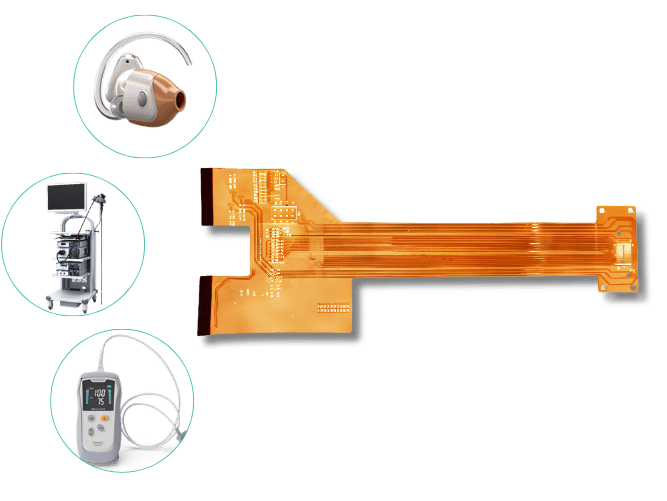
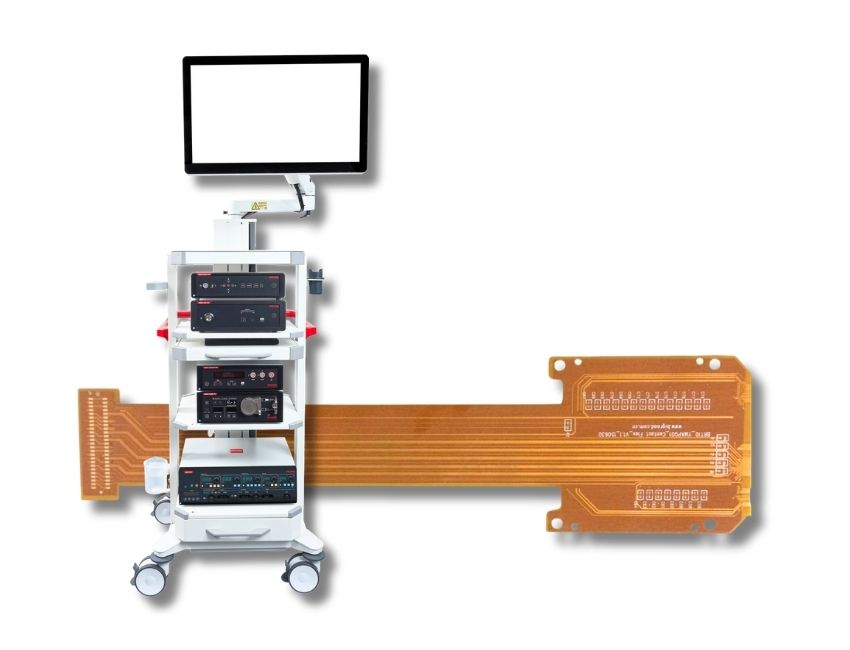
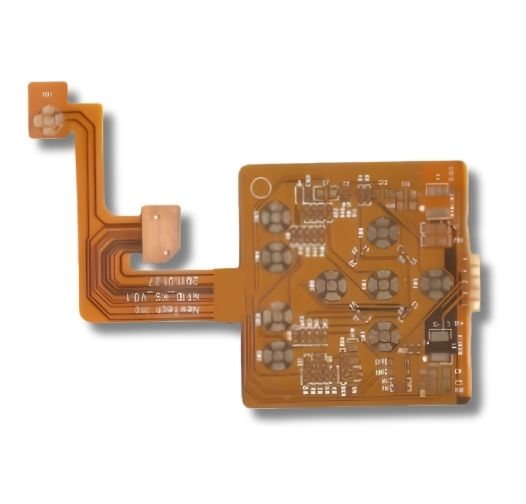
SF305 is a flexible laminate. It is a Shengyi flexible copper-clad laminate that bonds copper foil to a halogen-free polyimide film, used for flex circuits and the flex layers of rigid-flex boards.
2. Why Is SF305 Suitable for Medical Wearables?
SF305 suits medical wearables because it combines a UL 94 V-0 halogen-free base film with a volume resistivity of ≥ 10^6 MΩ·cm and low moisture absorption. Insulation resistance stays stable during skin contact.
3. Is SF305 Halogen-Free?
Yes. SF305 uses a halogen-free polyimide base film and is rated UL 94 V-0. MedPCB issues RoHS and REACH declarations for the laminate lot used on your order.
4. What Is the Difference Between SF305 and SF302?
Both are Shengyi flexible copper-clad laminates, differing in construction and in the properties published for each grade. Controlling values change between datasheet revisions, so MedPCB confirms current figures for both grades with Shengyi on request.
5. Can SF305 Be Used in Multilayer Flex PCBs?
Yes. MedPCB builds SF305 in flex constructions of 1-8 layers and rigid-flex constructions of 4-20 layers, with up to 18 flex layers.
6. What Is the Maximum Operating Temperature of SF305?
Shengyi does not publish a single maximum continuous operating temperature for SF305. The laminate withstands thermal stress testing at 300°C for 30 s without delamination and is compatible with lead-free processing, which describes process conditions rather than a continuous rating. Request the current datasheet revision from MedPCB.
7. What Surface Finishes Are Recommended for SF305 Flex PCBs?
ENIG and ENEPIG are the usual finishes for medical SF305 flex circuits, because both are flat and stable for fine geometry and wire bonding. Soft and hard gold suit electrode surfaces, and immersion silver, immersion tin, OSP, and HASL are available.
8. What Is the Minimum Trace Width and Spacing on SF305?
As part of our manufacturing capabilities, MedPCB produces 2.8 / 2.7 mil line and space on both inner and outer flex layers using 18 µm copper. For rigid-flex boards, our capabilities allow for 3.0 / 3.0 mil on inner layers and 3.2 / 3.6 mil on outer layers.
9. Are SF305 Flex PCBs Suitable for Repeated Sterilization?
SF305 is polyimide-based and withstands lead-free soldering temperatures, which indicates tolerance to autoclave temperature. Sterilization compatibility is a property of the finished construction, including coverlay, finish, and stiffener adhesive, so it must be qualified on the device.
10. Do You Provide Impedance Test Coupons for SF305 Flex PCBs?
Yes. MedPCB supplies time-domain reflectometry coupons whenever impedance is specified, reporting measured values against ±3Ω single-ended and ±4Ω differential at ≤50Ω, or ±8% above 50Ω.