Life Science Instrumentation PCB

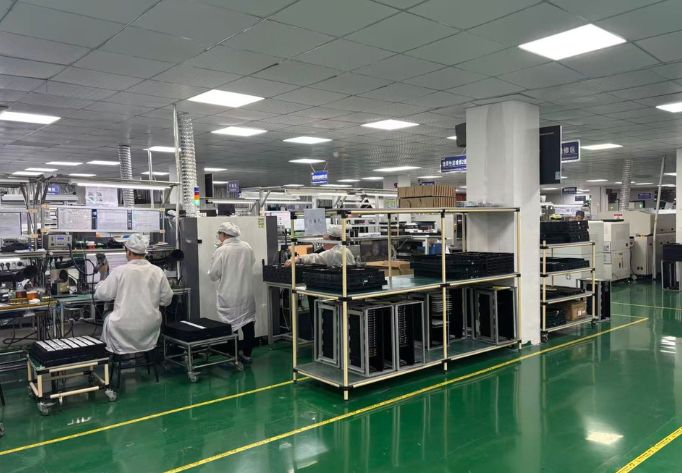
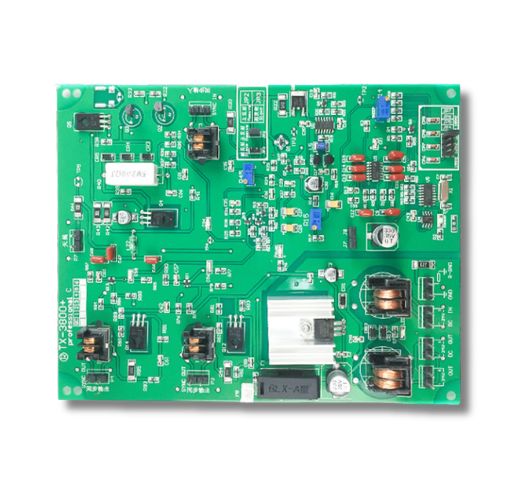
MedPCB manufactures and assembles PCBs for life science, diagnostic, and analytical instrumentation. We support high-density, high-frequency, and high-power technologies, providing reliable fabrication and assembly for critical lab and medical equipment.

✓ Full & Partial Turnkey, Consignment PCB Assembly 
✓ Multilayer, HDI, High-Power & High-Frequency PCB Fabrication 
✓ Fine-Pitch SMT, BGA, QFN & THT Assembly
✓ Strict Traceability & Component Sourcing Assurance 
✓ ISO 13485 & IPC Class 2/3 PCB Manufacturing & Assembly

Life Science Instrumentation PCB
Case Study

Life Science Instrumentation Case Studies

  • Automated Protein Digestion Instrumentation PCB 
    Automated Protein Digestion Instrumentation PCB  Automated Protein Digestion Instrumentation 

    Automated Protein Digestion Instrumentation PCB 

    For a liquid-handling automation platform, MedPCB manufactured an 8-layer HDI rigid PCB using high-Tg FR-4 material. The design incorporated 0.10 mm microvias, controlled impedance traces, and fine-pitch SMT assembly to support precise thermal control and multi-channel robotic actuator driver circuits.

  • Spectroscopy 
    Spectroscopy PCB  Spectroscopy

    Spectroscopy PCB 

    MedPCB manufactured a low-noise 6-layer PCB for optical signal acquisition. The board used controlled impedance where required, fine-line routing, optimized layer registration, and precision SMT assembly, followed by 100% AOI inspection to support stable detector and data-acquisition circuitry.

  • Array Printing 
    Array Printing PCB  Array Printing

    Array Printing PCB 

    For a high-throughput microarray dispenser, we produced a 10-layer HDI PCB featuring laser-drilled microvias and 0.075 mm trace/space tolerances. MedPCB managed turnkey component sourcing and fine-pitch BGA placement to deliver precise fluidic micro-dispensing and position control.

  • Protein Electrophoresis 
    Protein Electrophoresis PCB  Protein Electrophoresis 

    Protein Electrophoresis PCB 

    MedPCB fabricated a 6-layer heavy-copper PCB (3oz outer layers) on high-Tg FR-4 for high-voltage protein separation equipment. The design integrated custom creepage and clearance spacing alongside SMT and THT assembly, passing strict high-voltage isolation and electrical safety testing.

  • Cryogenic Sample Preparation 
    Cryogenic Sample Preparation PCB  Cryogenic Sample Preparation 

    Cryogenic Sample Preparation PCB 

    MedPCB manufactured a 6-layer PCB for sample-preparation equipment exposed to repeated temperature cycling. Material selection, soldering profiles, conformal coating, and assembly controls were defined to support mechanical stability under the specified operating conditions.

  • Medical Centrifuge System
    Medical Centrifuge System PCB  Medical Centrifuge System 

    Medical Centrifuge System PCB 

    For a high-speed lab centrifuge, MedPCB supplied a 8-layer high-power rigid PCB engineered for vibration resistance and motor control efficiency. The assembly featured heavy-copper power planes, reinforced SMT solder joints, and full functional testing under active load conditions.

PCB Manufacturing for Life Science Instrumentation
introduction

PCB Manufacturing for Life Science Instrumentation

Life science instrumentation encompasses the specialized analytical tools, diagnostic equipment, and automated systems used to process, measure, and analyze biological samples.

These advanced instruments rely on circuit boards that can deliver precise signal processing, stable power delivery, and high-density component layout within compact form factors. PCB materials and stack-ups must be selected to withstand continuous operation, minimize signal noise, and support delicate fluidic or optical sensors.

MedPCB manufactures and assembles flex, rigid-flex, and HDI PCBs for life science instrumentation from prototypes to full production. We comply with ISO 13485 and IPC Class 2/3 standards. Need a PCB for your life science instrumentation? Send us your Gerber files and BOM for a manufacturing and assembly review.

Specs

Why Choose MedPCB for Life Science Instrumentation PCBs

  • ISO 13485 Quality Management

    ISO 13485 Quality Management

    MedPCB manufactures and assembles life science PCBAs under an ISO 13485 quality management system. Controlled production processes, inspections, and documentation help maintain consistent quality and support the requirements of critical laboratory and diagnostic equipment.

  • Turnkey PCB Assembly

    Turnkey PCB Assembly

    MedPCB provides turnkey PCB assembly from component sourcing and PCB fabrication to SMT assembly, inspection, and testing. This gives you a single manufacturing partner while helping maintain consistent processes across the complete PCBA production cycle.

  • Free DFM & DFA Review

    Free DFM & DFA Review

    Our engineering team reviews your PCB design for manufacturability and assembly before production begins. The review helps identify layout, component placement, clearance, and assembly issues early, reducing potential rework and production delays.

  • Component Sourcing & Traceability

    Component Sourcing & Traceability

    MedPCB supports component sourcing with controlled material tracking throughout the manufacturing process. Traceability helps verify component information, maintain production records, and support consistent material quality for life science instrumentation.

Controlled Process

Manufacturing Challenges for Life Science Instrumentation PCBs

MedPCB delivers end-to-end electronic manufacturing services combining precision board fabrication, hybrid assembly, and rigorous quality controls designed specifically to solve the complex electrical, thermal, and mechanical challenges of life science and analytical equipment.

Get Instant Quote
  • Fine-Pitch and High-Density Assembly
    Fine-Pitch and High-Density Assembly

    Fine-Pitch and High-Density Assembly

    Life science instruments often require compact PCBs with fine-pitch components, dense routing, and limited board space. Small component packages and tight spacing increase the need for precise placement and controlled soldering processes.

    MedPCB Solution:
    MedPCB uses precision SMT assembly, solder paste inspection (SPI), AOI, and X-ray inspection where required. Our DFM/DFA review also helps identify spacing, footprint, and assembly concerns before production.

  • Mixed-Signal and High-Power PCB Production
    Mixed-Signal and High-Power PCB Production

    Mixed-Signal and High-Power PCB Production

    Life science instruments may combine sensitive analog circuits, digital processing, and high-power sections on the same PCB. Poor layout or thermal control can introduce noise, signal interference, and unwanted heat.

    MedPCB Solution:
    MedPCB controls dielectric thickness, copper weight, impedance, registration, and other fabrication parameters according to approved PCB specifications. Manufacturing reviews verify that specified stackups and isolation requirements can be produced consistently.

  • High-Voltage and Isolation Requirements
    High-Voltage and Isolation Requirements

    High-Voltage and Isolation Requirements

    Some laboratory and analytical instruments operate with high-voltage circuits that require proper spacing and electrical isolation. Insufficient clearance or incorrect PCB construction can increase the risk of arcing, leakage, or electrical failure.

    MedPCB Solution:
    MedPCB reviews creepage, clearance, insulation, and layer construction based on your design requirements. Controlled fabrication and inspection help maintain the required spacing and isolation features throughout production.

  • Complex SMT and THT Assembly
    Complex SMT and THT Assembly

    Complex SMT and THT Assembly

    Life science instrumentation can combine fine-pitch SMT components with connectors, transformers, large components, and other THT parts. Managing both technologies requires accurate placement and consistent soldering processes.

    MedPCB Solution:
    MedPCB supports both SMT, THT and Mixed assembly within the same production process. Automated placement, soldering, inspection, and testing help ensure components are assembled correctly and meet your production requirements.

  • Reliable Production for Continuous Operation
    Reliable Production for Continuous Operation

    Reliable Production for Continuous Operation

    Many laboratory and analytical instruments are designed for long operating cycles and consistent measurement performance. PCB assemblies must therefore provide stable electrical performance and withstand continuous operation without premature failures.

    MedPCB Solution:
    MedPCB applies controlled manufacturing, inspection, and testing processes throughout PCB production. Traceability and documented quality controls help maintain consistency from incoming materials through final PCBA testing, supporting reliable assemblies for continuous-use instrumentation.

Products

Technologies We Support for Life Science Instrumentation

MedPCB provides advanced printed circuit board fabrication and assembly services specifically tailored to the rigorous demands of life science, analytical, and medical instrumentation. 

  • HDI & Microvia PCB
  • High-Frequency & Low-Loss PCB
  • Heavy Copper & High-Power PCB
  • Rigid-Flex & Flex PCB
  • Fine-Pitch SMT Assembly
HDI & Microvia PCB
MedPCB manufactures HDI PCBs with fine-line routing, laser-drilled microvias, blind and buried vias, and via-in-pad structures for compact life science instrumentation. These technologies support dense interconnections and high component density within limited board space.
High-Frequency & Low-Loss PCB
Heavy Copper & High-Power PCB
Rigid-Flex & Flex PCB
MedPCB manufactures flex and rigid-flex PCBs for instruments that require compact interconnections, moving assemblies, or complex mechanical layouts. We support multilayer constructions, stiffeners, controlled flex-to-rigid transitions, and fine-line fabrication according to project requirements.
Fine-Pitch SMT Assembly
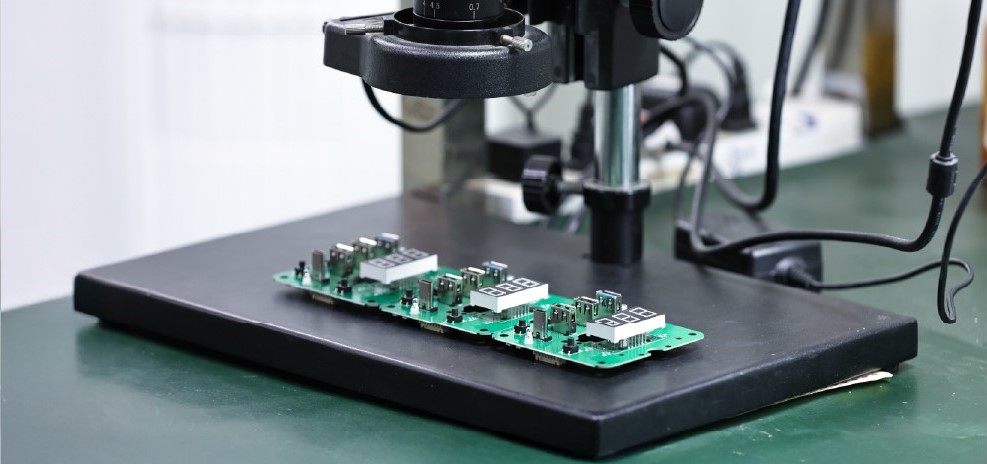
Fine-pitch SMT assembly allows more components to be placed within a limited PCB footprint. MedPCB uses precision placement and inspection processes, including SPI, AOI, and X-ray inspection where required, to support accurate and reliable assembly.
Capabilities

MedPCB’s Testing & Quality Control for Life Science Instrumentation PCBs

  • SPI & AOI Inspection

    MedPCB uses solder paste inspection (SPI) and automated optical inspection (AOI) to verify PCB assembly quality. SPI checks solder paste volume and placement, while AOI verifies component placement, polarity, solder joints, and other visible assembly defects.

    Get Instant Quote
    SPI & AOI Inspection
  • X-Ray Inspection

    X-ray inspection allows MedPCB to examine solder joints and connections that are hidden from standard optical inspection. It is especially useful for BGA packages, bottom-terminated components, and other assemblies where internal solder quality must be verified.

    Get Instant Quote
    X-Ray Inspection
  • Flying Probe / ICT

    Flying probe and in-circuit testing (ICT) provide detailed checks of PCB electrical performance and component connections. MedPCB uses the appropriate test method based on board complexity, production volume, and available test points.

    Get Instant Quote
    Flying Probe / ICT
  • Functional Testing

    Functional testing confirms that the completed PCBA performs according to its intended operating requirements. MedPCB can support customized testing based on your instrument’s functions, operating conditions, and specific performance criteria.

    Get Instant Quote
    Functional Testing
Specs

Technical Specifications

Specification

MedPCB Capability

Order Quantity

1 piece to high-volume production; no MOQ

Quality Standards

ISO 13485, IPC-A-610 Class 2 & 3, RoHS and REACH compliant

Lead Time

Standard production from 3–4 days; quick-turn manufacturing available

PCB Types

Rigid, Flexible, Rigid-Flex, HDI, High-Tg, and multilayer PCBs

Maximum Board Size

Up to 1500 × 500 mm

Assembly Methods

SMT, Through-Hole (THT), and mixed-technology assembly

Component Support

01005, BGA, uBGA, LGA, CSP, QFN, QFP, and larger packages

Component Sourcing

Full, partial, or customer-supplied/kitted components; 300,000+ components in stock

Surface Finishes

HASL, Lead-Free HASL, ENIG, OSP, Immersion Silver, and Immersion Tin

Conformal Coating

Available for moisture, chemical, dust, and environmental protection

Traceability

Lot and process traceability for components, materials, assembly, inspection, and test records

ESD Control

Controlled ESD protection throughout PCB assembly and handling

Manufacturing Capability

Prototype, low-volume, pilot, and high-volume PCB/PCBA production

Get Instant Quote
Technical Specifications
Faqs

Frequently Asked Questions

Our life science instrumentation FAQ addresses essential questions regarding our manufacturing and assembly capabilities for laboratory, diagnostic, and biotech devices. We cover critical topics including component sourcing, testing options, strict ISO 13485 quality systems, thermal and signal management, and compliance with RoHS and REACH standards.

1. Do You Provide Turnkey PCB Assembly for Laboratory and Analytical Equipment?
Yes. MedPCB provides turnkey PCB assembly for laboratory and analytical equipment, covering the complete process from component sourcing and PCB fabrication to SMT/THT assembly, inspection, and testing. 
2. What Should I Consider When Designing A PCB For Medical Or Biotech Devices?
Consider reliability, component availability, thermal management, signal integrity, miniaturization, and regulatory requirements. The PCB design should also support required testing, traceability, and the intended operating environment.
3. What Testing Options Do You Offer For Life Science PCBs?
MedPCB provides AOI, X-ray inspection, Flying Probe, ICT, functional testing, and burn-in testing. Testing can be tailored to the PCB design and life science instrument requirements.
4. What Certifications Or Quality Systems Should I Look For In A PCB Assembly Partner For Life Science Applications?
Look for ISO 13485, IPC-A-610 Class 2 or 3 workmanship standards, and RoHS/REACH compliance. Strong process control, traceability, inspection, and documented testing are also important for reliable life science PCB assembly.
5. What Are the Primary Challenges in Medical PCB Manufacturing?
Common challenges include miniaturization, high component density, signal integrity, thermal control, reliable assembly, component sourcing, and strict quality requirements.
6. How Does MedPCB Ensure PCB Reliability for Medical Devices?
MedPCB uses controlled manufacturing and assembly processes, automated inspection, electrical testing, functional testing, and documented traceability to verify PCBA quality and reliability.
7. What Emerging Technologies Are Transforming Medical PCB Manufacturing?
HDI, rigid-flex technology, flexible electronics, miniature components, advanced materials, and high-density assembly are supporting smaller and more capable medical devices.
8. How Does MedPCB Handle Contamination Risks During Assembly?
MedPCB uses controlled assembly practices to reduce contamination risks during PCB production. ESD-controlled work areas, proper material handling, equipment cleaning, and trained assembly personnel help protect sensitive components and PCB surfaces.