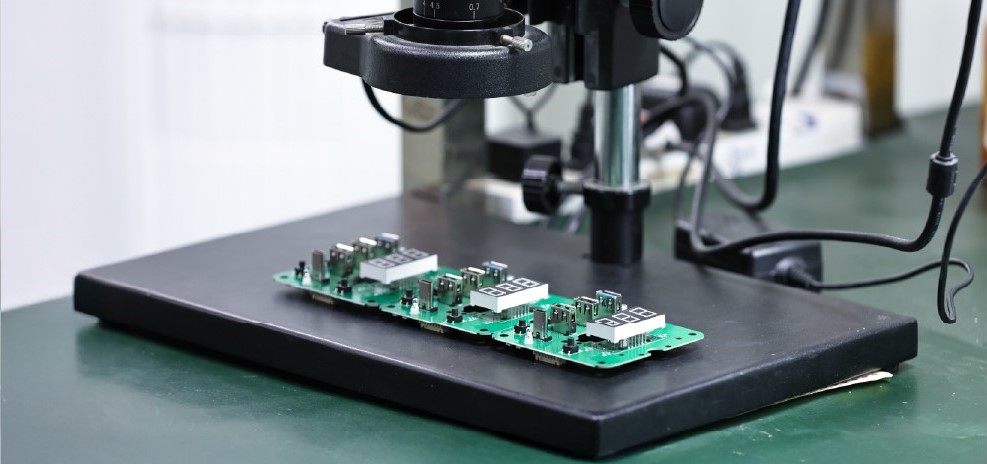

Everything You Need to Know About Medical Device PCB
-

-
August 20, 2026


For medical device OEMs, PCB selection and manufacturing affect device reliability, electrical performance, and regulatory compliance. Medical PCBs must meet application-specific requirements for materials, design, manufacturing, testing, and traceability. This guide covers the key considerations for designing and manufacturing medical device PCBs, from material selection to production and supplier qualification.

A medical device PCB is a circuit board engineered for healthcare. It powers diagnostic, monitoring, therapeutic, and implantable devices. These boards must meet strict reliability and safety standards such as ISO 13485 and FDA regulations, while packing dense circuitry into compact footprints.
“Medical-grade PCB” is commonly used to describe boards intended for medical applications that require controlled materials, manufacturing processes, reliability, traceability, and documentation. The specific requirements depend on the finished device, applicable regulations, customer specifications, and relevant standards.
Medical PCBs typically require tighter control over reliability, documentation, traceability, and risk management than general consumer electronics. Many medical devices also involve low-level signals, patient-connected circuits, long service lives, or demanding environmental conditions. These requirements influence PCB materials, layout, manufacturing processes, inspection, and testing.
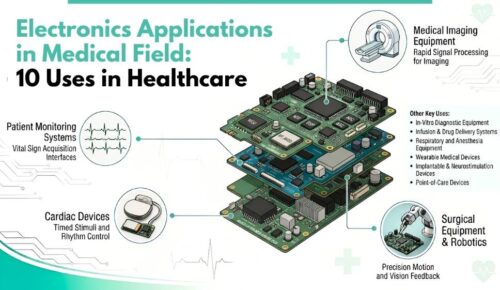
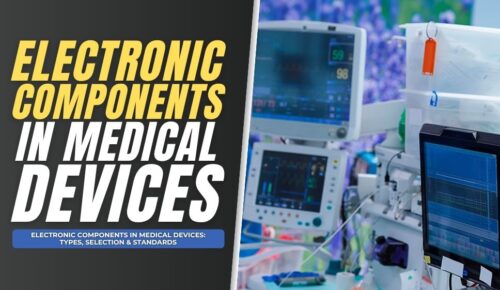
Medical device PCBs power diagnostic machines, patient monitors, and implants, combining sensing, processing, and wireless links on one board while balancing size, precision, and durability.

Diagnostic and imaging equipment relies on PCBs to capture and process clinical data. High-speed or RF sections within MRI, CT, and ultrasound systems may require low-loss materials, controlled impedance, and careful signal-integrity design. ECG machines amplify tiny cardiac signals on low-noise layouts. Consistent fabrication tolerances help maintain repeatable electrical performance across production units.
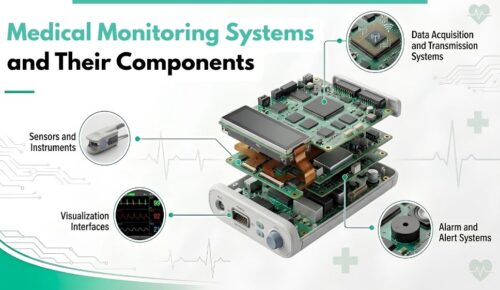
Patient monitoring equipment PCBs collect and transmit vital signs in real time. Blood pressure cuffs, glucose meters, biosensor circuit boards, and bedside monitors use them. Many designs include wireless modules for medical telemetry. An RF telemetry medical PCB balances wireless performance with patient isolation.

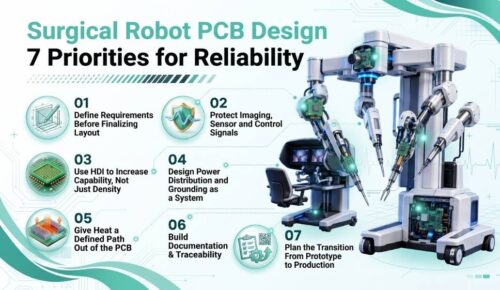
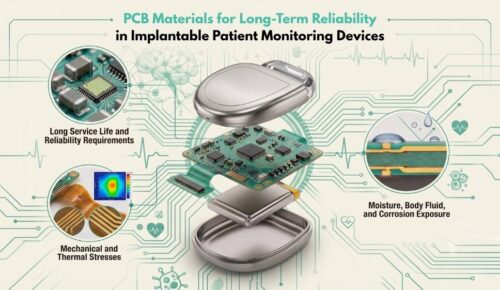
Therapeutic and implantable devices can impose particularly demanding requirements on PCB reliability, materials, packaging, and validation. Implantable electronics such as pacemakers and neurostimulators must maintain reliable operation over long service periods with limited or no access for maintenance. Infusion pump electronics deliver drugs with precise dosing. Implantable medical PCBs use biocompatible PCB materials and hermetic protection. Surgical robotics PCBA demands precise motion control and redundant safety.

Medical PCB manufacturing must comply with ISO 13485, IPC Class 3, FDA, and EU MDR, matched to your device class. Compliance protects patients and keeps your product on the market.
ISO 13485 is the international quality management standard for medical device manufacturing. It governs documentation, traceability, and risk management across your supply chain. An ISO 13485 certified PCB partner keeps controlled records for every lot. You can trace materials and processes for years after production. That documentation simplifies your audits and regulatory submissions.
Medical PCB projects may use IPC Class 2 or Class 3 requirements depending on the device’s reliability needs and customer specifications. Class 3 is intended for high-reliability applications where continued performance is critical. IPC Class 3 includes stricter acceptance criteria for features such as plated holes, conductors, soldering, and other PCB characteristics than Class 2.
The FDA and EU MDR regulate finished devices, not bare boards. Your PCB and PCBA suppliers still matter because medical device manufacturers must control and evaluate suppliers as part of their quality systems. Manufacturers register establishments and list devices with the agency. A Class 2 medical PCB usually needs 510(k) clearance. Many Class 2 medical devices require 510(k) clearance, although the applicable pathway depends on the specific device and regulatory classification. Many Class 3 devices require Premarket Approval (PMA), subject to the applicable regulatory pathway.
From our PCB manufacturing perspective, medical PCB design must consider more than electrical performance. Material selection, stack-up design, trace geometry, thermal management, and manufacturability can all affect production yield and long-term reliability. At MedPCB, we review these factors from the fabrication and assembly side to help you identify potential manufacturing risks before production.
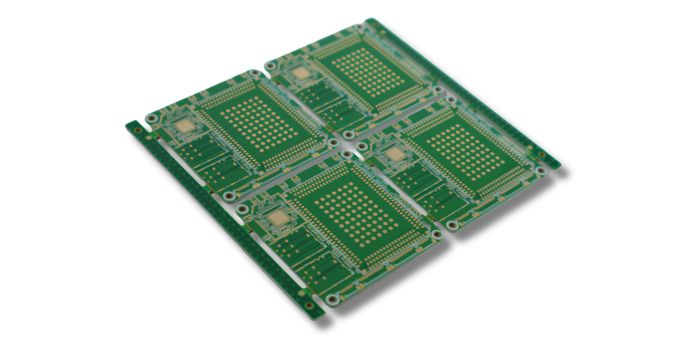
For compact medical devices, HDI can increase circuit density without expanding the PCB footprint. From our manufacturing perspective, microvia diameter, via stacking, layer structure, and material selection should be defined together. Early DFM review helps you confirm that the proposed HDI structure can be fabricated consistently at the required volume.
Some compact medical PCB designs may require 5 mil lines and spaces or finer features. From a manufacturing perspective, producing these fine features demands laser direct imaging (LDI) and extremely tight process control, especially since IPC Class 3 standards strictly limit acceptable trace etching tolerances. An early DFM (Design for Manufacturability) review balances fine-line requirements with repeatable yields, preventing costly production issues down the line.

Medical signals are highly sensitive, meaning noise, crosstalk, and impedance mismatches easily ruin accuracy. High-reliability medical boards depend on precise fabrication to maintain controlled impedance routing, solid reference planes, and symmetric stack-ups. Sharing impedance targets and tolerances upfront enables the manufacturer to verify the stack-up structure, ensuring the fabrication process maintains signal integrity without distortion.
Medical electronics must meet strict IEC 60601-1-2 standards to prevent interference with other equipment. While the board layout manages shielding and grounding, compact devices also rely heavily on fabricated structures like thermal vias and copper planes to safely move heat away. Evaluating thermal management and EMI requirements from a fabrication standpoint uncovers proven stack-up and surface-finish options that support the device’s end goals.
Any material that stays in contact with the human body must achieve complete biocompatibility. Implantable PCBs require specialized substrates and coatings that resist corrosion and avoid reacting with tissue. From a production standpoint, strict material sourcing and full component traceability drive the manufacturing process. Verifying raw material specifications and traceability requirements before committing to a build guarantees compliance and patient safety.
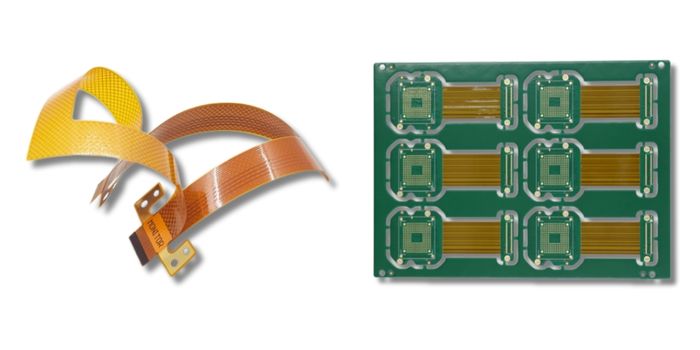
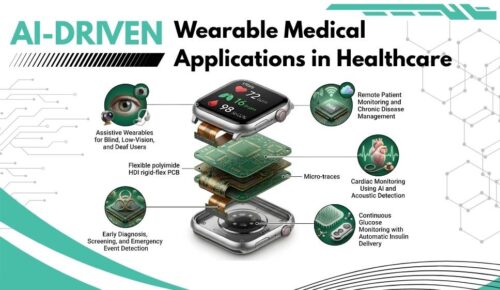
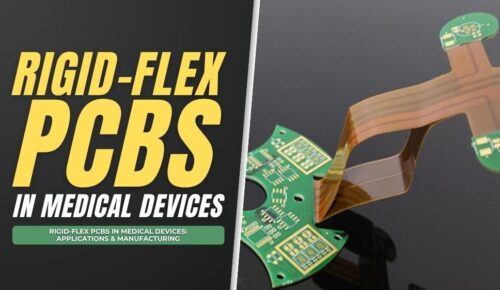
Flex and rigid-flex boards solve space and shape constraints in hearing aids, medical patches, and surgical tools. From the production side, combining stable mounting areas with bendable interconnects demands careful material selection to keep traces from cracking during use. Reviewing bend radius rules, stiffener placements, and materials upfront transitions flexible layouts seamlessly into reliable volume manufacturing.
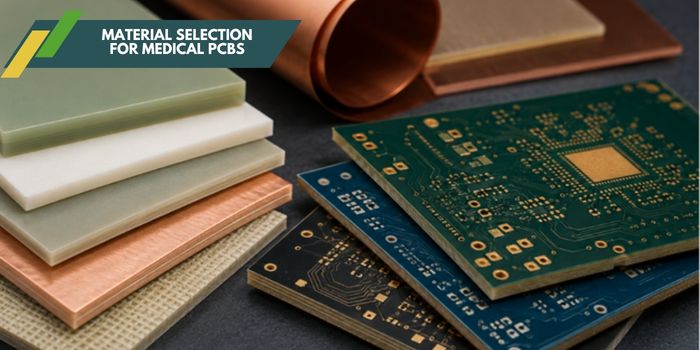
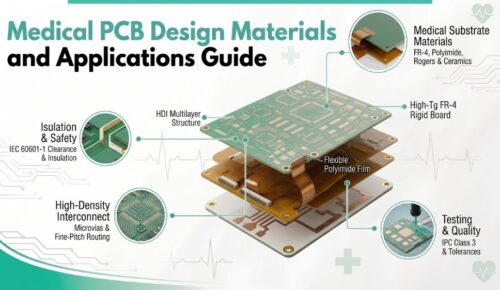
Material selection for medical PCBs should be based on the device’s electrical, thermal, mechanical, environmental, and regulatory requirements. From our perspective, the right laminate must also support the required layer structure, fabrication process, and production volume. MedPCB can help you evaluate material options based on the intended application and manufacturing requirements.
FR-4 is widely used in patient monitors, diagnostic equipment, laboratory instruments, and other non-implantable medical electronics. Its good mechanical strength, electrical insulation, processability, and cost efficiency make it suitable for many standard multilayer PCB designs. For higher-reliability medical applications, you may need to specify high-Tg or low-CTE FR-4 materials to improve thermal stability and dimensional reliability.

Manufacturing medical-grade printed circuit boards inherently costs more than consumer boards for critical reliability. You pay for tighter tolerances, specialty materials, documentation, and testing. Understanding the cost drivers helps you budget.
Board type, layer count, and material set the baseline price. A two-layer FR-4 board costs far less than a ten-layer rigid-flex design. Specialty laminates such as polyimide, ceramic, and low-loss RF materials raise costs further. Implantable materials and finishes push pricing highest.
Design and engineering costs cover layout, simulation, and design-for-manufacturing review. Implementing early DFM analysis identifies potential manufacturing defects upfront, ensuring high yields without costly redesigns.
Prototyping, testing, and validation protect you from discovering problems after launch. Testing adds in-circuit, functional, and environmental stress screening, while X-ray inspection verifies hidden solder joints on BGAs and QFNs.
Medical device compliance and certification can create high costs across the product lifecycle. These may include quality-system implementation, regulatory submissions, technical documentation, validation, testing, and supplier qualification. At the PCB manufacturing level, traceability, material certification, process validation, inspection, and test records can also add production and documentation costs.
Choosing a PCB fabricator requires prioritizing long-term board reliability over the lowest initial production quote. Medical device electronics contract manufacturing demands more than a generic EMS. You need a fabricator who understands medical documentation and compliance. Certifications and prototype-to-volume capability top the checklist.
Validate relevant certifications, such as ISO 13485 and ISO 9001, before requesting a production quote. Additionally, confirm the manufacturer’s capability to meet specific IPC and UL standards alongside full RoHS and REACH compliance. RoHS and REACH compliance matter for materials reporting. Ask for current certificates and inspector training records. An ISO 13485 certified PCB partner saves qualification work.
Prototype-to-volume support means one partner from first build to production ramp. You want prototypes made with the same processes as volume boards. Switching materials or methods between stages forces requalification and new documentation. This keeps your launch timeline intact.
MedPCB specializes in PCB manufacturing and assembly for medical electronics, supporting OEMs from prototype builds to volume production. We are ISO 13485 certified and support quality and environmental requirements including ISO 9001, UL, RoHS, and REACH.
Ready to start your next project? Send us your Gerber files for a project review and quote.
These are the questions our engineers hear most from medical device teams. Each answer gets straight to the point. If your question is not here, contact us, and we will talk through your project.
A prototype that cannot scale traps you in rework. Use production-grade materials and processes from the first build. Changing processes later forces new documentation and resubmission.
MedPCB supports rigid, flex, and rigid-flex constructions for medical devices. We also handle HDI with laser-drilled microvias, controlled impedance, and fine-line geometries.
Fine lines demand extreme process control. Etching traces and gaps below 5 mil requires laser direct imaging and tight chemistry control. IPC Class 3 limits how much etching can shrink a trace.
Yes. Many medical devices need polyimide, ceramic, Teflon, or low-loss laminates. Each material serves a need such as flexibility, heat resistance, or RF performance.
ISO 13485 governs quality management for medical devices. IPC Class 2 and Class 3 define fabrication and assembly acceptance. FDA and EU MDR regulate the finished device. UL 94 covers flammability.
Implantable boards cost more because failure is not an option. They use biocompatible materials, hermetic protection, and exhaustive testing. Full traceability and validation documentation raise the price further. You pay for decades of reliable service inside the body.
IPC Class 2 covers dedicated service electronics where minor cosmetic defects are acceptable. Class 3 demands the highest reliability for life-critical applications. Class 3 forbids annular ring breakout and requires thicker via copper. Most implants use Class 3.
Medical PCBs reward careful planning and the right manufacturing partner. Your boards must meet strict standards and perform for years. Choose a fabricator with certifications, traceability, and prototype-to-volume support.MedPCB stands ready to build your next medical boards.


Hello, I am Sony He, with extensive practical experience in medical PCB and PCBA manufacturing. Over the years, I have focused on medical circuit board manufacturing, rigid-flex PCB, SMT assembly, quality inspection and reliability compliance. I enjoy sharing hands-on expertise in medical PCB manufacturing and assembly through technical articles.


English

French

German

Japanese

Korean