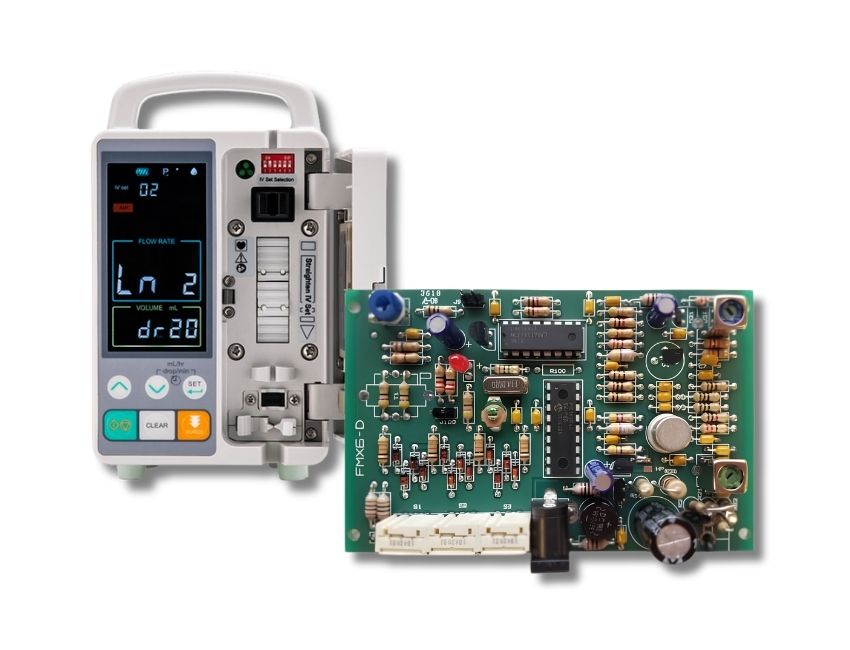
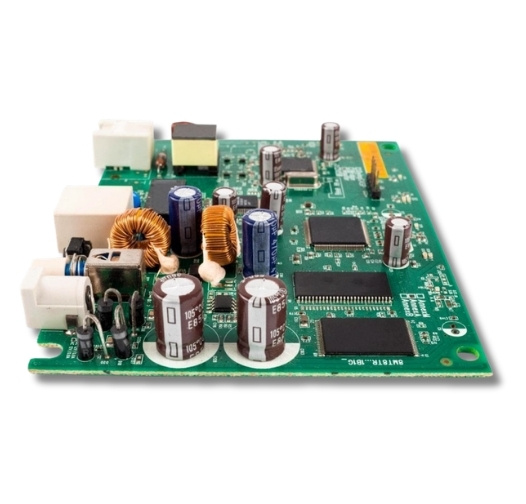
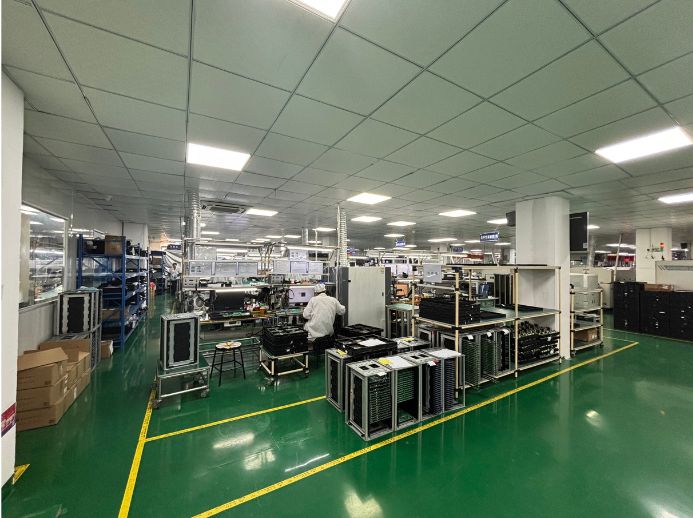
While Surface Mount Technology (SMT) dominates miniaturized electronics, Through-Hole Technology (THT) remains indispensable for medical devices that endure high physical stress, elevated voltages, or extreme operating environments. THT involves inserting component leads through drilled, plated holes in the printed circuit board (PCB) and soldering them to pads on the opposite side.
For medical engineers, this means unparalleled mechanical strength for user-facing connectors and superior thermal mass for high-power components. Through-hole assembly helps maintain reliable electrical and mechanical connections in demanding medical environments, including patient monitoring systems, surgical equipment, and high-power diagnostic devices.
| Order Quantity | ≥1 PCS (Prototype, Low-Volume, Mass Production) |
| Soldering Technology | Manual Soldering, Dual-Wave Soldering, Selective Soldering |
| Component Types | Axial, Radial, SIP, DIP, Connectors, Relays, Transformers, Custom Heavy Parts |
| PCB Technologies | Rigid, Flex, Rigid-Flex, High-TG, Heavy Copper (up to 10oz+) |
| Solder Chemistry | Lead-Free (RoHS), Tin-Lead (for exempt medical devices), Water-Soluble, No-Clean |
| Mechanical Reinforcement | Component staking, custom heat sink mounting |
| Additional Services | Conformal Coating, Potting |
| Inspection Standards | High-Mag Visual, AOI, X-Ray (for barrel fill verification), FAI |
| Quality Compliance | ISO 13485, ISO 9001:2015, IPC-A-610 Class 3, RoHS |


Thick medical PCBs and heavy copper layers act as heat sinks, making it difficult for solder to wick entirely up the plated through-hole, risking a weak joint.
Our Solution: We engineer precise pre-heating profiles and utilize specialized wave/selective soldering nozzles to ensure optimal thermal energy transfer, guaranteeing the 75%+ vertical solder fill required by IPC Class 3.

Modern medical boards often mix dense SMT microprocessors with heavy THT power connectors. Traditional wave soldering risks remelting or damaging the sensitive SMT parts.
Our Solution: We utilize highly precise, multi-axis selective soldering robots that apply molten solder only to specific through-hole pins, completely isolating and protecting the surrounding miniaturized components.

Any remaining flux on a medical device can absorb moisture and cause catastrophic electrical shorts. High-density component placement makes thorough cleaning difficult.
Our Solution: We use multi-stage DI water wash systems with precision spray angles and saponifiers designed specifically to penetrate under heavy components. We validate cleanliness with continuous ionic testing.

Large transformers and tall capacitors used in medical power supplies can vibrate or break their solder joints if the device is dropped or moved frequently.
Our Solution: We provide medical-grade potting, epoxy component staking, and conformal coating services. These structural reinforcements secure heavy components to the board, helping reduce mechanical stress on solder joints during long-term operation.

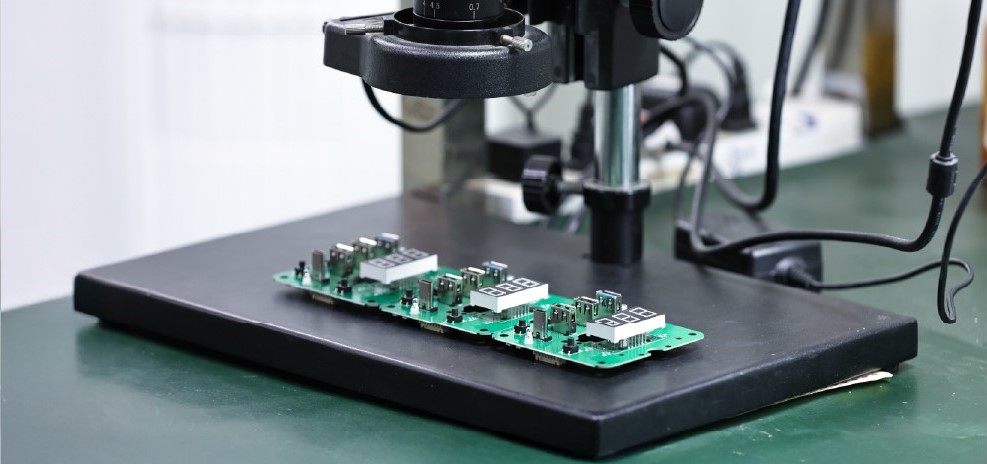
We run inline AOI scanning after soldering to confirm through-hole component placement and polarity, identifying missing parts, solder bridges and other surface defects.
We use 3D X-ray equipment to inspect hidden barrel solder fill on thick multi-layer medical through-hole pins that visual checks cannot reach.
We offer comprehensive In-Circuit Testing (ICT) to verify individual component values, as well as Custom Functional Testing (FCT) designed to simulate the board's real-world medical application, ensuring flawless power delivery and signal integrity.
Looking for a dependable assembly partner with integrated testing solutions? Share your project details with us today for a quotation.
Our Medical Through-Hole PCB Assembly FAQ addresses essential questions regarding your manufacturing requirements. We cover our capabilities for high-reliability medical electronics, manual and automated leaded component insertion, wave and selective soldering, mechanical component securing, rigorous quality inspection protocols, and our capacity to scale from prototype builds to volume production batches. For every medical device project, we guarantee precision-focused, medical-grade assembly standards.
The primary difference between Surface Mount Technology (SMT) and Through-Hole Technology (THT) lies in how the components are physically attached to the circuit board, which dictates their mechanical strength, size, and power capabilities in medical applications.
Here is the breakdown of how they compare:
|
Feature |
Surface Mount Technology (SMT) |
Through-Hole Technology (THT) |
|
Mounting Style |
Soldered directly to surface pads |
Leads fed through drilled board holes |
|
Primary Benefit |
Miniaturization and speed |
Mechanical strength and power handling |
|
Best Medical Uses |
Implantables, wearables, microprocessors |
Defibrillators, power supplies, I/O ports |
|
Heat/Power |
Lower thermal mass, lower power |
High thermal mass, high voltage |
|
Assembly Speed |
Extremely fast, fully automated |
Slower, often requires selective/wave |
We achieve the required 75%+ vertical solder fill through meticulous thermal profiling, optimized flux application, and strict control of our wave and selective soldering pre-heaters. We verify this via X-ray inspection on heavy thermal-mass boards.
Yes, the vast majority of modern medical boards are mixed-technology. We seamlessly integrate both processes, placing SMT components first, followed by automated selective soldering to attach the THT components without melting the SMT joints.
We use closed-loop aqueous cleaning systems with medical-grade saponifiers. To guarantee cleanliness, we perform Resistivity of Solvent Extract (ROSE) testing to ensure ionic residues are well below the strict thresholds required for medical safety.
Yes. For unusually heavy components like large transformers, we offer custom lead forming, manual insertion, and mechanical reinforcement techniques such as epoxy staking and potting to ensure they survive mechanical shock.
Yes. We have dedicated lead-free (RoHS compliant) wave and selective soldering lines to prevent cross-contamination. However, if your specific medical device has an FDA exemption requiring traditional tin-lead solder, we have dedicated leaded lines available as well.
Our Manufacturing Execution System (MES) tracks every step of the process. Even for manual insertions, operators scan component barcodes and link them to the specific PCB serial number, ensuring complete batch traceability for ISO 13485 compliance.
Yes, we offer both. Conformal coating protects the THT joints from moisture, bodily fluids, and chemical sterilization, while potting is used to fully encapsulate high-voltage areas or secure heavy components against extreme vibration.
Yes, we specialize in low-volume, high-mix production common in specialized medical device manufacturing. Our selective soldering systems and agile changeover protocols allow us to efficiently produce complex THT prototypes and small clinical-trial batches.
English
French
German
Japanese
Korean