Medical Low Volume PCB Assembly 

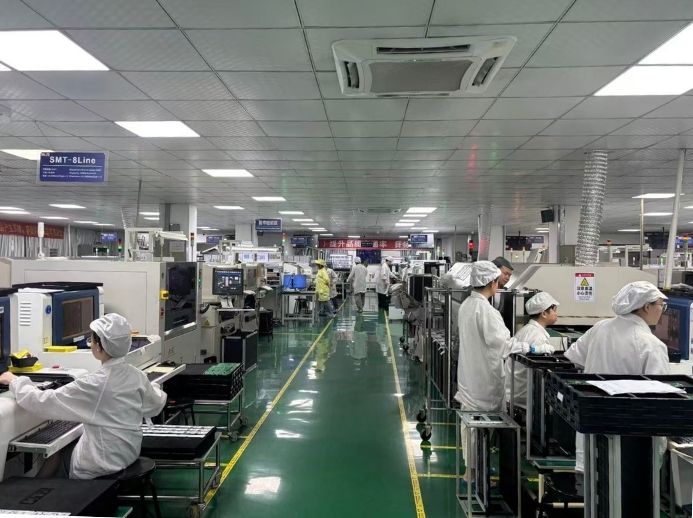
MedPCB offers low-volume PCB assembly services compliant with the ISO 13485 standard, suitable for medical prototypes, trial production, and small-batch manufacturing.
• ISO 13485, RoHS, and IPC-A-610 Class 2/3 compliant.
• Fast-Turn, Expedited Services and Pilot Builds
• Full Traceability and Quality Documentation
• Flexible Orders, No MOQ.

Medical Low Volume PCB Assembly
Certifications
What is Medical Prototype Assembly
introduction

What is Medical Low Volume PCB Assembly?

Medical low-volume PCB assembly is the small-scale production of specialized medical circuit boards, usually ranging from a few dozen to a few thousand units. It relies on flexible manufacturing setups and precise assembly techniques to ensure high accuracy without requiring massive factory runs. This service supports medical devices in their early development, testing, or specialized low-market-demand stages. It helps lower upfront costs, allows rapid design changes, and delivers high-reliability boards before committing to mass production.

Products

The Advantage of Low Volume PCB Assembly

  • Fast Transition from Prototype to Pilot Production
  • Cost-Efficient Medical Prototype Validation
  • Faster Design Iteration and Engineering Optimization
  • Flexible Support for Complex Medical PCB Designs
Cost-Efficient Medical Prototype Validation
Low-volume assembly helps you validate medical PCB designs without investing in large production runs. It supports engineering verification, clinical evaluation, and regulatory testing before full-scale manufacturing. You can identify design issues early, reduce development costs, and improve product reliability before submitting your device for certification.
Flexible Support for Complex Medical PCB Designs
Faster Design Iteration and Engineering Optimization
Medical device development often requires multiple hardware revisions before final approval. Low-volume assembly allows you to identify design flaws, replace components, and optimize PCB layout through multiple engineering prototypes. This also prevents the generating excessive inventory or manufacturing waste.
Fast Transition from Prototype to Pilot Production
Why Choose Us

Why Choose MedPCB?

  • ISO 13485 Certified Manufacturing

    ISO 13485 Certified Medical Manufacturing

    Every medical PCB is manufactured under an ISO 13485 certified quality management system. Controlled processes, documented procedures, and thorough inspections help ensure reliable and consistent production.

  • No Minimum Order Quantity

    Flexible Low Volume Production

    Start with as few as one board. Fast lead times support prototype validation, engineering samples, pilot production, early-stage medical device development and low-volume manufacturing without minimum order restrictions.

  • End-to-End Turnkey Integration

    End-to-End Turnkey Integration

    Receive complete manufacturing support from DFM review and component sourcing through PCB assembly, box build, and final system integration. Every low-volume project follows the same controlled manufacturing processes used for production-scale builds.

  • Reliable Component Sourcing and BOM Management

    Reliable Component Sourcing and BOM Management

    Our engineering team reviews every BOM for component lifecycle status, availability, approved alternates, and sourcing risks. We purchase component from authorized distributors to reduce counterfeit risks while maintaining full material traceability for medical projects.

  • Full Traceability and Inspection

    Full Traceability and Inspection

    Each production batch undergoes AOI, AXI, ICT, functional testing, and a final visual inspection as required. Our MES system records component traceability, inspection data, and production history to support your medical quality documentation and regulatory audits.

Specs

Technical Specifications

Order Quantity No minimum order quantity. Production starts from a single board.

Assembly Technologies

Supports SMT, through-hole (THT/DIP), and mixed-technology PCB assembly.
Supported PCB Types Assembles rigid, flex, rigid-flex, and aluminum (metal core) PCBs.
Board Size Supports board sizes from 50 × 50 mm up to 1500 × 500 mm.
Component Capability Places components from 01005 packages to 0.2 mm fine-pitch BGAs, with no maximum component size limit.
Placement Accuracy Automated component placement accuracy up to ±0.035 mm.
Component Sourcing Offers turnkey, partial turnkey, and consigned assembly with access to 300,000+ genuine components.
Surface Finish Compatibility Compatible with HASL, Lead-Free HASL, ENIG, and OSP finished PCBs.
Engineering Support Includes free DFM, DFA, and DFT reviews before production.
Quality Control Built to IPC-A-610 Class 2 and Class 3 standards with AOI, X-ray inspection, and visual inspection.
Lead Time Standard production in 3–4 days, with expedited service available for urgent orders.
Low Volume PCB Assembly
Capabilities

MedPCB Low Volume PCB Assembly Process

Step 1: Design Review and BOM Verification
Every medical PCB project begins with a detailed review of your design files and BOM. Our engineers verify component selection, PCB layout, and manufacturing requirements to support reliable assembly and regulatory compliance.
Step 2: Component Sourcing and Material Preparation
Step 3: SMT and Through-Hole Assembly
Step 4: Inspection, Testing, and Finishing
Step 5: Final Packaging
Once approved, boards are thoroughly cleaned, sealed in anti-static (ESD) protective packaging, and prepared for shipment. Secure packaging ensures your sensitive medical electronics arrive safely and ready for deployment.
Quality Control

Quality Assurance for Medical Low Volume PCB Assembly

  • Incoming Material Verification

    Incoming Material Verification

    Every component and bare PCB is inspected before production begins. Material verification helps ensure the correct parts are used and supports reliable performance in medical applications.

  • In-Process Inspection

    In-Process Inspection

    Medical PCBs are inspected throughout the assembly process to detect defects early and maintain consistent manufacturing quality.

    • SPI (Solder Paste Inspection) – Verifies solder paste volume, position, and coverage before component placement. 
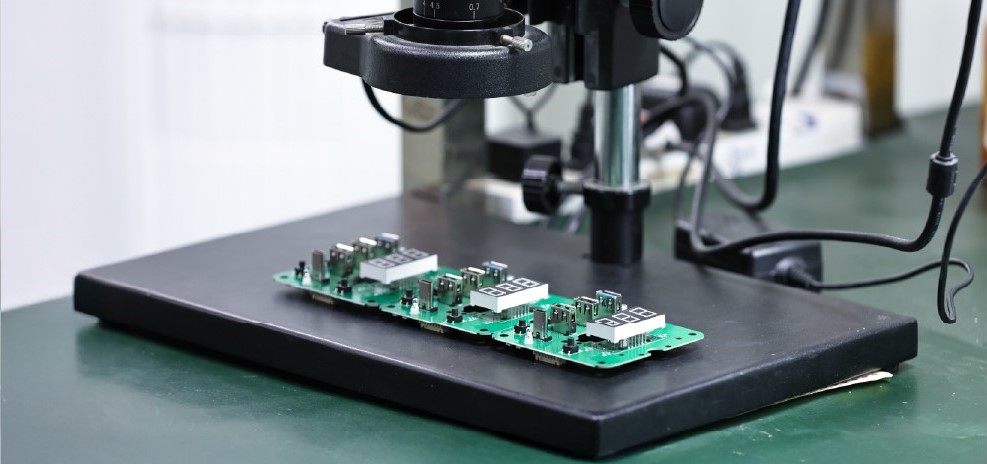
    AOI (Automated Optical Inspection) – Detects missing, misaligned, incorrect, or poorly soldered components. 
    AXI (Automated X-Ray Inspection) – Examines hidden solder joints on BGA, QFN, and other high-density medical PCB assemblies.

  • Functional Testing

    Functional Testing

    Each medical PCB is tested according to your product requirements to verify electrical performance and functionality.

    ICT (In-Circuit Testing) – Checks electrical connections and identifies shorts, opens, and incorrect component values. 
    FCT (Functional Circuit Testing) – Confirms the assembled PCB operates as intended under normal operating conditions. 
    Customized Testing – Performs application-specific testing based on your medical device requirements.

  • Traceability and Documentation

    Traceability and Documentation

    Every production batch is supported by complete manufacturing records, including material information, inspection results, and test reports. Full traceability helps support regulatory compliance and simplifies quality audits of medical PCBAs.

How PCBMay Reduces Your Medical Low-Volume PCB Assembly Cost
Specs

How MedPCB Reduces Your Medical Low-Volume PCB Assembly Cost

MedPCB helps reduce medical low-volume PCB assembly costs by improving manufacturability before production begins. Every project undergoes a DFM review to identify potential issues early, reducing rework and production delays.

Component selection also plays a key role in controlling costs. MedPCB reviews your BOM to recommend readily available components, reduce unnecessary part variations, and help prevent sourcing delays without affecting product reliability.

PCB layout and panelization are also optimized to improve assembly efficiency. Proper panel design allows multiple boards to be processed together, increasing production efficiency and lowering the cost per board while maintaining the quality standards required for medical devices.

Submit your Gerber files and BOM to us, and we will deliver a free DFA/DFM review alongside a competitive quote.

Case Study

Medical Low Volume PCB Assembly Cases

  • Robotic Surgery Controllers 
    Robotic Surgery Controllers  PCBA Robotic Surgery Controllers

    Robotic Surgery Controllers 

    PCB assembly for robotic surgery control units that manage motor drives, force feedback, and precision movement. Built with fine-pitch SMT components and tested to ensure accurate, reliable operation in advanced surgical systems.

  • Ultrasound Imaging Systems 
    Ultrasound Imaging Systems PCBA Ultrasound Imaging Systems

    Ultrasound Imaging Systems 

    PCB assembly for ultrasound imaging systems, including beamformer boards, signal processing modules, and display control boards. Supports complex multilayer PCBs, high-speed circuits, and precision assembly for clear, reliable imaging performance.

  • Cardiac Monitoring Implants
    Cardiac Monitoring Implants PCBA Cardiac Monitoring Implants

    Cardiac Monitoring Implants 

    Low-volume PCB assembly for implantable cardiac monitors that continuously record heart activity for long-term diagnosis. Supports ultra-miniature PCB designs, low-power electronics, and high-reliability manufacturing for pre-clinical development and engineering validation.

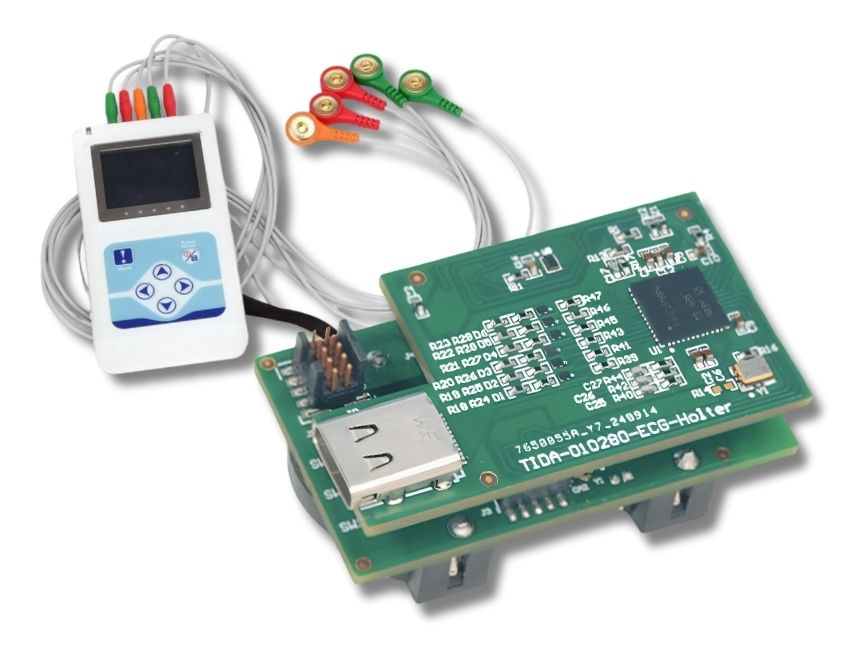
  • Holter Monitors 
    Holter Monitors PCBA Holter Monitors 

    Holter Monitors 

    Low-volume PCB assembly for Holter monitors used to record continuous ECG data over extended periods. Designed for compact, wearable devices with stable signal acquisition, low power consumption, and dependable wireless connectivity.

Faqs

Frequently Asked Questions

Our Medical Low Volume PCB Assembly FAQ addresses essential questions regarding your manufacturing requirements. We cover our capabilities for complex medical electronics, supply chain management, assembly timelines, rigorous quality inspection protocols, and our capacity to scale from initial builds to production batches. For every medical device project, we guarantee precision-focused, medical-grade assembly standards.

1. What Is The Cost Of Low-Volume Medical PCB Assembly?
Overall project expenses remain low. While unit costs are slightly higher due to setup fees being distributed over smaller quantities, it remains a cost-effective choice for short runs.

2. How Long Does Delivery Take For Medical Low-Volume PCB Assembly?
Lead times range from 1 to 3 weeks.. Expedited builds can finish in 48 hours if all components are in stock.
3. Can You Combine Prototype And Low-Volume PCB Assembly?
Yes. Running prototypes and low-volume medical runs on the same production lines ensures consistent quality from early validation through small-batch manufacturing.
4. SMT vs. Through-Hole: What Are The Trade-Offs?
SMT is faster and more cost-effective for high-density designs. Through-hole assembly requires extra manual labor, which increases costs, but it provides stronger mechanical support for heavy connectors.
5. How to Optimize BOM For Low-Volume Medical PCB Assembly?
Consolidate passive component values to reduce machine feeder changes, choose in-stock parts from major distributors, and list approved drop-in alternatives.
 
Consolidate passive component values to reduce machine feeder changes, choose in-stock parts from major distributors, and list approved drop-in alternatives.
 
6. What Is the Minimum Order Quantity (MOQ)?
There is no MOQ. You can order as few as 1 board for testing, though ordering 25 to 100 units significantly lowers the per-unit cost.
7. Is Low-Volume PCB Assembly More Expensive Per Unit Than High-Volume?
Yes. High-volume production benefits from bulk component discounts and spreads fixed engineering setup fees across thousands of boards, lowering the price per unit.
8. What Files Are Required For Medical Low-Volume PCB Assembly?
You will need to provide Gerber or ODB++ files, an Excel BOM featuring manufacturer part numbers, Pick-and-Place (Centroid) coordinates, and clear assembly drawings with polarity markings.
9. Is Low-Volume Assembly Okay For Final Production?
Yes. Medical low-volume PCB assembly is standard for specialized, high-value medical equipment, enabling fast market entry without inventory risk.
10. When Should You Switch to Mass Production?
Move to high-volume production only after your board layout and firmware are fully locked, regulatory clearances are secured, and demand justifies higher tooling costs.
11. Testing Methods for Low-Volume Medical PCB Assembly?
Use Automated Optical Inspection (AOI) for placement, X-ray inspection for hidden BGA joints, and Functional Testing (FCT) to confirm operational performance.
12. Can Medical Low-Volume PCB Assembly Support Multiple Board Variants?
Yes. Small-batch runs easily accommodate panel-level BOM variations and regional hardware configurations within a single production run.

Product Related