Medical High TG PCB 

We manufacture high-reliability Medical High-Tg PCBs for medical electronics that require stable performance under elevated temperatures. We support fabrication of complex HDI or multilayer medical PCBs that needs high Tg performance.

• ISO 13485 & IPC Class 2/3 Compliant
• Full TG range support for Mid-Tg 150°C, High-Tg 170°C +
• We manufacture complex High Tg PCBs up to 40 layers
• In Stock Material Suppliers like Rogers, Isola, Panasonic, and Shengyi and more.

Medical High-Tg PCB
Certifications
What Is a Medical High-Tg PCB
introduction

What Is a Medical High-Tg PCB and When Is It Needed?

A Medical High-Tg PCB uses high-temperature laminate materials designed to maintain stable performance under elevated heat. Standard FR-4 typically has a Tg of 130–140°C, while mid-Tg materials reach around 150–160°C and High-Tg materials reach 170°C or higher. The higher Tg improves resistance to thermal stress, moisture, and chemical exposure. You need a Medical High-Tg PCB when your medical device experiences repeated thermal cycling, high lead-free soldering temperatures, elevated operating temperatures, or other demanding conditions where standard FR-4 may not provide enough thermal reliability.

Products

Advantages of Medical High TG PCB

  • Improved Thermal Performance
  • Better Delamination Resistance
  • Excellent PTH Reliability
  • Stable Electrical Performance
  • Better Dimensional Stability
Improved Thermal Performance
High-Tg laminates maintain their mechanical and dimensional stability better during elevated-temperature processing and repeated thermal cycling. This helps medical PCBs withstand thermal stress during manufacturing and operation.
Better Delamination Resistance
Excellent PTH Reliability
Better Dimensional Stability
Stable Electrical Performance
The improved thermal and dimensional stability of High-Tg materials helps maintain consistent electrical performance. This is important for medical devices where signal integrity and dependable circuit operation are critical.
Why Choose Us

Choosing MedPCB as Medical High TG PCB Partner

  • ISO 13485 Certified Manufacturing

    ISO 13485 Certified Medical PCB Manufacturing

    MedPCB follows ISO 13485 and IPC Class 2/3 requirements for medical PCB production. Strict process controls and quality checks help ensure consistent High-Tg PCB performance for demanding medical applications.

  • In-Stock High-Tg Materials

    In-Stock High-Tg Materials

    We maintain high-Tg laminates from trusted suppliers, including Rogers, Isola, Arlon, and Panasonic Megtron. These materials support medical PCBs that require strong thermal stability and reliable electrical performance.

  • Multilayer & HDI High-Tg PCB Capability

    Multilayer & HDI High-Tg PCB Capability

    We manufacture complex multilayer and HDI High-Tg PCBs up to 40 layers for compact medical electronics. Our capabilities support fine traces, high-density interconnects, and advanced layer structures, giving you greater routing capacity for complex medical PCB designs while supporting reliable performance under thermal stress.

  • Free DFM Review

    Free DFM Review

    Our engineering team provides a free DFM review before production. We check your PCB design for manufacturing issues, material requirements, layer structures, and other potential risks before fabrication begins.

  • Material Selection & Engineering Support

    Material Selection & Engineering Support

    Our engineering team can advise on High-Tg material options, layer structures, stackups, and thermal requirements based on your PCB design. We consider operating temperature, assembly conditions, board thickness, layer count, and electrical requirements to help identify suitable manufacturing options.

Specs

Technical Specifications


Technical Parameter

Standard Capability

Advanced Capability

Layer Count

1–20 layers

22–40 layers

Base Materials

Available materials include Shengyi, Isola, Panasonic, and other qualified suppliers, including S1000-2M, IT-180A, FR408HR, 370HR, IS410, and Megtron 6 etc.


For more material needs, please contact us directly.

PCB Types

Rigid PCB, multilayer PCB, blind & buried vias, heavy copper power PCB

HDI PCB, backplanes, backdrilled PCB, embedded capacitance/resistance structures

HDI Build Structure

1+N+1, 2+N+2, 3+N+3

Any-Layer HDI, laser vias with copper filling and plating

Finished Board Thickness

0.2–3.2 mm

3.4–10.0 mm

Maximum Board Size

500 × 600 mm

1100 × 500 mm

Minimum Laser Drill Size

4 mil (0.10 mm)

4 mil (0.10 mm)

Minimum Trace Width / Spacing

3/3 mil at 0.5 oz base copper

3/3 mil, optimized for fine-line structures

Warp & Twist Control

≤0.75%

≤0.50%, with tighter control for assembly

Solder Mask Options

Green, black, blue, red, white, and yellow, Matte or glossy finishes available

Surface Finishes

Lead-Free HASL, ENIG, OSP, Immersion Silver, Immersion Tin

ENEPIG, hard gold plating, electroless soft gold

Impedance Control

±10% or ±5 Ω for low-impedance nets

±5%, with strict impedance matching available

Technical Specifications
Capabilities

MedPCB Medical High TG PCB Process

Step 1. High-Tg Material Preparation & Inner Layer Imaging
Select high-Tg laminates rated for 170°C or higher, material options may include high-Tg FR-4 systems and other qualified high-temperature laminate systems. Clean the copper surface, apply dry-film photoresist, and transfer the inner-layer circuit pattern through UV exposure. Unwanted copper is then etched away to form the required traces.
Step 2. High-Pressure Lamination
Step 3. Precision Drilling & Desmear
Step 4. Outer Layer Imaging & Copper Plating
Apply photoresist to the outer copper layers and transfer the circuit pattern using precise UV imaging. Copper plating builds the required trace thickness and strengthens plated through-holes. A tin etch resist protects the circuit pattern while excess copper is removed.
Step 5. Solder Mask, Surface Finish & Inspection
Apply a heat-resistant solder mask and silkscreen to protect the finished circuitry. Suitable surface finishes such as ENIG or Lead-Free HASL are then applied. Final inspection includes AOI and electrical testing to verify trace patterns, layer registration, continuity, and overall PCB quality.
Quality Control

Common Challenges in Medical High TG PCB Manufacturing

  • Delamination & Resin Degradation

    Delamination & Resin Degradation

    Challenge: Repeated heating, moisture, and high-temperature processing can increase the risk of delamination or resin degradation. Poor material selection and storage can add to these risks.

    Our Solution: We control lamination parameters according to the selected laminate system, including temperature, pressure, vacuum, and curing conditions. Proper material storage and handling are also maintained to support consistent bonding quality and reduce process-related delamination risks.

  • Warpage & Dimensional Stability

    Warpage & Dimensional Stability

    Challenge: Thermal stress can cause PCB warpage and dimensional movement. This may affect SMT assembly, BGA soldering, connector fit, and mechanical installation.

    Our Solution: We review stackup construction, copper distribution, board thickness, and layer symmetry during DFM. Controlled lamination and panel processing help maintain dimensional accuracy and reduce warpage during fabrication and assembly.

  • PTH Barrel Reliability & CTE Stress

    PTH Barrel Reliability & CTE Stress

    Challenge: Repeated heating and cooling can cause expansion and contraction that stress plated through-hole barrels. This may increase the risk of barrel cracking and other reliability issues.

    Our Solution: During DFM, we review the selected material system, board thickness, hole structure, and aspect ratio. Controlled drilling, desmear, and copper plating processes help maintain reliable hole-wall quality and reduce stress on plated through-hole connections.

  • Moisture Absorption

    Moisture Absorption

    Challenge: Some High-Tg materials, especially polyimide, can absorb more moisture than standard FR-4. Moisture can affect lamination, drilling, and soldering if it is not properly controlled.

    Our Solution: MedPCB maintain controlled storage conditions for moisture-sensitive materials and apply pre-baking when required by the material manufacturer's specifications. During fabrication, controlled lamination and handling procedures help minimize moisture-related defects.

High Tg Manufacturing
Specs

Popular High-Tg PCB Materials Supported by MedPCB

MedPCB supports a range of High-Tg laminates for medical PCBs that require reliable performance under heat and long operating cycles. Available materials include Rogers, Isola, Panasonic Megtron, and Shengyi options.

Material

Tg Value

Isola FR408HR

180°C

Isola 370HR

180°C

Panasonic Megtron 6

185°C (DSC)

Shengyi S1000-2M

180°C (DSC)

IT-180A

175°C (DSC)

Shengyi S1000-2

170°C (DSC)

MedPCB supports your medical High-Tg PCB projects with expert material selection, free DFM review, and ISO 13485 and IPC Class 2/3 compliant manufacturing. Contact us for an instant quote.

Case Study

Medical High-Tg PCB Cases

  • Ceiling-Mounted Surgical Light Towers 
    LED Surgical Light PCB Ceiling-Mounted Surgical Light Towers 

    LED Surgical Light

    High-Tg PCBs withstand continuous heat from high-power LEDs, maintaining stable lighting during long surgical procedures.

  • Medical Instrument Washers
    Medical Instrument Washers PCB Medical Instrument Washers

    Medical Instrument Washers

    High-Tg PCBs reduce the risk of delamination and maintain electrical performance in high-temperature operating environments.

  • Immunoassay Analyzers
    Immunoassay Analyzers Immunoassay Analyzers

    Immunoassay Analyzers

    High-Tg PCBs provide stable multilayer connections despite repeated thermal stress during automated testing.

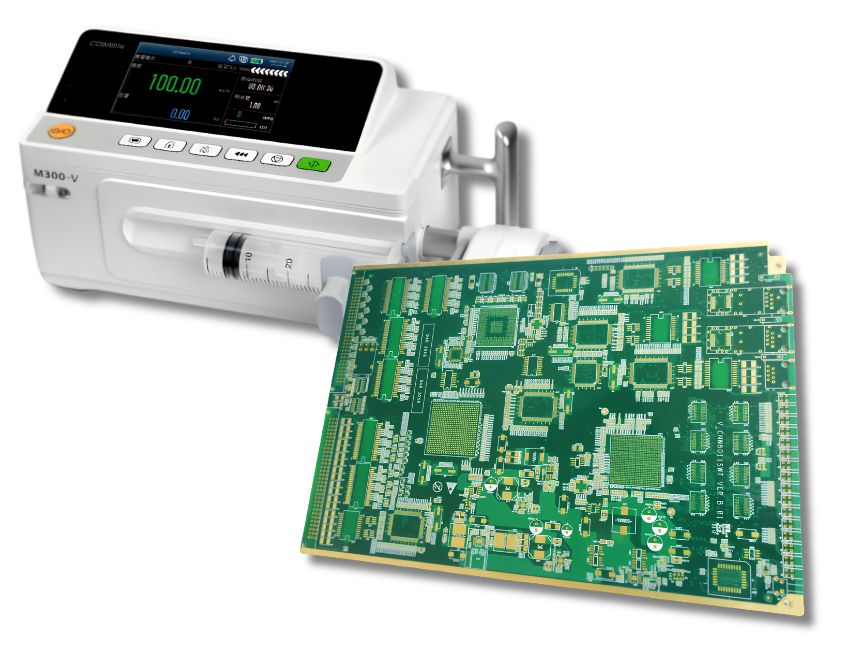
  • Syringe Pumps
    Syringe Pumps PCB Syringe Pumps

    Syringe Pumps

    High-Tg PCBs provide stable circuit performance during continuous operation and long treatment sessions.

Faqs

Frequently Asked Questions

Our Medical Metal High-Tg FAQ addresses essential questions regarding your manufacturing requirements. We cover our capabilities for complex medical electronics, supply chain management, assembly timelines, rigorous quality inspection protocols, and our capacity to scale from initial builds to production batches. For every medical device project, we guarantee precision-focused, medical-grade assembly standards.

1. Can you Use High-Tg for Multilayer and HDI Medical PCBs?
Yes. High-Tg materials are well suited for multilayer and HDI medical PCBs that face repeated thermal cycling, high-density routing, or elevated processing temperatures.
2. High-Tg and High-Frequency PCB Materials Difference?
High-Tg materials are selected mainly for thermal stability and resistance to heat-related stress. High-frequency materials are designed for controlled signal loss, dielectric performance, and high-speed signal transmission. Some medical PCBs may require both properties.
3. Can Your Engineers Help Me Select the Right Tg?
Yes. PCBMay can review your operating temperature, thermal cycling, layer count, assembly process, and other design requirements to help determine a suitable Tg range, depending on your PCB requirements.
4. What Is The Difference Between High-Tg PCB And High-Temperature PCB?
The terms are often used interchangeably. High-Tg PCB is the technical term that refers to the laminate’s glass transition temperature (Tg), while high-temperature PCB is a broader term.
5. When Should You Upgrade To A High-Tg PCB?
Choose High-Tg materials when your medical device faces high operating temperatures, repeated thermal cycling, high heat generation, or thermal stress during multilayer PCB manufacturing.
6. Is Tg The Maximum Operating Temperature Of A PCB?
No. Tg is the temperature where the resin begins to change from a rigid state to a softer state. It is not the maximum operating temperature or failure point.
7. Standard FR-4 And High-Tg PCB Material Difference?
FR-4 has a Tg of 130–140°C. High-Tg have a Tg of 170°C or higher. High-Tg materials provide better thermal stability and resistance to thermal stress.
8. When to Choose High-Tg For Lead-Free Assembly?
High-Tg PCBs are recommended for lead-free reflow, multiple reflow cycles, high layer counts, and repeated thermal cycling. They help maintain board reliability during demanding assembly processes.

Product Related