Medical Consigned PCB Assembly

MedPCB provides full, partial, and kitted medical consigned PCB assembly with ISO 13485-certified manufacturing, complete component traceability, and reliable SMT production.

• ISO 13485, ISO 9001, and IPC-A-610 Class 2/3 compliant.
• Full, Partial & Kitted Consignment Supported
• 8 SMT lines available.
•Competitive pricing for prototype to volume production.

Medical Consigned PCB Assembly
Certifications
What is Medical Consigned PCB Assembly
introduction

What is Medical Consigned PCB Assembly?

Medical consigned PCB assembly is the process where you supply your own components, and we handle the precise assembly, inspection, and testing of your circuit boards. This approach gives medical device manufacturers complete control over component selection and proprietary parts while relying on an expert partner for precision manufacturing. It is ideal for companies with established supply chains or custom inventory looking to lower production costs, protect IP, and ensure compliance for diagnostic, monitoring, imaging, and life-critical medical equipment.

Products

Advantages of Consigned PCB Assembly

  • Cost Savings in Component Procurement
  • Better Control Over Component Quality
  • Flexibility and Customization
  • Reduced Lead Times for Rare Components
  • Effective Inventory Utilization
Cost Savings in Component Procurement
Supplying your own components eliminates supplier markups and extra purchasing fees. This significantly lowers overall assembly costs, especially if you already have bulk inventory or negotiated volume pricing with component manufacturers.
Better Control Over Component Quality
Flexibility and Customization
Reduced Lead Times for Rare Components
Effective Inventory Utilization
Why Choose Us

Choosing MedPCB as Medical Consignment PCB Partner

  • ISO 13485 Certified Manufacturing

    ISO 13485 Certified Medical Manufacturing

    Our manufacturing processes strictly follow ISO 13485 standards and IPC-A-610 Class 2/3 guidelines. Every assembly run meets rigorous regulatory requirements and quality control protocols to ensure complete device safety and reliability.

  • Specialized Component Storage

    Specialized Component Storage

    Sensitive medical components are protected from static, moisture, and contamination inside temperature and humidity-controlled storage environments. This preserves component integrity and prevents damage prior to assembly.

  • Free BOM Review & Optimization

    Free BOM Review & Optimization

    MedPCB engineering team conducts a complimentary Bill of Materials (BOM) review to identify single-source risks, resolve component obsolescence, and recommend approved alternatives when requested to help minimizing supply chain delays before production begins.

  • MES Inventory Tracking & Full Traceability

    MES Inventory Tracking & Full Traceability

    Our Manufacturing Execution System (MES) provides complete inventory tracking, accurate documentation, and real-time visibility. Your consigned parts are securely logged, tracked throughout production, and never mixed with other customer inventories.

  • Advanced Assembly Capabilities

    Advanced Assembly Capabilities

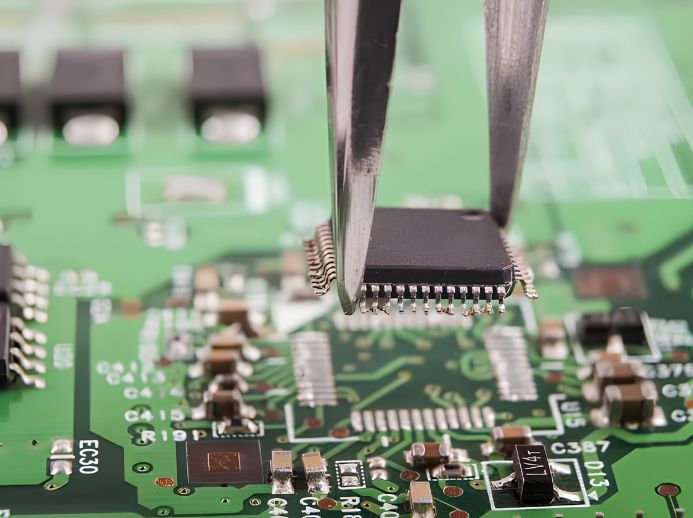
    Equipped with 8 high-precision SMT lines, we support micro-components down to 01005 sizes, fine-pitch BGAs, and complex mixed-technology layouts to power high-density, next-generation medical devices.

Specs

Technical Specification

Order Quantity

1 piece to high-volume production (No MOQ)

Quality Standards

ISO 13485, IPC-A-610 Class 2 & 3, Leaded & RoHS-compliant

Lead Time

Standard 3–4 days, quick-turn available

PCB Types

Rigid, Flexible, and Rigid-Flex

Maximum Board Size

Up to 1500 × 500 mm

Assembly Methods

SMT, Through-Hole (THT), and Mixed Technology

Component Support

01005, BGA, uBGA, LGA, CSP, QFN, QFP, and larger packages

Placement Accuracy

Min: 01005 / Max: No limit

Component Sourcing

Full, Partial, or Kitted; 300,000+ in-stock components

Surface Finishes

HASL, ENIG, OSP, Immersion Silver, Immersion Tin

Conformal Coating

Moisture, chemical, and environmental protection

Inspection & Testing

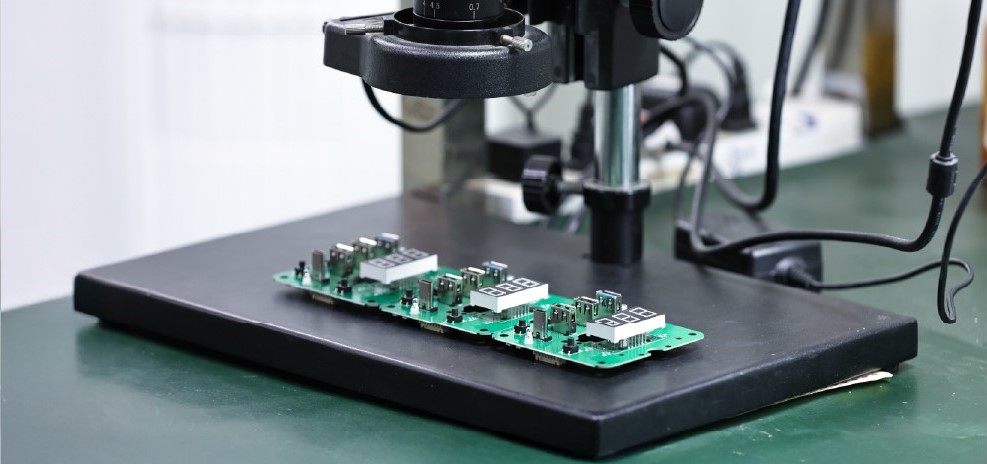
AOI, AXI, Flying Probe, ICT, and Functional Testing (FCT)


Medical Consignment PCB
Capabilities

MedPCB Consignment PCB Assembly Process

Step 1: DFM & BOM Review
Before production begins, our engineering team performs a thorough Design for Manufacturability (DFM) and Design for Assembly (DFA) review alongside a detailed BOM analysis. We verify component footprints, check for single-source or obsolete parts, confirm assembly compatibility, and flag potential manufacturing risks to ensure seamless execution.
Step 2: Ship Your Components
Step 3: SMT & Through-Hole Assembly
Step 4: Inspection, Testing, and Quality Verification
Step 5: Cleaning and Final Packaging
Quality Control

What Are the Common Challenges of Consigned PCB Assembly?

  • Component Verification & Overages

    Component Verification & Overages

    Challenge: Customer-supplied components may arrive mislabeled, mismatched, or in insufficient quantities with missing overages, leading to sudden production line stoppages.

    Our Solution: MedPCB conducts strict Incoming Quality Control (IQC) upon delivery. We perform automated part-number verification, pin-count checks, and quantity validation before scheduling production.

  • Documentation Accuracy

    Documentation Accuracy

    Challenge: Documentation errors are one of the most common causes of delays in consigned PCB assembly. BOM mismatches, incorrect footprints, missing reference designators, or polarity errors can stop production before assembly begins.

    Our Solution: MedPCB performs a free DFM and BOM review before production. Our engineers compare the BOM, Gerber files, assembly drawings, and component specifications to identify inconsistencies before manufacturing.

  • MSL (Moisture Sensitivity Level) Management

    MSL (Moisture Sensitivity Level) Management

    Challenge: Customer-supplied ICs and delicate medical ICs exposed to ambient humidity during transit risk cracking or delamination when exposed to high reflow heat.

    Our Solution: We audit received parts for Moisture Sensitivity Levels (MSL), bake moisture-exposed components per IPC standards, and store them in temperature- and humidity-controlled ESD cabinets.

  • Inventory Traceability & Mix-Ups

    Inventory Traceability & Mix-Ups

    Challenge: Managing consigned inventory runs the risk of customer parts getting mixed up, misplaced, or lost during multi-step medical device manufacturing.

    Our Solution: Our Manufacturing Execution System (MES) assigns unique barcode tracking to every incoming component batch. Your parts are securely isolated, fully logged, and tracked in real-time throughout assembly.

Consignment vs Turnkey for Medical PCB Assembly
Specs

Consignment vs Turnkey for Medical PCB Assembly

Both consigned and turnkey PCB assembly are suitable for medical devices. Consigned assembly gives you full control over component sourcing, while turnkey assembly lets MedPCB manage both sourcing and production. 

Feature

Consignment Assembly

Turnkey Assembly

Component Sourcing

You supply the parts. We assemble them.

We source all parts and assemble them.

Inventory

We use your supplied inventory.

We manage inventory and purchasing.

Custom Parts

Best for custom or proprietary components.

Best for standard components.

Cost

Saves money by using your existing parts.

One price covers sourcing and assembly.

Lead Time

Faster if parts are ready.

Depends on component availability.

Responsibility

You provide the parts; we build the PCB.

We handle the entire process.

Best For

Production runs and IP-sensitive projects.

Prototypes, standard products, and fast builds.

Need a reliable medical consigned PCB assembly partner? Contact MedPCB today for a fast quotation and engineering support.

Case Study

Medical Consignment PCB Assembly Cases

  • MRI System
    MRI System PCBA  MRI System

    MRI System PCBA 

    High-complexity, multi-layer PCB assembly for magnetic resonance imaging systems, supporting high-density signal processing, customer-supplied RF IC integration, and noise-free data acquisition.

  • Hematology Analyzer
    Hematology Analyzer PCBA  Hematology Analyzer

    Hematology Analyzer PCBA 

    Precision consigned PCB assembly for automated blood cell counters, featuring low-noise sensor interfaces, microfluidic control circuits, and reliable long-term measurement accuracy.

  • Continuous Glucose Monitor (CGM)
    Continuous Glucose Monitor (CGM) PCBA  Continuous Glucose Monitor (CGM)

    Continuous Glucose Monitor (CGM) PCBA 

    Ultra-compact, low-power PCB assembly for wearable glucose sensors, utilizing micro-SMT components on flexible substrates for lightweight, continuous patient tracking.

  • PCR Machine
    PCR Machine PCBA  PCR Machine

    PCR Machine PCBA 

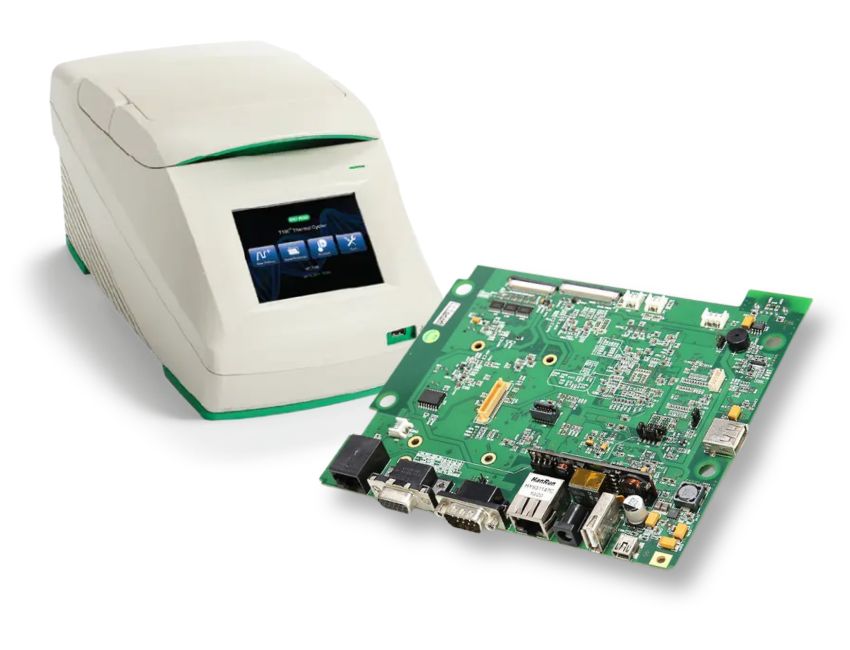
    High-reliability PCB assembly for thermal cyclers and DNA amplification equipment, supporting precise thermal management, fast sensor response, and stable electrical performance during diagnostic runs.

Faqs

Frequently Asked Questions

Our Medical Consignment PCB Assembly FAQ addresses essential questions regarding your manufacturing requirements. We cover our capabilities for complex medical electronics, supply chain management, assembly timelines, rigorous quality inspection protocols, and our capacity to scale from initial builds to production batches. For every medical device project, we guarantee precision-focused, medical-grade assembly standards.

1. What Is The Difference Between Consignment And Turnkey PCB Assembly?
In consignment PCB assembly, you supply the components while PCBMay handles manufacturing and assembly. In turnkey assembly, we source all components, manufacture the bare boards, and manage the complete build from start to finish.
2. What Are The Main Benefits Of Consigned PCB Assembly?
Consignment eliminates component markups, lowers overall production costs, protects custom/proprietary designs, lets you use existing inventory, and gives you total control over part quality and supply chain traceability.
3. Is Consigned PCB Assembly More Cost-Effective?
Yes, especially for specialized or lower-volume medical builds. Supplying your own parts eliminates vendor markups, leverages your existing supplier pricing, and prevents unnecessary component inventory costs.
4. How Much Component Overage Should I Provide For Consignment Assembly?
Provide 3–5% extra for SMT components and 10% extra for through-hole (THT) components to cover setup, feeder attrition, and handling. For high-cost ICs, overage can be reduced to 2–3% upon agreement.
5. What Happens If My Consigned Components Arrive Damaged Or Short?
Our Incoming Quality Control (IQC) team inspects all shipments upon arrival and notifies you immediately of any damages or shortages. You can ship replacement parts, authorize us to source equivalents, or approve a partial build.
6. Can I Mix Consignment And Turnkey On The Same Project?
Yes. Known as partial consignment or hybrid assembly, you supply specialized, proprietary, or long-lead ICs, while PCBMay sources standard passive components and connectors to streamline your procurement process.
7. Should I Choose Full Consignment For Prototypes Or Volume Production?
Partial consignment works best for prototypes to save time on standard passives. Full consignment is ideal for volume production runs once your design is validated and you can leverage volume-discounted component inventory.
8. What Supply Chain Risks Come With Consignment Assembly?
You are responsible for sourcing accuracy, component packaging, shipping timelines, and stock management. Supplying correct part numbers, proper MSL packaging, and adequate overage ensures zero production delays.
9. What Are the Key Quality Control Strategies for Consignment Assembly?
We protect customer-supplied components through a strict four-step quality process. First Article Inspection, Component Quality Verification, Moisture Sensitivity Management and IPC Standards Compliance.

Product Related