DuPont Pyralux Flexible PCB Manufacturer

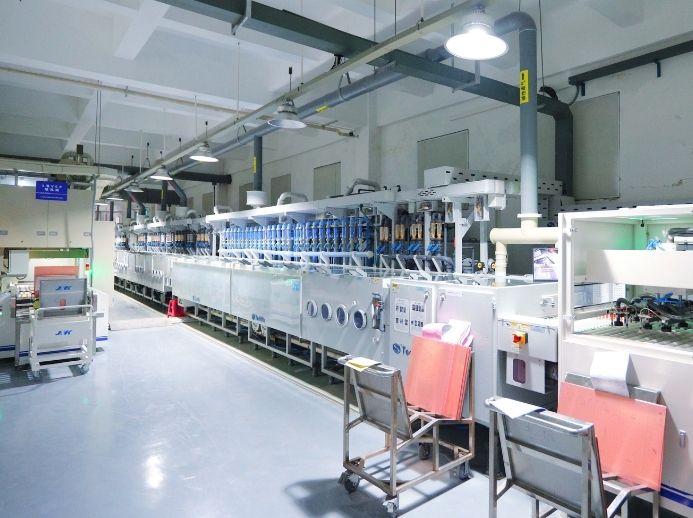
Medical-grade flexible circuits manufactured on genuine DuPont Pyralux polyimide laminates, fabricated and tested within a single facility under full material traceability.

• DuPont Pyralux AP Adhesiveless Polyimide Laminates 
• Stable Dk 3.4 & Low Df 0.003 for Controlled-Impedance Flex Circuits 
• UL 94 V-0 Flammability for Medical Electronics
• Flexible PCB up to 8 Layers & Rigid-Flex PCB up to 20 Layers 
• ISO 13485 & IPC Class 2/3 Manufacturing

DuPont Pyralux Flexible PCB Manufacturer
Certifications
What Is a DuPont Pyralux PCB?
introduction

What Is a DuPont Pyralux PCB?

DuPont Pyralux is a polyimide-based flexible PCB material system designed for flexible and rigid-flex circuit applications. Adhesiveless Pyralux AP uses copper directly bonded to polyimide, eliminating the acrylic adhesive layer used in conventional flexible laminates.

Its thin, flexible construction and thermal stability make Pyralux suitable for medical electronics that require compact form factors, repeated flexing, or reliable performance under thermal processing.

MedPCB manufactures flexible and rigid-flex PCBs using DuPont Pyralux materials, including single-sided, double-sided, and multilayer constructions.

advantages

Key Advantages of DuPont Pyralux AP for Medical Flex PCBs

  • Adhesiveless All-Polyimide Construction for Thin, Dense Flex
  • Stable Dielectric Constant for Controlled-Impedance Circuits
  • High Copper-Polyimide Adhesion Strength
  • Thermal Resistance & UL 94 V-0 Safety Rating
Adhesiveless All-Polyimide Construction for Thin, Dense Flex
Conventional flex laminates use acrylic adhesive between the copper and polyimide, creating a thicker, less stable dielectric. Pyralux AP eliminates this adhesive, resulting in thinner builds, superior dynamic bend performance, and cleaner microvia drilling essential for space-constrained medical devices.
Stable Dielectric Constant for Controlled-Impedance Circuits
High Copper-Polyimide Adhesion Strength
Thermal Resistance & UL 94 V-0 Safety Rating
Why Choose Us

Why Choose MedPCB?

  • ISO 13485 Certified Pyralux Flex PCB Production

    ISO 13485 Certified Pyralux Flex PCB Production

    MedPCB’s medical PCB production fully complies with the ISO 13485 quality management system. We maintain standardized documentation, complete production records and full material traceability to meet strict medical device manufacturing requirements.

  • Free DFM Review with Flex Stackup

    Free DFM Review with Flex Stackup

    Before material release we confirm the flex stackup achieves your target thickness and impedance, checking coverlay openings, bend radius, copper weight against requested line and space, and stiffener placement.

  • DuPont Pyralux Material Sourcing

    DuPont Pyralux Material Sourcing

    MedPCB sources genuine DuPont Pyralux materials through established supplier channels and verifies incoming materials against the specified part number and documentation before production. This helps maintain material consistency and reduces the risk of unapproved substitutions or supply-related production delays.

  • Advanced Flexible & Rigid-Flex Capability with Polyimide Laminates

    Advanced Flexible & Rigid-Flex Capability with Polyimide Laminates

    MedPCB supports up to 8-layer flexible PCBs and 20-layer rigid-flex PCBs, including multilayer flex and complex rigid-flex constructions. Our manufacturing capability covers prototypes through production builds according to your specified material stackup and fabrication requirements.

  • Quality Control, Testing & Material Traceability

    Quality Control, Testing & Material Traceability

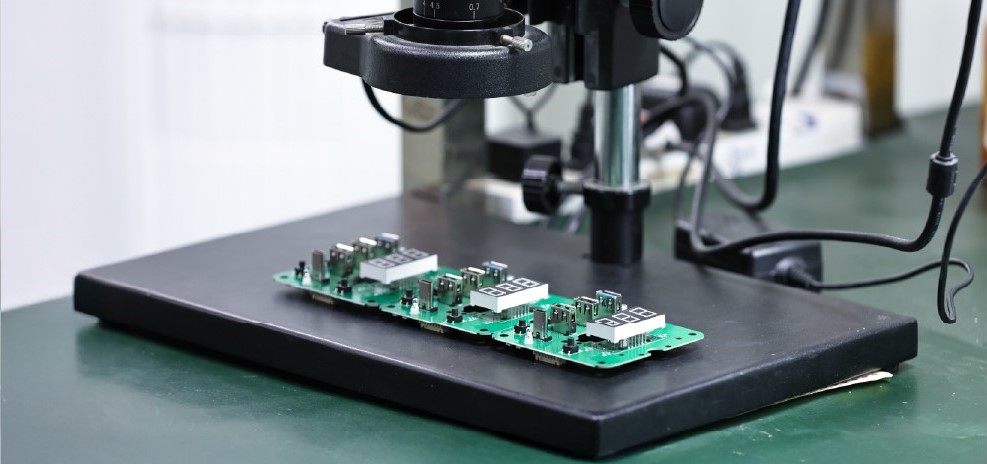
    MedPCB applies AOI, electrical testing, impedance testing where specified, microsection analysis, and dimensional inspection according to project requirements. Material certificates and production records are maintained for lot-level traceability throughout the manufacturing process.

Specs

Technical Specifications

Item Standard Advanced
Material DuPont Pyralux AP FCCL: PI 1/2/3 mil, Cu 0.5/1 oz PI 4 mil, Cu 2 oz
Flex Layers 1–4 5–8
Rigid-Flex Layers 2–12 (up to 10 flex layers) 13–20 (up to 18 flex layers)
Flex Board Thickness (without stiffener) 0.05–0.5 mm 0.5–0.8 mm
Rigid-Flex Board Thickness 0.3–3.0 mm 0.3–4.0 mm
Min Line/Space (0.5 oz Cu) 3/3.2 mil 2.8/2.7 mil
Max Copper Thickness 2 oz inner / 3 oz outer 3 oz inner / 5 oz outer
Min Mechanical Drill 6 mil 4 mil
HDI / 1+n+1 (buried via ≤ 0.4 mm)
Impedance Control (Single-Ended) ±5Ω (≤50Ω), ±10% (>50Ω) ±3Ω (≤50Ω), ±8% (>50Ω)
Impedance Control (Differential) ±5Ω (≤50Ω), ±10% (>50Ω) ±4Ω (≤50Ω), ±8% (>50Ω)
Min Bend Radius (Single Layer) 3–6× Board Thickness /
Min Coverlay Bridge 8 mil /
Max Board Size • Flex: 9 × 14 in
• Rigid-Flex: 406.4 × 558.8 mm
• Flex: 9 × 23 in (PI ≥ 1 mil)
• Rigid-Flex: 406.4 × 736.6 mm
Surface Finish ENIG, ENEPIG, OSP, Immersion Silver, Immersion Tin, Soft/Hard Gold, LF HASL
Medical Dupont Pyralux Flexible PCB
Process

Our Medical Dupont Pyralux Flex PCB Production Process

Step 1: Engineering Review & Flex Stackup Verification
Our engineering team reviews your Gerber files and raises engineering queries (EQs) for manufacturability concerns when needed. We verify material callouts, layer structure, flex stack-up, and key fabrication requirements to identify production risks and confirm the final board construction before manufacturing.
Step 2: Pyralux Material Preparation & Circuit Imaging
Step 3: Etching, Drilling & Plated Through-Hole Processing
Step 4: Coverlay Lamination & Surface Finish
Step 5: Electrical Testing & Final Inspection
challenges

Common Challenges When Manufacturing  DuPont Pyralux PCBs

  • Thin Polyimide Material Handling

    Thin Polyimide Material Handling

    Thin polyimide materials are more susceptible to handling marks, scratches, and creasing during flex PCB fabrication. These defects can affect circuit integrity and final appearance.

    Our Solution: MedPCB uses dedicated flex handling procedures and carrier panels where required. Incoming materials are inspected for surface defects, and controlled handling practices are applied throughout production.

  • Dimensional Stability During Flex Fabrication

    Dimensional Stability During Flex Fabrication

    Polyimide flex materials suffer dimensional shrinkage from moisture and stress relief during etching, which may cause layer misalignment, annular‑ring breakout and coverlay offset.

    Our Solution: MedPCB pre-bakes panels, images in humidity-controlled rooms, and applies etch compensation from measured shrinkage data for each construction rather than one global factor. Tooling holes are set by post-etch punch registration after the film has relaxed, and first-article dimensional inspection confirms compensation before lot release.

  • Copper Adhesion and Plated-Hole Reliability

    Copper Adhesion and Plated-Hole Reliability

    Barrel and polyimide expand at different rates, so thermal cycles stress the interface and barrel cracking dominates field failures. Inadequate hole wall preparation produces adhesion loss that passes electrical test and then fails during thermal cycling qualification.

    Our Solution: MedPCB uses process conditions suitable for polyimide materials and verifies plated-hole quality through electrical testing and microsection analysis according to the required quality class.

  • Coverlay Alignment and Flex Reliability

    Coverlay Alignment and Flex Reliability

    Openings are cut before lamination with no correction possible, and misalignment either exposes copper or obstructs a pad. An edge terminating inside the bend zone is worse, because it concentrates stress where the conductor cracks in service rather than at test.

    Our Solution: MedPCB holds an 8 mil minimum coverlay bridge and aligns pre-cut openings under optical registration. Placement is verified by AOI after lamination, and DFM review reports any coverlay edge falling inside the bend zone before material is committed.

DuPont Pyralux AP Material Specifications
Specifications

DuPont Pyralux AP Technical Specifications

The table below outlines the key DuPont Pyralux AP material specifications and performance characteristics, extracted directly from the official DuPont Pyralux AP datasheet. Electrical values such as the Pyralux AP dielectric constant and loss tangent are included for reference:

Property DuPont Pyralux AP
Material Type Adhesiveless polyimide-copper laminate
Dielectric Constant (Dk) 3.4 @ 1 MHz
Dissipation Factor (Df) 0.003 @ 1 MHz
Peel Strength (90°) > 1.8 N/mm (typ.)
Copper Foil 18 / 35 / 70 μm (down to 1/2 oz)
Dielectric Thickness 25–150 μm*
Flammability UL 94 V-0 (UL 796)
Lead-Free Process Compatible Yes

Need a DuPont Pyralux AP flexible PCB for your high-reliability electronics? Send us your Gerber files for a free DFM review and quote.

industries

Applications of Medical Dupont Pyralux Flex PCBs

More Industries

Case Study

Medical Dupont Pyralux Flex PCB Case Studies

  • Pyralux AP Adhesiveless Flex for Cardiac Pacemaker Interconnect
    Pyralux AP Adhesiveless Flex for Cardiac Pacemaker Interconnect Pyralux AP Adhesiveless Flex for Cardiac Pacemaker Interconnect

    Pyralux AP Adhesiveless Flex for Cardiac Pacemaker Interconnect

    A medical-device customer required a thin flexible interconnect for a compact cardiac electronics assembly. MedPCB produced a double-sided Pyralux AP flex circuit with controlled line/space, coverlay, and ENEPIG surface finish. Electrical testing and dimensional inspection were completed before shipment.

  • Multilayer Rigid-Flex for Insulin Pump Controller
    Multilayer Rigid-Flex for Insulin Pump Controller Multilayer Rigid-Flex for Insulin Pump Controller

    Multilayer Rigid-Flex for Insulin Pump Controller

    The customer needed an 8‑layer rigid‑flex PCB with two rigid sections connected by a 4‑layer flexible tail, built with ENIG surface finish for an insulin pump controller. We mitigated differential material shrinkage with targeted etch compensation and applied post‑etch punching for stable tooling holes. This PCB helped the customer simplify system architecture and eliminate extra connectors and wiring.

  • Flex Electrode Array for Neurostimulation Device
    Flex Electrode Array for Neurostimulation Device Flex Electrode Array for Neurostimulation Device

    Flex Electrode Array for Neurostimulation Device

    A neurostimulation application demanded a fine-pitch flex layout with sub-3 mil traces on 1 mil polyimide. To maintain yield, single-layer flex panels were imaged via direct imaging in a humidity-controlled environment, achieving 2.8/2.7 mil line/space specs. The electrode pads received hard gold plating, while the outline was precision laser-profiled. Every panel underwent automated optical inspection (AOI), electrical testing, and dimensional checks to meet IPC Class 3 standards.

  • Flex Circuit for Endoscopy Camera Module
    Flex Circuit for Endoscopy Camera Module Flex Circuit for Endoscopy Camera Module

    Flex Circuit for Endoscopy Camera Module

    An endoscopy camera tail required a tight 3 mm bend diameter at a total thickness of 0.15 mm. To maintain flexibility in the bend region, coverlay terminations were placed outside the fold area, and bond ply was restricted strictly to essential areas of the stackup. Each panel underwent coverlay registration verification alongside 100% electrical continuity testing prior to release.

Faqs

Frequently Asked Questions

Our Medical DuPont Pyralux AP Flex PCB FAQ addresses key questions regarding DuPont Pyralux AP flexible laminate properties and fabrication standards. We cover flexible characteristics, thermal stability, adhesiveless polyimide performance, multilayer construction, surface finishes, sterilization compatibility, and DFM support. For every medical Pyralux flex PCB project, we guarantee high-precision manufacturing engineered for critical healthcare applications.

1. What Is the Difference Between Pyralux AP and Pyralux LF?
Pyralux AP is an adhesiveless all-polyimide copper-clad laminate, while Pyralux LF uses an acrylic adhesive system. AP is commonly selected when thin construction, thermal performance, and dimensional stability are important. LF products are available as flexible laminates, coverlays, bondplys, and sheet adhesives for different flex constructions.
2. What Makes DuPont Pyralux AP Different from Conventional Flex Laminates?
Conventional adhesive-based laminates soften and expand more under heat, absorb more moisture, and smear during drilling. Pyralux AP is all-polyimide, so the whole dielectric behaves as one consistent material, which is why it's specified for high-reliability flex laminate applications.
3. Can DuPont Pyralux AP Be Used in Multilayer Flex PCBs?
Yes. We build up to 8 flex layers and up to 20 layers in rigid-flex (with up to 18 flex layers) using AP cores joined by bond ply. Multilayer flex needs careful attention to registration and bend zone construction, which we cover during DFM review.
4. What Is an Adhesiveless Flex Laminate?
A copper clad laminate where copper foil bonds directly to the polyimide film with no separate adhesive layer. The benefit is a thinner, more thermally stable, more dimensionally predictable base material.
5. Why Is Pyralux Suitable for Critical Medical Devices?
Pyralux AP supports high‑reliability flexible and rigid‑flex circuit applications. It features an adhesiveless all‑polyimide build with robust thermal, mechanical, and electrical performance. Its fitness for a given medical device depends on the full PCB construction, operating environmental conditions, sterilization approach, and relevant regulatory requirements.
6. Are Pyralux PCBs RoHS and REACH Compliant?
Yes. Everything we ship is RoHS and REACH compliant, with declarations included on every order. We also hold ISO 9001, ISO 13485, and UL certification.
7. What Surface Finishes Are Recommended for Pyralux Flex PCBs?
For medical work, ENIG and ENEPIG are the most common because they're flat, solderable, and stable in storage. Use ENEPIG or hard gold where wire bonding or contact wear is involved, and soft gold for electrode pads. We also offer OSP, immersion silver, immersion tin, and lead-free HASL. Avoid HASL on very thin flex, where thermal shock during the process can cause distortion.
8. How Many Layers Can a Pyralux Medical PCB Support?
1 to 8 layers for pure flex, and 2 to 20 layers for rigid-flex with up to 18 flex layers. HDI is available at 1+n+1 with buried vias up to 0.4 mm.
9. What Is the Minimum Trace Width and Spacing on Pyralux?
3/3.2 mil standard and 2.8/2.7 mil advanced on 0.5 oz copper. Heavier copper needs wider geometry. Tell us your copper weight and we'll confirm what's achievable at production yield.
10. Are Pyralux Flex PCBs Suitable for Repeated Sterilization?
Polyimide handles autoclave, EtO, and gamma sterilization well, which is why it's standard in reusable surgical instruments and endoscopes. Base material tolerance is only part of the picture, though. Coverlay adhesion, surface finish choice, and edge sealing all affect the outcome. Share your sterilization protocol and we'll flag anything in the construction that concerns us.
11. Do You Provide Impedance Test Coupons for Pyralux Flex PCBs?
Yes. When controlled impedance is specified, we include coupons on the panel and supply TDR measurement reports with the shipment at no extra charge. Standard tolerance is ±10%, and advanced is ±8% or ±3Ω on lower-impedance nets.

Product Related