Top 10 Flexible Circuit Board Suppliers for Medical Devices in 2026
-

-
August 25, 2026


Medical devices place demanding requirements on flexible circuits, from mechanical reliability and miniaturization to quality control and traceability. The right supplier should have proven flex PCB manufacturing capabilities, relevant medical experience, and the quality systems needed for high-reliability applications. This guide reviews 10 flexible circuit board suppliers to help you identify suitable manufacturing partners.
Look for an ISO 13485 quality system, documented flex and rigid-flex capability, and lot-level traceability. A capable medical FPC supplier also reviews your files before quoting, which catches most yield problems early.

Multek was founded in California in 1978 and became part of Flex in 2000. In 2018, its China-based operations were acquired by Suzhou Dongshan Precision Manufacturing (DSBJ). Today, Multek provides flexible, rigid-flex, HDI, and other advanced PCB technologies for industries including medical, automotive, and industrial electronics.
Multek reports large-scale production capabilities for single-sided, double-sided, multilayer, and rigid-flex circuits. Its flexible circuit portfolio includes multilayer constructions, fine-line processing, microvias, coverlay, stiffeners, and multiple surface finishes. These capabilities make it a strong option for high-volume and technically demanding flex applications.

Founded in Shenzhen in 2008, MedPCB focuses its public offering on PCB fabrication for medical-related electronics. The company produces flexible PCB, rigid-flex, HDI, and multilayer boards within its 20,000 m² facility, with publicly stated monthly output exceeding 50,000 m².
According to its published documentation, the factory supports up to 40-layer constructions with 3 mil trace and space, covering flex and rigid-flex laminate materials. Rigid-flex offerings up to 20 layers, and flexible PCB support up to 8 layers with manufacturing compliant to IPC Class 2 or Class 3 requirements.
Publicly listed certifications include ISO 13485:2016, ISO 9001:2015, ISO 14001:2015, UL, RoHS and REACH. They also support 24-hour quick-turn prototype service. Finished bare boards undergo multi-stage inspection before shipment. This includes AOI, as well as electrical testing performed by flying-probe or fixture-based equipment.

Minco has manufactured flex circuits, flexible heaters, temperature sensors, and instruments for more than six decades. The company reports over 600 employees worldwide, roughly 300,000 square feet of manufacturing space, and more than 80 quality certifications across its manufacturing sites.
Its flex portfolio covers multilayer flex and rigid-flex for high-reliability work, and medical sits among its named industries alongside aerospace and defense. Minco also integrates heaters and sensors with flex interconnects, which suits thermally sensitive diagnostic and therapeutic equipment.

Founded in 1977, All Flex Solutions supplies specialty flex and rigid-flex printed circuits, flexible heaters, and value-added assemblies for mission-critical and life-critical products. The company positions itself around quick-turn prototypes and low- to mid-volume production runs rather than mass volume.
Product lines include CatheterFlex for catheter builds, extended-length Maxi Flex, sculptured flex, and rigid-flex. Published approvals cover AS9100, ISO 9001, ITAR registration, MIL-P-50884, and IPC certification. Medical, defense, aerospace, and semiconductor production make up its core customer base.

Operating since 1967, Fralock builds flexible and rigid-flex circuits, etched foil flex cables, flex heaters, and specialty laminates. Its Adhesiveless Lamination Technology produces all-polyimide constructions that skip adhesive layers entirely, which raises thermal tolerance for demanding medical and aerospace assemblies.
Certifications include ISO 13485:2016, ISO 9001:2015, AS9100D, FDA registration, and ITAR, plus an IPC-1791 Qualified Manufacturer Listing. The company runs a dedicated medical and life science group covering flex circuits, heaters, structural ceramics, and stick-to-skin materials for wearables.

Epec brings roughly 70 years of printed circuit board experience and reports supporting more than 5,000 customers across the electronics industry. The company supplies flex and rigid-flex PCBs, rigid boards, HDI, cable assemblies, user interfaces, flexible heaters, and battery packs.
Published certifications cover UL, ITAR registration, RoHS, ISO 9001, and ISO 27001. Epec offers a free DFM file check with no order obligation, plus an online quoting portal. Named target markets include medical, aerospace, industrial, and defense electronics programs.

Founded in 1980, Cirexx runs layout, fabrication, assembly, and test under one roof in Silicon Valley with roughly 160 employees. The company reports 100% US manufacturing and quick-turn fabrication in as little as 24 hours for urgent customer programs.
Capabilities span flexible circuits, multilayer rigid-flex, HDI, RF and microwave boards, copper and epoxy-filled vias, plus flex assembly with BGA and wire bonding. Certifications include ITAR, IPC, UL, AS9100, and ISO 9001. Medical and wearable electronics appear among its served industries.

FCT has supplied flexible circuits since 2000, pairing US-based application engineers and CAD teams with Asian manufacturing in China and Thailand. Its Zhuhai facility covers roughly 485,000 square feet and produces FPC, rigid-flex, substrate-like PCBs, and flexible heaters at volume.
Medical products include catheter flexible circuits and endoscope flexible circuits, alongside flat flex cables, printed electronics, and FPCA assembly. Published certifications cover ISO 9001:2015, ISO 14001, ISO 13485, IATF 16949, and VDA 6.3. Wearables and medical sit among its named markets.

Sierra Circuits manufactures and assembles flex, rigid-flex, and HDI flex boards in a 70,000 square foot Silicon Valley campus. Published limits reach 12 layers for flex and up to 16 for rigid-flex, with minimum trace and space of 3.5 mil.
Certifications include ISO 13485:2016, ISO 9001:2015, AS9100D, ITAR, MIL-PRF-31032, and IPC-6012 Class 3/ES. The company quotes flex and rigid-flex turns in as fast as five days and supplies microsection, solderability, ionic contamination, and TDR reports on customer request.

MV Flex Circuit has produced flexible printed circuits and rigid-flex boards for more than 15 years from a facility of roughly 5,000 square meters. Its catalog covers single-sided, double-sided, and multilayer flex, HDI rigid-flex, flexible heaters, and FPC antennas.
They manufacture products from single-sided and double-sided flex through multilayer flex, HDI rigid-flex, long flex, and FPC antennas, with stiffeners and coverlay handled in-house. Laminates include DuPont Pyralux, SF202, SF305, and R-F775. Every shipment carries a micro-section and certificate of conformance, with most work built to IPC Class 3 under ISO 9001:2015, ISO 14001, and UL 94 V-0.
| Supplier | Location | Key Certifications | Flex Focus |
| Multek | Zhuhai, China | ISO 27001, TISAX | Multilayer flex, HDI rigid-flex, semi-flex |
| MedPCB | Shenzhen, China | ISO 13485, ISO 9001, ISO 14001, UL, RoHS | Flex, rigid-flex, HDI, SMT assembly |
| Minco Products | Minneapolis, MN, USA | ISO 9001, AS9100D | Multilayer flex, heaters, sensors |
| All Flex Solutions | Northfield, MN, USA | AS9100, ISO 9001, ITAR | CatheterFlex, sculptured flex, heaters |
| Fralock | Valencia, CA, USA | ISO 13485, AS9100D, FDA, ITAR | All-polyimide adhesiveless flex |
| Epec | New Bedford, MA, USA | ISO 9001, ISO 27001, UL, ITAR | Flex, rigid-flex, heaters |
| Cirexx | Santa Clara, CA, USA | AS9100, ISO 9001, ITAR, UL | Quick-turn flex, HDI rigid-flex |
| FCT | Minneapolis, MN, USA | ISO 13485, ISO 9001, IATF 16949 | Catheter and endoscope flex, FPCA |
| Sierra Circuits | Sunnyvale, CA, USA | ISO 13485, AS9100D, MIL-PRF-31032 | Flex to 12L, rigid-flex to 16L |
| MV Flex Circuit | Shenzhen, China | ISO 9001, ISO 14001, UL 94 V-0, ISO 13485 | Flex, HDI rigid-flex, flex & flex rigid assembly |
Medical device flex circuits remove connectors and cable harnesses, which removes the most common failure points inside a sealed device. You gain space, drop weight, and route around curved housings. A flex PCB for wearable medical devices follows the contour of a wrist or a chest patch. Pacemaker flex circuits and biosensor flexible PCB builds push that further, folding multilayer routing into a few cubic millimeters.
Compare layer count, minimum trace and space, coverlay registration, and stiffener options before you compare price. Medical equipment FPC suppliers differ most on the last two. Ask for microsection reports from a recent similar job, because a supplier that shares real cross-sections has nothing to hide.
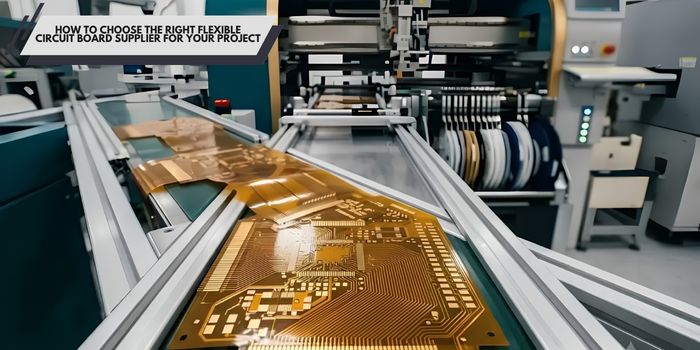
Match the supplier to your project stage. Quick-turn medical flex PCB shops fit prototypes and layout iteration, while volume medical electronics contract manufacturing fits locked designs entering production. A supplier who flags a via inside your bend zone, or a pad-to-trace junction without a fillet, has actually read your files.
Review the supplier’s official certification documents. Confirm the issuing authority, accredited scope, and expiration date. Keep in mind that a certification covering only rigid PCB manufacturing may not apply to your flex‑circuit project.
Request published limits in writing: maximum flex layer count, minimum trace and space on polyimide, coverlay registration tolerance, and stiffener thicknesses. Verbal capability claims evaporate once a yield problem arrives.
Ask which medical builds the supplier has actually shipped: catheter flex, wearable patches, endoscope tips, or imaging interconnect. Similar geometry matters more than a long customer list. Request a redacted example.
Confirm record retention in years, not vague assurances. Ask whether serialization runs to panel level or lot level, and who signs the certificate of conformance. Request a sample traceability record.
Check whether prototype and production run in the same plant on the same tooling. A prototype built elsewhere tells you nothing about production yield. Ask what changes between the two.
ISO 13485 is the one that counts most, since it proves a medical device quality system rather than a general one. Add ISO 9001, UL, and RoHS as baseline compliance. For finished device components, look for FDA registration too. Ask for dated certificates before you place a first order.
Minimum bend radius equals a multiplier times your total stackup thickness. IPC-2223 sets that multiplier by layer count and bend type.
| Construction | Bend type | Minimum radius |
| Single-sided flex | Static, bend to install | 6× thickness |
| Double-sided flex | Static | 12× thickness |
| Multilayer flex | Static | 24× thickness |
| Single-sided flex | Dynamic, repeated | 100× thickness |
| Double-sided flex | Dynamic | 150× thickness |
Shops generally avoid multilayer stackups in dynamic bend zones. Keep vias, plated holes, and component pads out of the bend area, then confirm the final number against your actual stackup with your supplier.
Flexible medical circuit boards come in four main builds. Single-sided flex handles simple sensor connections. Double-sided and multilayer flex carry denser routing for monitors and handheld instruments. Rigid-flex suits compact devices needing both mounting rigidity and a bending interconnect. Sculptured and extended-length flex serve catheters and endoscopes.
Standard polyimide flex handles roughly 200,000 bending cycles. Designs using rolled annealed copper, a neutral-axis stackup, and a generous bend radius pass one million. Electrodeposited copper cracks far sooner, so specify rolled annealed for anything dynamic. Request bend-cycle testing on your actual stackup rather than trusting a datasheet number.
Flex pricing is quote-driven, so ask for a figure against your actual stackup. Tooling dominates at prototype quantities, while layer count, copper weight, panel utilization, surface finish, and stiffener count drive the unit price. Per-unit cost falls sharply once volume amortizes tooling, so quote prototype and production quantities together.
Polyimide flexible PCB medical constructions handle autoclave temperatures around 121 to 134 degrees Celsius without degrading, so steam sterilization is workable. Ethylene oxide and gamma methods suit assemblies with temperature-sensitive components. Conformal coating or parylene adds moisture protection.
Expect five to fifteen working days for most flex and rigid-flex prototypes. Quick-turn suppliers deliver simple two-layer flex in 24 to 72 hours at a premium. Assembly adds another two to five days depending on component availability. Long-lead parts, not fabrication, usually set your real schedule.
Pick your flexible printed circuit manufacturer on evidence, not marketing. Ask for certificates, microsections, and a DFM review on your actual files. The right medical flexible PCB partner tells you what will fail before you build it, and that conversation saves more money than any unit-price discount.


Professional PCB




English

French

German

Japanese

Korean