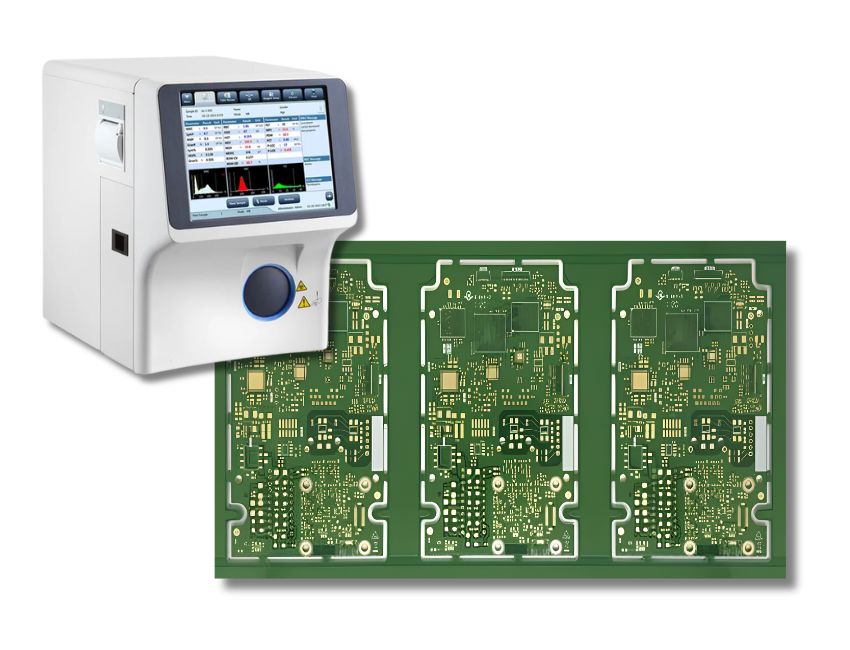
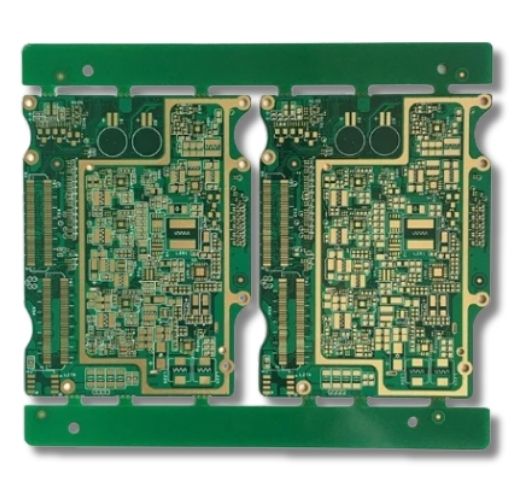
TU768 Medical PCB Manufacturing and Assembly

TU768 is a high-Tg FR-4 laminate by TUC, providing top-tier thermal stability and anti-CAF reliability for medical devices. At MedPCB, we use TU768 in our ISO 13485 facilities to build IPC Class 3 multilayer HDI boards.

• High-Tg FR-4 Laminate for Thermal Stability
• Anti-CAF Performance for Long-Term PCB Reliability 
• Low CTE for Multilayer Reliability
• UL 94 V-0 & RoHS Compliant 
• ISO 13485 & IPC Class 3 Manufacturing

TU768 Medical PCB Manufacturing and Assembly
Certifications
What Is a TU768 PCB?
introduction

What Is a TU768 PCB?

A TU768 PCB is a printed circuit board built on Taiwan Union Technology Corporation TU768, a high-performance FR-4 material formulated with a specialized epoxy resin system over high-quality woven E-glass. The material family encompasses the TU-768 core, TU-768P TU768 prepreg, and TU-768 copper-clad laminate components.

These properties make TU-768 suitable for medical electronics that require stable performance through repeated thermal cycling, lead-free assembly, and long-term operation.

MedPCB manufactures custom TU768 PCBs with controlled multilayer fabrication, material traceability, and IPC Class 2/3 production support.

advantages

Key Advantages of Medical-Grade TU768 PCBs

  • High-Tg Performance for Lead-Free Assembly
  • Excellent CTE for Multilayer Reliability
  • Anti-CAF Performance for Long-Term Reliability
  • Moisture Resistance for Stable Electrical Performance
  • Chemical and Thermal Resistance for Demanding Medical Applications
High-Tg Performance for Lead-Free Assembly
TU768 offers a high glass transition temperature of 180°C (DSC), providing stable dimensional and mechanical performance under elevated temperatures. This makes it suitable for your medical electronics exposed to lead-free reflow, thermal cycling, and other elevated-temperature conditions.
Excellent CTE for Multilayer Reliability
Anti-CAF Performance for Long-Term Reliability
Moisture Resistance for Stable Electrical Performance
Chemical and Thermal Resistance for Demanding Medical Applications
Why Choose Us

Why Choose MedPCB?

  • ISO 13485 Certified TU768 PCB Production

    ISO 13485 Certified TU768 PCB Production

    MedPCB manufactures TU768 PCBs under an ISO 13485-certified quality management system, with controlled production processes and documented quality records for medical device projects.

  • Free DFM Review for TU-768 PCB Project

    Free DFM Review for TU-768 PCB Project

    We provide a free DFM review for your TU768 PCB files before production. Our engineering team checks key manufacturing requirements, including trace and spacing, drill sizes, annular rings, layer alignment, and board stackup. Helping you identify design flaws early on can help eliminate errors before entering production.

  • IPC Class 3 PCB Fabrication & Assembly

    IPC Class 3 PCB Fabrication & Assembly

    MedPCB supports TU768 PCB fabrication and assembly to IPC Class 2 and Class 3 requirements. We provide PCB manufacturing and PCBA services for medical electronics requiring high reliability and consistent production quality.

  • Full Material and Production Traceability

    Full Material and Production Traceability

    We maintain a premium, stable supply chain with direct sourcing of authentic TUC TU768 raw materials from Taiwan Union Technology. All substrates are 100% genuine and factory-certified. We enforce full lot-to-lot material traceability throughout the entire manufacturing workflow.

  • Quality Assurance & Reliability Testing

    Quality Assurance & Reliability Testing

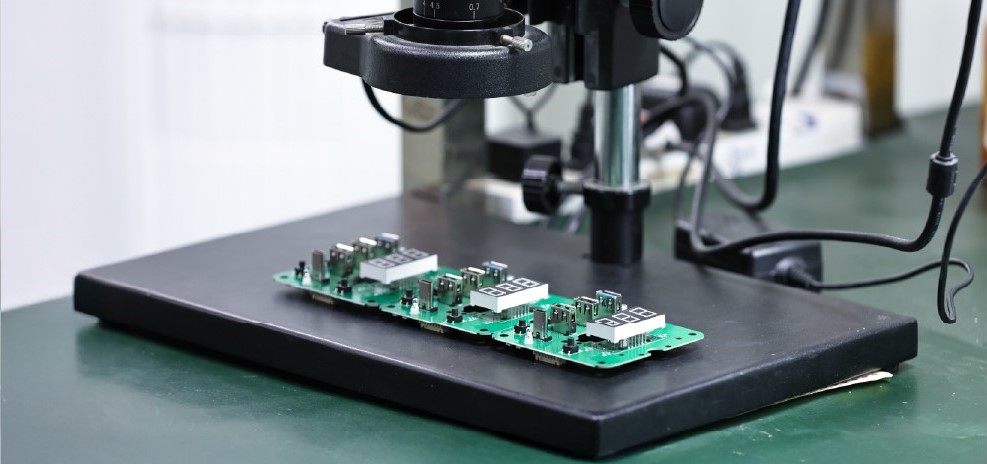
    MedPCB applies multiple inspection and testing methods throughout TU768 PCB production. Depending on the project requirements, quality control may include AOI, X-ray inspection, electrical testing, impedance testing, and microsection analysis.

Specs

Technical Specifications

Parameter Standard Capability Advanced Capability
Layer Count 1-20 layers 22-40 layers
Finished Board Thickness 0.20-3.20 mm 3.40-10.0 mm
Copper Thickness 0.5-4 oz 0.33-100 oz
Minimum Line/Space (1/2 oz) 0.10/0.11 mm (3.9/4.5 mil) 0.08/0.08 mm (3.5/3.5 mil)
Minimum Laser Drill (Blind Via) 0.10 mm (4 mil) 0.10 mm (4 mil)
Controlled Impedance Tolerance ± 10% (≥ 50 ohm) ± 5 ohm (< 50 ohm)
Maximum Panel Size 500 x 600 mm 1100 x 500 mm
Surface Finish HASL Lead-Free, OSP ENIG, ENEPIG, Immersion Ag / Sn
Medical TU768 PCB
Process

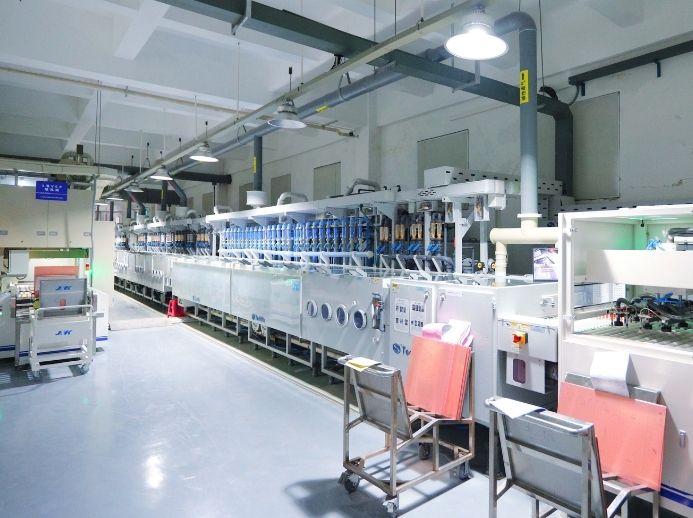
Our Medical TU768 PCB Production Process

Step 1: Engineering Review & TU768 Material Verification
Incoming TU-768 core materials undergo strict verification against their manufacturer certificates of conformance. The engineering team confirms the correct UV-blocking fluorescence properties are present before authorizing the laminate lot for active floor production.
Step 2: Inner Layer Imaging & TU768 Prepreg Lamination
Step 3: Drilling & Hole Preparation
Step 4: Copper Plating & Outer Layer Fabrication
Step 5: Final Inspection, Reliability Testing
challenges

Common Challenges in Medical TU768 PCB Manufacturing

  • Multilayer Lamination and Dimensional Control

    Multilayer Lamination and Dimensional Control

    TU768 high-Tg laminates feature rigid resin systems that generate uneven shrinkage during vacuum lamination. Rigid substrate behavior makes layer-to-layer registration difficult to control, easily leading to misalignment and compromised via connectivity in multilayer stacks.

    Our Solution: We apply custom panel scaling compensation based on first-article verification data tailored for TU768 material shrinkage characteristics. All thin cores are mounted on precision pinned frames during lamination to minimize lateral shifting and ensure accurate inner-to-outer layer registration.

  • Plated Through-Hole Reliability

    Plated Through-Hole Reliability

    Contamination in the drill hole prevents the electroless copper from adhering to the inner layer connections. The resulting weak barrel fractures under the thermal shock of wave soldering, creating intermittent connections in the final assembly.

    Our Solution: We run a tightly controlled alkaline permanganate desmear process customized for high Tg epoxy systems. Technicians pull test coupons from every production panel to verify interconnection integrity microscopically prior to shipment.

  • Moisture Control and Lamination Quality

    Moisture Control and Lamination Quality

    Substrates absorb atmospheric moisture when left unprotected on the production floor prior to the press cycle. Trapped moisture expands violently during high-temperature thermal stress testing, causing internal delamination and destroying layer bonds.

    Our Solution: We conduct mandatory pre-lamination baking for all TU768 cores and prepregs to eliminate residual moisture. Finished bare boards are vacuum-packed with desiccants to prevent reabsorption during storage and transit, ensuring long-term thermal stability.

  • Fine-Line Fabrication and Etching Control

    Fine-Line Fabrication and Etching Control

    TU768 resin uniformity requires tightly balanced etching parameters. Uncontrolled chemical aggression causes inconsistent trace width reduction, shifting controlled impedance values and introducing signal integrity errors during device operation.

    Our Solution: We maintain closed-loop control of etchant concentration, temperature, and conveyor speed for precise fine-line etching. Post-etch AOI metering verifies trace width consistency, stabilizing impedance performance for high-reliability medical applications.

TU768 Material Specifications
Specifications

TU768 Material Specifications

The following table summarizes the thermal, electrical, mechanical, and physical properties of TU768 based on IPC-4101E/126 validation specifications.

Property Condition Value
Glass Transition (Tg) DSC 180 °C
Decomposition Temp (Td) TGA 350 °C
Z-Axis Expansion (CTE) 50 - 260 °C 2.7 %
Thermal Stress (T288) Solder Float, 288°C > 15 min
Permittivity (Dk) 1 GHz (RC 50%) 4.3 -
Loss Tangent (Df) 1 GHz (RC 50%) 0.018 -
Water Absorption E-1/105+D-24/23 0.18 %
Maximum Operating Temp Continuous 130 °C
Flammability Rating UL 94 V-0 Rating

Need a TU768 PCB for your high-reliability medical electronics? Send us your Gerber files for a free DFM review and quote.

industries

Applications of Medical TU768 PCBs

More Industries

Case Study

Medical TU768 PCB Case Studies

  • Portable Ultrasound Board on 12-Layer TU768
    Portable Ultrasound Board on 12-Layer TU768 Portable Ultrasound Board on 12-Layer TU768

    Portable Ultrasound Board on 12-Layer TU768

    The customer needed a 12-layer PCB for a compact ultrasound platform with dense interconnections and controlled high-speed signal routing. For them we produced a 12-layer stackup utilizing very thin prepreg layers and controlled depth drilling. Every panel underwent automated optical inspection and time domain reflectometry testing prior to packaging.

  • Electrosurgical Generator Board with High-Voltage Isolation
    Electrosurgical Generator Board with High-Voltage Isolation Electrosurgical Generator Board with High-Voltage Isolation

    Electrosurgical Generator Board with High-Voltage Isolation

    The customer came to us with an ablation controller that required significant current-carrying capacity alongside sensitive digital logic. We handled it with sequential lamination and 3-ounce inner layer heavy copper weights. Netlist verification and IPC microsectioning confirmed structural integrity.

  • Critical Care Ventilator Class 3 Assembly
    Critical Care Ventilator Class 3 Assembly Critical Care Ventilator Class 3 Assembly

    Critical Care Ventilator Class 3 Assembly

    For this life-support client, the hospital environment demanded strict IPC Class 3 compliance and verified PCBA performance. Our facility built the boards with an ENIG surface finish to guarantee flat component mounting pads for final assembly. The boards passed strict continuity testing before release.

  • Endoscopic Camera Module for Repeat Sterilization
    Endoscopic Camera Module for Repeat Sterilization Endoscopic Camera Module for Repeat Sterilization

    Endoscopic Camera Module for Repeat Sterilization

    This customer requires high-resolution imaging modules that survive repeated hospital autoclaving, placing extreme stress on the substrate. We imaged precise controlled impedance lines and reinforced the through holes with extra copper deposition to prevent barrel fatigue. Final inspection included exact dimensional validation against the supplied drawing.

Faqs

Frequently Asked Questions

Our Medical TU768 PCB FAQ addresses key questions regarding TUC TU768 high-performance laminate properties and fabrication standards. We cover thermal stability, high-Tg characteristics, anti-CAF reliability, lead-free reflow compatibility, IPC Class 3 standards, and ISO 13485 manufacturing support. For every medical TU768 PCB project, we guarantee high-precision manufacturing engineered for critical healthcare applications.

1. What Is TU768 PCB Material Used For?
TU768 is a woven E-glass reinforced epoxy laminate used primarily for high-reliability printed circuit boards in the medical, server, and automotive sectors. It excels in environments that require continuous operation and survival through aggressive thermal cycling.
2. What Is the Tg and Td of TU768 Laminate?
This material features a glass transition temperature of 180°C via DSC and a decomposition temperature of 350°C via TGA. These thermal properties confirm its status as a robust substrate for high-temperature operating environments.
3. Is TU768 Halogen-Free and RoHS Compliant?
TU768 is a RoHS compliant laminate that withstands lead-free reflow profiles effortlessly. It carries an ANSI Grade FR-4.0 UL designation and is not halogen-free. Halogen-free requirements necessitate an entirely different material formulation.
4. Is TU768 Suitable for ISO 13485 Medical Device Manufacturing?
Yes, TU768 is highly suitable for medical device manufacturing. MedPCB processes this material entirely within our ISO 13485 certified quality management system to support stringent medical regulatory compliance and traceability.
5. What Is the Difference Between TU768 And Standard FR-4?
TU768 provides a glass transition temperature of 180°C and superior anti-CAF properties, whereas standard FR-4 typically offers a glass transition temperature of 135°C. This chemical makeup makes TU768 dramatically more resilient against thermal stress and internal ionic migration compared to standard alternatives.
6. Can TU768 PCBs Be Built to IPC Class 3 Requirements?
Yes, MedPCB regularly manufactures TU768 boards to strict IPC Class 3 standards. This manufacturing level mandates tighter annular ring tolerances and increased copper plating thicknesses within the via barrels to ensure absolute reliability.
7. What Is the Dielectric Constant of TU768 At 1 GHz?
The TU768 dielectric constant measures 4.3 at 1 GHz with a 50 percent resin content. This stable permittivity supports precise impedance calculations and maintains signal integrity for high-speed digital medical designs.
8. Does TU768 Pass CAF Resistance Testing for Medical Applications?
Yes, TU768 passes rigorous Conductive Anodic Filament resistance testing. The epoxy resin system is specifically engineered to prevent internal copper migration under continuous voltage bias and high humidity conditions.
9. What Traceability Documentation Is Provided with TU768 Medical PCB Orders?
MedPCB provides complete certificates of conformance, material lot tracking numbers, and final inspection reports with every shipment. We retain these critical production records permanently to support your medical regulatory audits and ISO 13485 traceability requirements.

Product Related