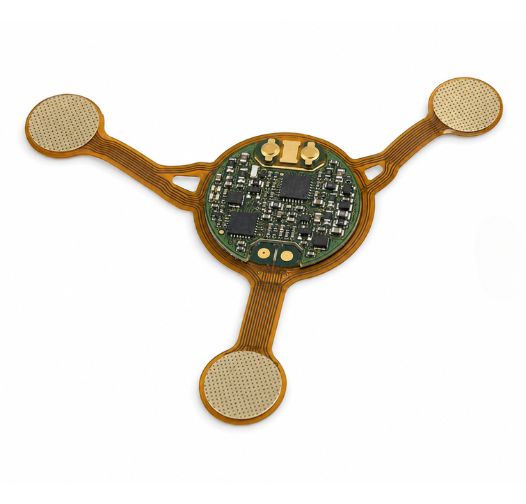
Wearable Heart Rate Monitor PCB

MedPCB provides PCB manufacturing and assembly for wearable heart rate monitors, including ultra-thin flex, rigid-flex, HDI, and fine-pitch PCBAs. We support component sourcing, prototype and volume assembly, inspection, functional testing, and project traceability under an ISO 13485 quality management system.

✓ Ultra-Thin Flex, Rigid-Flex & HDI PCB Manufacturing
✓ Ultra-Fine Pitch Assembly Capability for Wearable Heart Rate Monitor PCB 
✓ Consignment, Full & Partial Turnkey, Inspection & Functional Testing             
✓ ISO 13485 Manufacturing & IPC Class 2/3 Support

Wearable Heart Rate Monitor PCB
Certifications
What is Wearable Heart Rate Monitor PCB
introduction

What is Wearable Heart Rate Monitor PCB?

A Wearable Heart Rate Monitor PCB is a specialized circuit board used inside wearable devices to collect, process, and transmit heart rate data. It connects the heart rate sensor with the processor, power system, wireless module, display, and other device functions.

Wearable heart rate monitor PCBs must fit into small and lightweight devices. They also need to handle constant movement, bending, and daily use. Compact layouts, low-power circuits, and reliable sensor connections are important for stable operation.

MedPCB manufactures and assembles PCBs for wearable heart rate monitors and other compact health monitoring devices. We support rigid, flex, and rigid-flex PCB designs, fine-pitch component assembly, and miniature components. Our manufacturing supports prototypes, low-volume production, and volume manufacturing.

Products

Features of Wearable Heart Rate Monitor PCB

  • High-Density Integration and Miniaturization
  • Flexible PCB Designs for Wearable Devices
  • Mechanical Durability for Long-Term Monitoring
  • Low-Noise Sensor Signal Support
High-Density Integration and Miniaturization
Wearable heart rate monitor PCBs must fit inside small devices with limited board space. High-density layouts and fine-pitch components allow more circuits to fit into a compact area. This supports smaller and lighter wearable designs.
Flexible PCB Designs for Wearable Devices
Mechanical Durability for Long-Term Monitoring
Low-Noise Sensor Signal Support
Why Choose Us

MedPCB for Wearable Heart Rate Monitor PCB Manufacturing?

  • ISO 13485 Certified Manufacturing

    ISO 13485 PCB & PCBA Manufacturing

    MedPCB manufactures wearable heart rate monitor PCBs and PCBAs under an ISO 13485 certified quality management system. Our process supports material traceability, controlled production, and quality inspection from prototypes to volume manufacturing.

  • Ultra-Thin Flex, Flex & Rigid-Flex PCB Capability

    Ultra-Thin Flex, Flex & Rigid-Flex PCB Capability

    We manufacture ultra-thin flex, flex, and rigid-flex PCBs for compact wearable heart rate monitors. These PCB formats support curved layouts, tight spaces, and flexible connections while helping reduce overall device size.

  • Fine-Pitch & Miniature Component Assembly

    Fine-Pitch & Miniature Component Assembly

    Our SMT lines support miniature components from 01005 packages to fine-pitch BGA devices. Precise placement helps meet the small size and high-density requirements of wearable heart rate monitor PCBAs. We also support mixed SMT and THT assembly for designs that require different component types.

  • Turnkey Component Sourcing

    Turnkey Component Sourcing

    MedPCB provides turnkey component sourcing for wearable heart rate monitor PCB assembly. We source genuine, traceable components through approved supply channels and support BOM review, component verification, and production preparation. If a specified component is obsolete or unavailable, we may suggest alternative components for review and approval before production.

  • Free DFM _ DFA Check

    Free DFM / DFA Check

    Our engineering team reviews component placement, PCB layout, spacing, pad design, flex areas, and assembly requirements before production. This helps identify manufacturing issues early and supports reliable wearable heart rate monitor PCB production.

Specs

Technical Specifications


Technical Parameter

Manufacturing Capability

Order Quantity

≥ 1 PCS, No MOQ

Board Size

Standard: up to 500 × 600 mm; Advanced: up to 1100 × 500 mm

Layer Count

Rigid: 1–40 layers; Flex: 1–8 layers; Rigid-Flex: 2–20 layers

PCB Types

Rigid, Flex, Rigid-Flex, HDI, and ultra-thin PCB

Assembly

SMT, THT/DIP, and Mixed-Technology

Component Sourcing

Full, Partial Turnkey, or Consigned; 300,000+ traceable components

Component Range

01005 components, fine-pitch ICs, QFN, BGA, sensor packages, and other miniature components

Placement Accuracy

±0.035 mm

Board Thickness

0.2–10.0 mm

Surface Finish

ENIG, ENEPIG, HASL, OSP, Immersion Silver/Tin, Soft/Hard Gold

Impedance Tolerance

±5 Ω for <50 Ω; ±10% for ≥50 Ω

Materials

High-Tg FR-4, Polyimide, Rogers, Megtron 6 and other qualified PCB materials

Technical Specifications ECG
Capabillities

Wearable Heart Rate Monitor PCB Manufacturing and Assembly at MedPCB

Step 1: Engineering Review & DFM/DFA
We review your PCB design before production. Our engineers check the layout, component placement, trace spacing, flex areas, sensor connections, and power circuits. This helps find design issues early.
Step 2: PCB Fabrication & Component Sourcing
Step 3: IQC Incoming Inspection
Step 4: SMT & THT Assembly
Step 5: Inspection, Testing & Traceability
Quality Control

Challenges in Wearable Heart Rate Monitor PCB Manufacturing and Assembly

  • Miniaturized PCB and Component Placement

    Miniaturized PCB and Component Placement

    Challenge: Wearable heart rate monitors have very limited internal space. The PCB must fit around sensors, batteries, displays, and wireless modules. Small components and tight layouts also increase the risk of placement and soldering defects.

    MedPCB Solution: We support compact HDI, multilayer, flex, and rigid-flex PCBs with precision assembly. Our SMT lines support components down to 01005 packages and fine-pitch BGA assembly.

  • Sensor & Analog Component Assembly

    Sensor & Analog Component Assembly

    Challenge: Wearable heart rate monitor PCBAs may include PPG or ECG sensor interfaces, analog front-end devices, LEDs, photodiodes, and other signal-sensitive components. Small packages and dense placement can increase assembly and soldering risks around these circuits.

    MedPCB Solution: MedPCB controls solder paste printing, component placement, polarity, reflow profiles, and cleaning according to the approved assembly requirements. Fine-pitch SMT capability supports miniature sensor and analog components used in compact wearable PCBAs.

  • Flexing, Vibration, and Wearable Mechanical Stress

    Flexing, Vibration, and Wearable Mechanical Stress

    Challenge: Wearable devices experience repeated bending, movement, vibration, and contact with the user's skin. Rigid PCBs may not fit well in curved or moving sections of the device.

    MedPCB Solution: Our flex and rigid-flex PCB capability supports tight layouts, curved spaces, and repeated movement. We also provide precise SMT assembly and mixed-technology assembly for reliable connections in compact wearable devices.

  • Moisture, Sweat, and Environmental Exposure

    Moisture, Sweat, and Environmental Exposure

    Challenge: Wearable heart rate monitors can be exposed to sweat, skin moisture, and temperature changes. Moisture can cause corrosion, leakage, or long-term PCB and component reliability issues.

    MedPCB Solution: We can provide conformal coating and selective potting where required. Our assembly process also includes controlled soldering, inspection, and electrical testing to help detect assembly defects before shipment.

Wearable Heart Rate Monitor PCB:PCBA Testing & Validation in MedPCB
Quality Control

Wearable Heart Rate Monitor PCB/PCBA Testing & Validation in MedPCB

PCB Inspection & Electrical Testing
We inspect wearable heart rate monitor PCBs during fabrication. Electrical testing checks continuity, isolation, and basic board performance. Dimensional checks verify board size and critical features.

PCBA Process Inspection
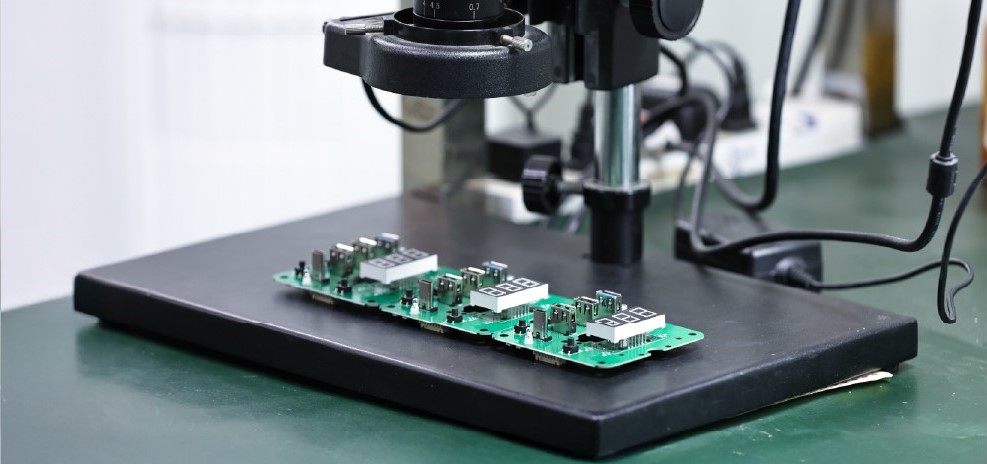
We inspect component placement and solder joints throughout assembly. 3D SPI checks solder paste before component placement. AOI checks component position, polarity, and visible solder defects. 3D X-ray checks hidden joints on BGAs, QFNs, and other dense components.

Functional Testing & Traceability
We perform functional tests based on your approved requirements. Testing can cover power circuits, heart rate sensor interfaces, displays, wireless communication, and other device functions. Production and component records are maintained for traceability.

Need reliable Wearable Heart Rate Monitor PCB & PCBA? Send your Gerber files, BOM, and assembly files for a free DFM/DFA review.

Case Study

Wearable Heart Rate Monitor PCB Case Studies

  • Smartwatch Heart Rate Monitor
    Smartwatch Heart Rate Monitor PCBA Smartwatch Heart Rate Monitor

    Smartwatch Heart Rate Monitor PCBA

    The customer required a compact 4-layer high-Tg PCB for PPG or ECG sensors, signal processing, wireless communication, and power management. MedPCB manufactured the PCB according to the customer specifications. Fine-pitch SMT assembly supports the compact layout, while sensor and power circuits were separated for controlled signal performance. 

  • Chest Strap Heart Rate Monitor
    Chest Strap Heart Rate Monitor PCBA Chest Strap Heart Rate Monitor

    Chest Strap Heart Rate Monitor PCBA

    The customer required a flex PCB for continuous ECG monitoring that could follow the curved chest strap and maintain stable sensor connections. MedPCB manufactured the polyimide flex PCB with fine traces and reinforced connector areas. Fine-pitch SMT assembly was completed according to the approved design. The finished PCBA passed flex-area inspection, solder-joint inspection, electrical testing, and signal testing.

  • Arm Band Heart Rate Monitor
    Arm Band Heart Rate Monitor PCBA Arm Band Heart Rate Monitor

    Arm Band Heart Rate Monitor PCBA

    The customer required a lightweight PCB for PPG sensors, low-power circuits, and wireless communication. MedPCB manufactured a rigid-flex PCB to connect the curved sensor section with the main control board. Selective conformal coating was applied to specified areas where additional protection was required. The finished PCBA passed AOI, electrical testing, and functional sensor testing.

  • Smart Ring Heart Rate Monitor
    Smart Ring Heart Rate Monitor PCBA Smart Ring Heart Rate Monitor

    Smart Ring Heart Rate Monitor PCBA

    The customer required an ultra-compact PCB for finger-based heart rate monitoring with limited board space. MedPCB manufactured an HDI PCB with 01005 components and fine-pitch assembly for the sensor and control circuits. Our precise SMT placement supports the small component spacing and compact layout. 

Faqs

Frequently Asked Questions

Our Wearable Heart Rate PCB FAQ addresses key questions about PCB manufacturing and assembly requirements. We cover rigid, flex, and rigid-flex PCB fabrication, thin polyimide materials, fine-pitch SMT assembly, low-power sensor circuits, and signal integrity for accurate heart rate monitoring. We also cover ISO 13485 manufacturing, precise component placement, and flexible assembly options from prototypes to volume production. For every wearable heart rate PCB project, we provide controlled fabrication and assembly based on the device size, sensor layout, power requirements, and wearable application.

1. What Type of PCB is Best for Wearable Heart Rate Monitors?
Flex and rigid-flex PCBs are well suited for wearable devices. Polyimide materials support thin, lightweight, and flexible designs.
2. Can Flexible PCBs Support Multiple Layers for Complex Sensors?
Yes. Multilayer flex PCBs can support sensor, power, signal, and communication circuits in limited space.
3. Why is Low Power Consumption Critical for These PCBs?
Wearable devices run on small batteries. Low-power PCB designs help extend battery life and reduce heat generation.
4. How is Signal Integrity Maintained in Such a Small Form Factor?
Proper grounding, short signal paths, controlled routing, and separated power and sensor circuits help reduce noise and interference.
5. What Is the Ideal Copper Thickness for Wearable Flex Circuits?
Thin copper, typically 0.5–1 oz, is commonly used for flex circuits. The final thickness depends on current requirements and bending conditions.
6. What Surface Finishes Are Recommended for Wearable PCB Manufacturing?
ENIG and ENEPIG are commonly used. They provide a flat surface for fine-pitch components and good resistance to moisture and corrosion.
7. How Are Battery Contacts and Charging Terminals Assembled on Wearable PCBs?
Pogo pins, spring contacts, and magnetic charging pads can be used. Accurate placement and suitable surface finishes help maintain reliable connections during repeated use.
8. What Surface Finishes Are Available for Fine-Pitch Wearable PCBAs?
MedPCB supports ENIG, ENEPIG, and other suitable surface finishes based on the PCB design and component requirements. We can recommend the appropriate finish for fine-pitch SMT assembly, contact areas, and wearable applications.
9. Can You Provide Functional Testing?
Yes. MedPCB provides functional testing for wearable heart rate monitor PCBAs. Testing can verify sensor signals, power circuits, wireless functions, charging circuits, and other functions based on the customer's test requirements.

Product Related