Medical-Grade BGA Assembly

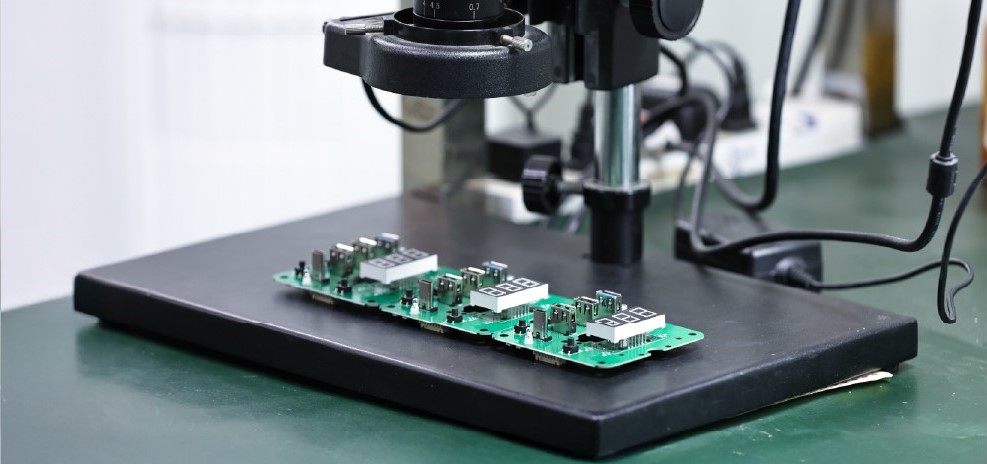
MedPCB provides high-precision Ball Grid Array (BGA) assembly services for medical devices requiring compact designs, reliable connections, and advanced inspection control. Whether your project involves wearable biosensors or high-pin-count diagnostic imaging equipment, our automated placement lines support IPC-A-610 Class 3 compliant manufacturing requirements for your critical healthcare applications.

• ISO 13485 Certified Medical Manufacturing
• Fine-Pitch (0.2 mm) & Micro-BGA Expertise
• 100% 3D X-Ray (AXI) Inspection for Hidden Joints
• Strict Moisture Sensitivity Level (MSL) Control
• Advanced BGA Rework and Thermal Profiling
• Full Component Serialization and Traceability

Medical BGA Assembly
Certifications
Why is BGA Assembly Essential for Modern Medical Devices?
introduction

Why is BGA Assembly Essential for Modern Medical Devices?

Ball Grid Array (BGA) is an advanced surface-mount packaging technology that utilizes an array of solder balls beneath the component rather than traditional peripheral leads. As medical devices evolve toward smaller form factors and higher processing capabilities, traditional component packaging often falls short.

It allows medical engineers to integrate complex microprocessors, advanced memory modules, and multi-functional sensors into incredibly small footprints. By placing electrical connections beneath the package, BGA helps reduce PCB space requirements while improving signal performance and thermal management capability. These advantages make BGA assembly widely used in implantable electronics, portable diagnostics, and high-speed medical imaging systems.

Products

Benefits of BGA Assembly for Medical Electronics

  • High-Density Interconnection and Compact Design
  • Improved Electrical Performance and Signal Integrity
  • Enhanced Thermal Performance
  • Improved Assembly Reliability
High-Density Interconnection and Compact Design
BGA packages maximize I/O pin counts within a compact footprint compared with many traditional leaded packages. This allows medical device designers to pack more processing power and functionality into ultra-compact devices like wearable continuous glucose monitors (CGMs) and implantable neurostimulators.
Improved Electrical Performance and Signal Integrity
The short electrical paths between the BGA package and PCB reduce parasitic inductance and capacitance, supporting high-speed and low-noise signal processing critical for medical imaging and life-support monitoring.
Enhanced Thermal Performance
Medical processors generate heat that must be safely dissipated to prevent device failure or patient discomfort. BGA packages can improve thermal performance through optimized solder ball arrays, thermal pads, and PCB heat dissipation structures. Offering superior thermal management for continuous-use medical equipment.
Improved Assembly Reliability
During reflow soldering, the surface tension of molten solder balls helps align the BGA package with PCB pads, reducing placement deviations and improving assembly consistency. Combined with optimized process control and inspection, BGA assembly provides reliable solder joint performance for portable medical devices.
Why Choose Us

Why Choose MedPCB?

  • ISO 13485 Certified Manufacturing

    ISO 13485 Certified Manufacturing

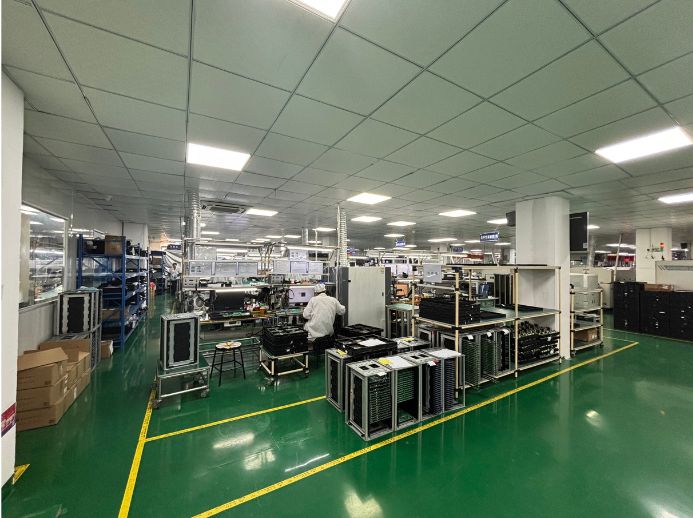
    Our facilities operate under a strict ISO 13485 medical-grade quality management system. Every step of our BGA assembly process adheres to IPC-A-610 Class 3 standards, supporting reliable manufacturing for demanding medical electronics.

  • Advanced AXI Inspection & Defect Detection

    Advanced AXI Inspection & Defect Detection

    Because BGA solder joints are hidden beneath the package, cannot verify hidden solder joints. Our high-resolution 3D AXI systems inspect hidden BGA solder joints and help identify defects such as voids, bridging, and insufficient solder.

  • Fine-Pitch BGA Assembly Expertise

    Fine-Pitch BGA Assembly Expertise

    Our precision SMT lines are equipped with advanced vision alignment systems to support fine-pitch BGA, micro-BGA, and CSP assembly. Including packages with pitches down to 0.2 mm for high-density medical electronics.

  • Complete Traceability and MSL Control

    Complete Traceability and MSL Control

    We follow J-STD-033 moisture handling procedures to reduce the risk of package damage during reflow. MES-based traceability links component information with each production batch. Ensures production traceability for the medical project.

Specs

Technical Specifications

Order Quantity ≥1 PCS (Prototype, Low-Volume, Mass Production)
Service Options Full Turnkey PCB Assembly, Partial Turnkey, Component Sourcing, PCB Fabrication
PCB Technologies & Board Type Rigid PCB, Flexible PCB, Rigid-Flex PCB, Metal Core PCB, HDI, Via-in-Pad
Assembly Types Surface Mount Technology (SMT), Through-Hole Technology (THT), Mixed Technology
Component Sourcing Turnkey (All components sourced by us), Trusted Global Supply Network
Mounting & Placement Accuracy ±0.035mm (±0.025mm) Cpk≥1.0 (3σ)
Min Package 01005 (0.4mm*0.2mm)
Supported BGA Packages PBGA, CBGA, TBGA, MBGA, Micro-BGA, CSP, Flip-Chip
Minimum Pitch Ultra-fine pitch down to 0.2 mm
Testing, Inspection & Validation 100% 3D AXI (X-Ray), 3D AOI, 3D SPI, Flying Probe, Functional Testing (FCT), FAI
Solder Chemistry Lead-Free (RoHS), Tin-Lead (for exempt medical devices), No-Clean, Water-Soluble
Rework Capabilities Advanced ERSA IR rework stations with custom thermal profiling
Conformal Coating Acrylic (AR), Silicone (SR), Polyurethane (UR), UV
Quality Compliance & Certificates ISO 13485, ISO 9001:2015, IPC-A-610 Class 3, RoHS, REACH
Medical BGA Assembly Sample
Capabilities

Our Medical BGA Assembly Process

Engineering Review & BGA Preparation
Our engineering team performs a comprehensive Design for Manufacturability (DFM) analysis on your Gerber files, focusing specifically on BGA pad sizes, solder mask definitions (SMD vs. NSMD), and via-in-pad layouts. Stencils are custom-designed to ensure exact solder paste volume deposition.
Moisture Control & Component Preparation
BGA packages are highly susceptible to moisture absorption. We strictly enforce J-STD-033 standards by storing components in dry cabinets and pre-baking moisture-sensitive (MSL) packages prior to assembly to reduce the risk of delamination and package damage during reflow.
High-Precision Placement & Reflow
Using sophisticated vision-alignment systems, our pick-and-place machines accurately position the BGAs onto the printed solder paste. The boards then enter multi-zone convection reflow ovens, where custom thermal profiles are executed to ensure reliable solder joint formation while avoiding thermal shock to sensitive medical dies.
AXI Inspection & Quality Verification
BGA assemblies undergo 3D X-Ray Inspection (AXI) to verify hidden solder joints, solder ball connections, voiding, and other internal defects. Our technicians analyze the X-ray images to verify solder ball shape, detect micro-voids, and identify potential bridging or insufficient solder conditions. This guarantees structural integrity before the board moves to the next manufacturing stage.
BGA Rework & Final Validation
When rework is required, our IPC-certified technicians utilize specialized infrared (IR) BGA rework stations to safely remove, reball, and replace the component using precise, localized heating profiles that protect the surrounding medical assembly.
Quality Control

Challenges in Medical BGA Assembly

  • BGA Solder Joint Reliability

    BGA Solder Joint Reliability

    Medical electronics may experience mechanical stress, vibration, and thermal cycling during their service life. Reliable BGA solder joints are essential to maintain long-term electrical performance.

    Our Solution: We optimize your reflow profiles to create strong intermetallic bonds and offer BGA underfill potting services to significantly increase mechanical shock resistance and thermal cycling durability.

  • Void Detection

    Void Detection

    Excessive voiding inside BGA solder joints can reduce thermal and electrical performance and may affect long-term reliability.

    Our Solution: We optimize our stencil aperture designs and reflow profiles to minimize outgassing. Our 3D AXI systems measure void percentages to guarantee they remain strictly below the IPC-A-610 Class 3 thresholds required for medical electronics.

  • Thermal Expansion and Warpage Control

    Thermal Expansion and Warpage Control

    CTE mismatch between the BGA package and PCB can create mechanical stress during thermal cycling. Excessive warpage may contribute to solder joint defects such as head-in-pillow (HIP).

    Our Solution: We carefully engineer multi-stage reflow profiles with controlled ramp-up and cool-down rates to minimize thermal stress and minimize thermal stress and reduce the risk of warpage-related defects.

  • BGA Rework and Repair Challenges

    BGA Rework and Repair Challenges

    BGA rework on high-density medical boards requires specialized equipment and process control to avoid damaging surrounding components.

    Our Solution: Your boards are handled by IPC-trained technicians using localized, software-controlled BGA rework stations. These stations help replicate the component's required reflow profile, facilitating safe removal and replacement while working to prevent degradation of the surrounding PCB.

Our Medical Prototype Assembly Process
quality

Quality Inspection Methods for Medical BGA Assembly

3D X-Ray Inspection (AXI)

Because BGA connections are entirely hidden, high-resolution 3D X-ray is our primary validation tool. It penetrates the component package to provide cross-sectional slices of the solder joints, allowing us to identify bridging, voids, cold solder joints, and head-in-pillow (HIP) defects.

Automated Optical Inspection (AOI)

While AOI cannot see under the BGA, our inline 3D AOI systems inspect the component's orientation, coplanarity, and alignment relative to the PCB silkscreen, ensuring the part is correctly placed before and after reflow.

First Article Inspection (FAI)

Before commencing a medical production run, the first completed BGA assembly is subjected to rigorous dimensional, electrical, and X-ray analysis to validate the entire SMT process parameters.

Functional Testing and Traceability

We perform custom functional testing on your completed boards to ensure the BGA communicates properly with the rest of your circuit. We permanently log all inspection data, X-ray logs, and test results in our MES system for full ISO compliance traceability.

Case Study

Medical BGA Assembly Cases

  • MRI Controller Board Assembly
    MRI Controller Board Assembly MRI Controller Board Assembly

    MRI Controller Board Assembly

    Successfully placed and reflowed high-density 1,000+ pin Ceramic BGAs (CBGAs) for an MRI gradient control board. Implemented custom thermal profiles to overcome extreme board thickness, helping to secure highly reliable joint integrity as verified by 3D AXI.

  • Handheld Glucose Meter PCBA
    Handheld Glucose Meter PCBA Handheld Glucose Meter PCBA

    Handheld Glucose Meter PCBA

    Assembled thousands of compact continuous glucose monitors utilizing ultra-fine pitch (0.3 mm) Micro-BGAs. Optimized stencil design reduce solder void risks surpassing strict medical reliability requirements.

  • Cardiac Pacemaker Electronics
    Cardiac Pacemaker Electronics Cardiac Pacemaker Electronics

    Cardiac Pacemaker Electronics

    Executed highly precise BGA placement on biocompatible substrates for implantable pacemakers. Utilized advanced underfill techniques to ensure long-term mechanical reliability against bodily movement and shock.

  • Neuro-Stimulator System Integration
    Neuro-Stimulator System Integration Neuro-Stimulator System Integration

    Neuro-Stimulator System Integration

    Transitioned a traditional SMT design to an HDI rigid-flex layout using Chip-Scale Packages (CSPs). This BGA miniaturization notably reduced the overall device volume, supporting improved patient comfort.

  • Electrosurgical Power Module
    Electrosurgical Power Module Electrosurgical Power Module

    Electrosurgical Power Module

    Provided high-reliability BGA assembly for a surgical generator. Overcame severe CTE mismatch challenges by tuning the reflow cooling zones, eliminating warpage and achieving flawless first-pass yields.

Faqs

Frequently Asked Questions

Our BGA Assembly FAQ addresses essential questions regarding your manufacturing requirements. We cover our capabilities for high-density, fine-pitch BGA and micro-BGA components, automated pick-and-place precision, controlled reflow profiling, 3D X-ray inspection and voiding analysis, BGA reballing and rework, and our capacity to scale from prototype builds to volume production batches. For every complex circuit project, we guarantee precision-focused, high-reliability assembly standards.

1. What Type of Files Do I Need to Provide for a BGA Assembly Project?

To ensure your BGA assembly project proceeds smoothly, please provide the following files:

  • Gerber files
  • Bill of Materials (BOM)
  • Pick-and-place files
  • Assembly drawings

Providing these files allows our team to execute precise component placement and ensures the highest level of manufacturing accuracy.

2. Do You Support Both Leaded and Lead-Free Options for BGA Assembly?

Yes, we accommodate both leaded and lead-free BGA assembly requirements to align with your project specifications. Whether your design requires traditional soldering or RoHS-compliant lead-free solutions, we ensure optimal quality and performance across both processes.

3. Do You Support Mixed-Technology Assemblies with BGA and Other SMT Components?

Yes, we are fully equipped to manage mixed-technology assemblies that combine BGA with other SMT components. Our versatile manufacturing workflows are designed to integrate these diverse technologies into a single, efficient assembly to meet your specific technical needs. 

4. Do You Support HDI PCB and Via-in-Pad Designs for BGA Assembly?

Yes, we fully support your via-in-pad plated over (VIPPO) designs and ensure paste deposition is perfectly calibrated to prevent solder wicking into the vias.

5. What Medical Standards Do You Follow for BGA Inspection (IPC-A-610 Class 3)?

We inspect all your medical BGA assemblies according to strict IPC-A-610 Class 3 standards, mandating the highest criteria for solder joint acceptance.

6. How Do You Manage Moisture-Sensitive (MSL) Components in A Medical Production Environment?

We strictly adhere to J-STD-033 protocols by vacuum-sealing your MSL components upon arrival, storing them in digitally monitored dry cabinets, and baking them if their floor life exposure exceeds allowable limits.

7. What Is Your Process for BGA Rework on High-Value Medical Boards?

Our IPC-certified technicians use advanced, software-controlled localized IR BGA rework stations, running custom removal and reballing profiles that mimic the original reflow temperatures to protect your board.

8. Can You Handle Micro-BGA and Fine-Pitch BGA Components?

Yes, our high-precision optical pick-and-place lines are fully capable of placing your micro-BGAs, Chip-Scale Packages (CSPs), and flip-chips with pitches down to 0.2 mm.

9. How Does Your Medical-Grade Traceability Work for BGA Assembly?

Our Manufacturing Execution System (MES) scans every component reel barcode and links it directly to your PCB serial number, and we provide you with complete batch certificates and build logs.

Product Related