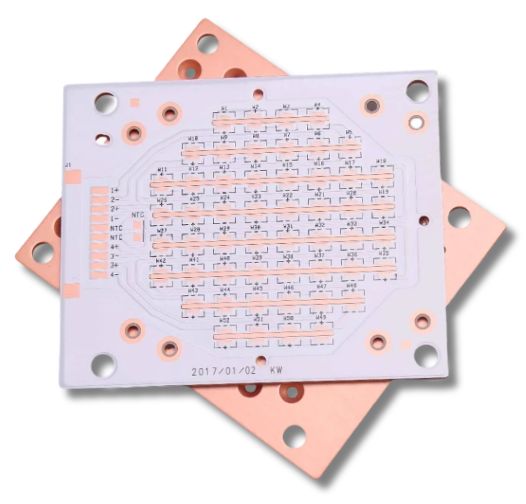
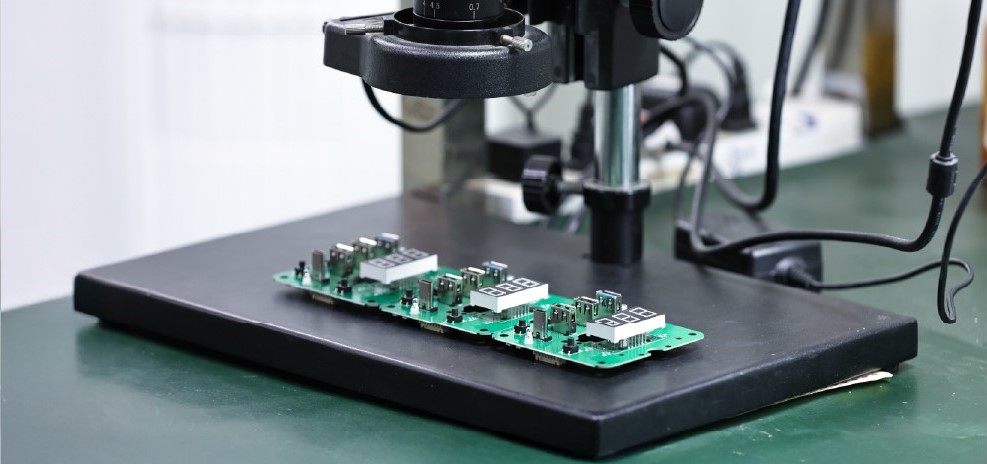
A medical metal core PCB uses aluminum or copper as a base instead of FR4. It draws intense heat away from critical electronic components. In multilayer configurations, the metal core balances heat dissipation across both sides of the board. By transferring thermal energy directly to a heatsink core, these boards prevent overheating and component failure. This advanced thermal stability is essential for high-power medical equipment, ensuring total operational reliability and long-term durability in life-critical devices.
|
Feature
/ Parameter |
Specification |
|
Layer
Count |
Single-layer, Double-layer, 4-layer Aluminum PCB |
|
Thermal
Conductivity |
Up to 5 W/m·K |
|
Board
Thickness |
0.3 mm – 5.0 mm |
|
Copper
Thickness |
35 µm – 240 µm |
|
Maximum
Board Size |
1500 mm × 600 mm |
|
Minimum
Board Size |
5 mm × 5 mm |
|
Min.
Line Width / Spacing |
0.1 mm |
|
Surface
Finish |
Lead-Free HASL,
ENIG (Chemical Nickel/Gold), Chemical Tin, Chemical Silver, OSP |
|
Board
Warpage |
≤ 0.5% (Thickness:
1.6 mm, Size: 300 mm × 300 mm) |
|
Finished
Size Tolerance |
±0.15 mm |
|
V-Cut
Score Tolerance |
±0.1 mm |
|
Hole
Position Tolerance |
±0.076 mm |


Challenge: Metal core substrates like copper bases carry higher raw material costs and add significant physical weight compared to standard FR-4 boards, which can strain budget-conscious or lightweight device designs.
Our Solution: We have in-stock material selection for high-conductivity aluminum with optimized board geometries to deliver medical-grade heat management while keeping weight and production costs strictly controlled.

Challenge: Fabricating MCPCBs requires complex multi-stage laminations under extreme heat and pressure, as well as heavy-duty drilling through tough metal cores that wear down standard tooling.
Our Solution: Using specialized, carbide-tipped machining tools and automated lamination presses, we precisely drill and profile metal substrates without burrs, mechanical stress, or structural layer separation.

Challenge: Micro-voids or microscopic defects within the insulating dielectric layer disrupt thermal flow, creating localized hot spots that can destroy sensitive medical components or cause total board failure.
Our Solution: We utilize high-integrity thermal dielectric materials and perform automated optical and thermal-imaging inspections to ensure uniform heat transfer and avoid dielectric voids across every panel.

Challenge: Frequent power spikes and temperature swings cause uneven expansion between the metal base and surface components, risking solder joint fatigue, trace lifting, and eventual open circuits.
Our Solution: We'll help you choose suitable dielectric materials based on your project needs and control bonding and manufacturing parameters to improve thermal-cycle reliability.
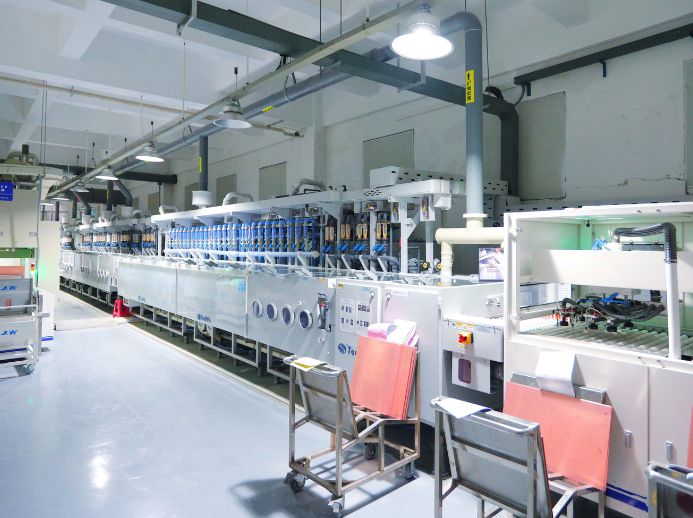
MedPCB supports high-performance Metal Core PCB (MCPCB) materials designed for high thermal conductivity, superior heat dissipation, and long-term reliability in critical medical devices.
Aluminum Core PCB – Aluminum is the most popular metal core material, offering excellent thermal dissipation, high strength, and cost-efficiency. It works well for medical equipment requiring reliable cooling, such as high-power LED lighting, power supplies, and surgical lamps.
Copper Core PCB – Due to its superior thermal conductivity over aluminum, copper excels in demanding thermal environments. It can be considered for high-power medical electronics such as laser systems and imaging equipment where efficient heat dissipation is required.
MedPCB supports metal core board fabrication based on your thermal management needs, component density, and device size. Send your files to us so we can review your design through a free DFM check for reliable medical PCB production.
Our Medical Metal Core PCB FAQ addresses essential questions regarding your manufacturing requirements. We cover our capabilities for complex medical electronics, supply chain management, assembly timelines, rigorous quality inspection protocols, and our capacity to scale from initial builds to production batches. For every medical device project, we guarantee precision-focused, medical-grade assembly standards.
English
French
German
Japanese
Korean