Medical Double-Sided PCB Assembly

MedPCB delivers medical double-sided PCB assembly for reliable, high-quality production that meets strict medical manufacturing requirements.

• ISO 13485, ISO 9001, and IPC-A-610 Class 2/3 compliant.
• Double-sided SMT, through-hole, and mixed-technology assembly.
• MES-based traceability with complete production records.
• High-precision SMT placement for components down to 01005.

Medical Double-Sided PCB Assembly
Certifications
What is Medical Double-Sided PCB Assembly
introduction

What is Medical Double-Sided PCB Assembly?

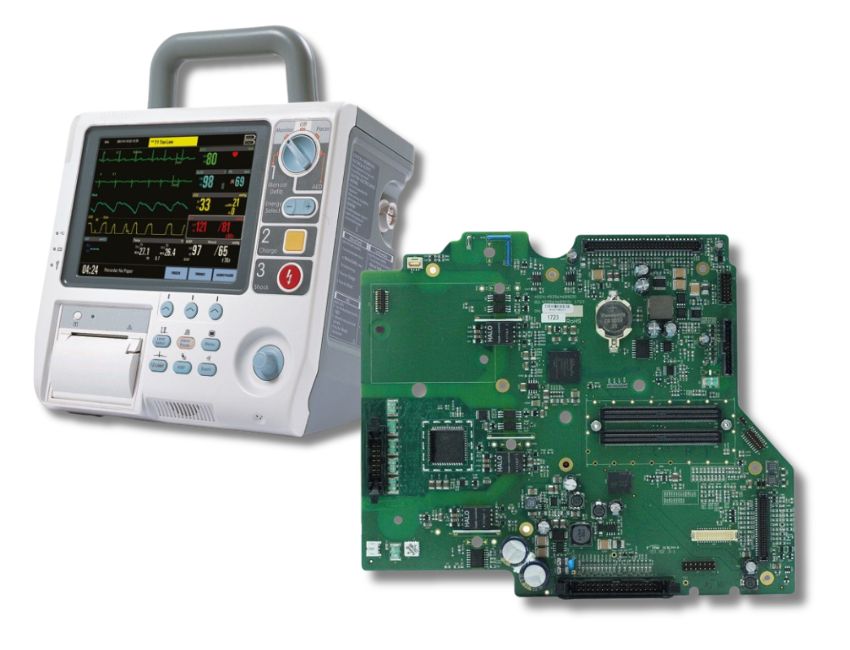
Medical double-sided PCB assembly is the process of mounting electronic components on both sides of a printed circuit board. Supports higher component density, compact boards, and advanced designs. This assembly method is widely used for medical devices that require compact, reliable, and high-performance electronics. It helps manufacturers build smaller products without compromising functionality, making it suitable for diagnostic, monitoring, imaging, and portable medical equipment.

Products
 

Advantages of Double-Sided PCB Assembly

  • Higher Component Density
  • Cost-Effective for Complex Designs
  • Supports More Complex Medical Assemblies
  • Better PCB Space Utilization
Higher Component Density
Double-sided assembly places components on both sides of the PCB, allowing more circuits in a smaller area. This helps reduce board size while supporting the complex electronics used in medical devices.
Cost-Effective for Complex Designs
Supports More Complex Medical Assemblies
Better PCB Space Utilization
Why Choose Us

Why Choose MedPCB?

  • ISO 13485 Certified Manufacturing

    ISO 13485 Certified Medical Manufacturing

    Every double-sided medical PCBA is manufactured under an ISO 13485 certified quality management system. Controlled processes, documented procedures, and strict quality inspections help ensure reliable, compliant production.

  • Double-Sided Assembly Expertise

    Double-Sided Assembly Expertise

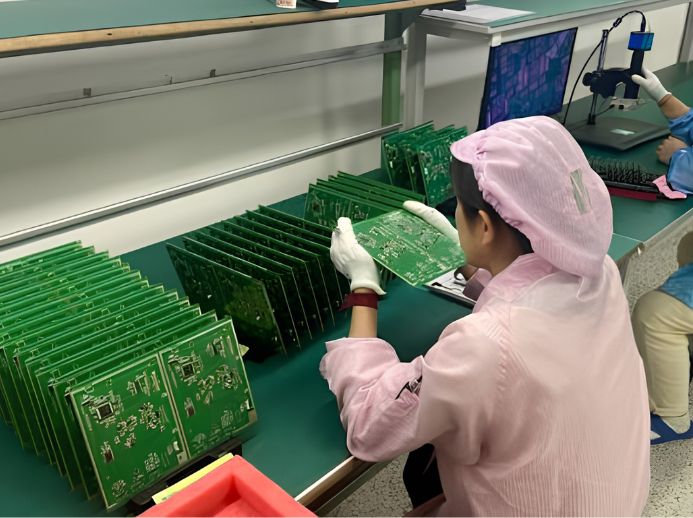
    We specialize in high-precision, double-sided surface mount (SMT) and through-hole (TTH) assembly. Our state-of-the-art automated lines handle fine-pitch components, complex BGAs, and high-density layouts with tight tolerances, ensuring flawless component placement on both sides of the board.

  • Component Sourcing & BOM Support

    Component Sourcing & BOM Support

    Our global supply chain network provides 100% traceable, authentic components directly from authorized distributors. We offer comprehensive Bill of Materials (BOM) management, life-cycle tracking, and recommend reliable component alternatives if needed to prevent production delays.

  • Comprehensive Inspection, Testing, and Traceability

    Comprehensive Inspection, Testing, and Traceability

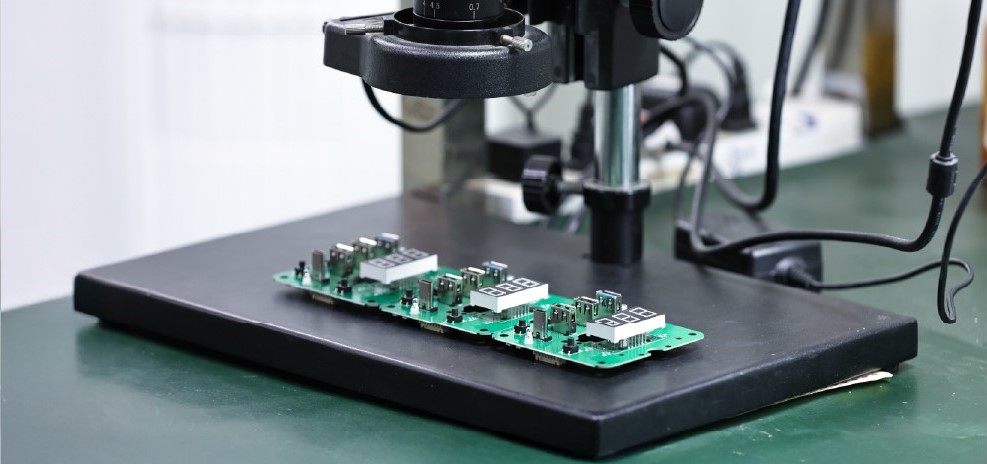
    Every double-sided medical PCB can undergo SPI, AOI, AXI, ICT, functional testing, and final visual inspection. Our MES system records component traceability, inspection results, and production history to support medical quality documentation and regulatory compliance.

Specs

Technical Specification

Order Quantity

From 1 piece to high-volume production (No MOQ)

Quality Standards

IPC-A-610 Class 2 and Class 3 compliant

Lead Time

3–4 days (Expedited quick-turn service available)

Supported Board Types

Rigid, Flexible, and Rigid-Flex PCBs

Maximum Board Size

Up to 1500 × 500 mm

Supported PCB Types

Rigid, Flexible, and Rigid-Flex

Component Size

Supports 01005 packages and larger

Placement Accuracy

Min: 01005 / Max: No limit

Component Sourcing

Access to 300,000+ in-stock components

Component Packaging

Cut tape, reel, tube, and tray formats supported

Surface Finish Support

Leaded/Lead-Free HASL, Immersion Gold (ENIG), and OSP

Assembly Methods

SMT, DIP/THT, and mixed-technology assembly


Double-Sided PCB Assembly Sample
Capabilities

MedPCB Double-Sided PCB Assembly Process

Step 1: Engineering Review & IQC
Before production begins, our engineering team performs a detailed Design for Manufacturability (DFM) and BOM review to flag potential assembly risks and suggest component alternatives. Simultaneously, Incoming Quality Control (IQC) verifies all raw materials and electronic components for authenticity, quality, and compliance.
Step 2: First-Side Assembly
Step 3: Second-Side Assembly
Step 4: Inspection, Testing, and Quality Verification
Step 5: Cleaning and Final Packaging
Quality Control

Challenges in Medical Double-sided PCB Assembly

  • Component Alignment & Placement

    Component Alignment & Placement

    Challenge: High-density components on both sides can shift or misalign during placement, risking short circuits or open connections.

    Our Solution:

    MedPCB has 8 high-precision SMT pick-and-place systems with advanced vision alignment and optical fiducials ensure exact component placement on both sides.

  • Second Reflow Stability

    Second Reflow Stability

    Challenge: First-side components hang upside down during the second pass, risking solder reflow, shifting, or component drop-off.

    Our Solution: Our fixtures and optimized thermal profiles ensure first-side components remain stable throughout the second reflow process.

  • Thermal Profile Control

    Thermal Profile Control

    Challenge: Uneven heat distribution across double-sided layouts can cause cold joints, solder bridges, or heat damage to sensitive medical ICs.

    Our Solution: MedPCB develops customized multi-zone reflow profiles for each product, ensuring uniform solder wetting while minimizing thermal stress.

  • Inspection & Verification

    Inspection & Verification

    Challenge: Double-sided density and hidden BGA leads make defect detection difficult with standard visual inspection.

    Our Solution: We combine double-sided 3D AOI and 3D X-Ray Inspection (AXI) to non-destructively check hidden solder joints, voids, and alignment.

Single-Sided vs Double-Sided PCB Assembly
Specs

Single-Sided vs Double-Sided PCB Assembly

While single-sided PCB assembly provides a simple, cost-effective solution for basic electronics, double-sided PCB assembly is the industry standard for modern medical devices.

Feature

Single-Sided PCB Assembly

Double-Sided PCB Assembly

Component Placement

Components on one side only

Components on both sides

Component Density

Low

High

Assembly Complexity

Simple

More Complex

Assembly Process

Single soldering/reflow pass

Two reflow passes

Cost

Lower manufacturing cost

Higher cost for more advanced designs

MedPCB provides ISO 13485-compliant medical double-sided PCB assembly with comprehensive engineering support, advanced inspection, and full production traceability. Request a quote today to discuss your project.

Case Study

Medical Double-Sided PCB Assembly Cases

  • Pacemaker
    Pacemaker PCBA  Pacemaker

    Pacemaker PCBA 

    Double-sided PCB assembly for pacemakers that require ultra-compact, high-density circuit designs, low power consumption, and reliable long-term performance.

  • Defibrillator
    Defibrillator PCBA  Defibrillator 

    Defibrillator PCBA 

    PCB assembly for implantable and external defibrillators, supporting high-reliability power management, control circuits, and dependable operation during critical emergencies.

  • Blood Pressure Monitor
    Blood Pressure Monitor PCBA  Blood Pressure Monitor

    Blood Pressure Monitor PCBA 

    Double-sided PCB assembly for digital blood pressure monitors with compact layouts, accurate sensor interfaces, and stable signal processing for precise measurements.

  • Cochlear Implants
    Cochlear Implants PCBA  Cochlear Implants

    Cochlear Implants PCBA 

    PCB assembly for cochlear implant electronics featuring miniature, high-density circuit boards that support reliable signal processing and long-term device performance.

Faqs

Frequently Asked Questions

Our Medical Double-Sided PCB Assembly FAQ addresses essential questions regarding your manufacturing requirements. We cover our capabilities for complex medical electronics, supply chain management, assembly timelines, rigorous quality inspection protocols, and our capacity to scale from initial builds to production batches. For every medical device project, we guarantee precision-focused, medical-grade assembly standards.

1. What Is The Biggest Challenge In Double-Sided PCB Assembly?
The main challenge is preventing first-side components from shifting during the second reflow. This is controlled through proper component placement, optimized reflow profiles, and process planning.
2. Is Double-Sided PCB Assembly More Expensive?
Yes. It requires additional assembly and inspection steps, but it often reduces overall product size and system cost.

3. Can BGAs Be Assembled On Both Sides Of The PCB?
Yes. Double-sided BGA assembly is supported, but it requires careful DFM review, thermal management, and X-ray inspection.

4. What Is The Difference Between Double-Sided And Multilayer PCBs?
Double-sided PCBs have copper layers on both outer sides. Multilayer PCBs contain three or more copper layers inside the board. A PCB can be both double-sided and multilayer.

5. Which Components Are Placed On Each Side Of The PCB?
Small, lightweight components are typically placed on the first side, while larger or heavier components are assembled on the second side.

6. How Do You Keep Components From Moving During The Second Reflow?
We optimize component placement, reflow temperature profiles, and PCB support fixtures to maintain stable assembly throughout production.

7. Are All Components Suitable for Double-Sided SMT Assembly?
Most SMT components are compatible. Very large or specialized components may require design review before assembly.

8. Can Heavy Components Be Mounted on Both Sides of a PCB?
Yes. Most SMT components can be mounted on either side of the PCB. Heavy components are usually placed on the primary side. They may also need extra support to prevent movement during reflow soldering.

9. What Should Be Considered When Designing A Double-Sided Medical PCB?
Proper component placement, thermal management, signal routing, and manufacturability are essential for reliable assembly and long-term performance.

Product Related