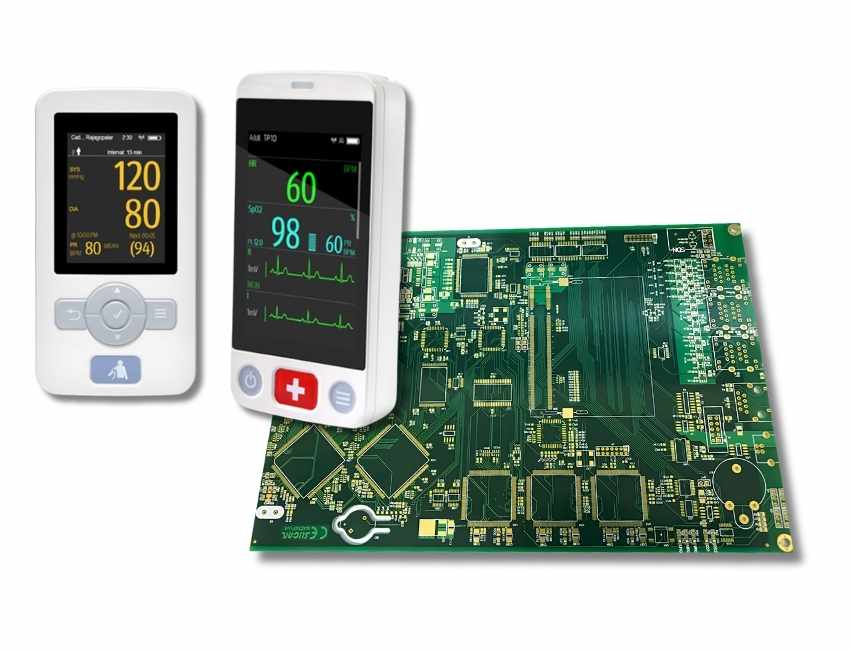
High-Performance Prototype PCB Manufacturing for Medical Applications

Medical electronics require prototypes that can be built quickly, tested accurately, and revised efficiently. MedPCB provides rapid, medical-grade bare board fabrication to help you validate your designs quickly and confidently, ensuring a smooth transition to volume production.

• ISO 13485 Certified Medical Prototyping
• Quick-Turn Prototype PCB Fabrication (24–48 Hr Options)
• Extensive In-Stock Material Inventory for Rapid Prototyping
• Controlled Impedance & HDI Prototype Support
• Low-Volume Prototype to Production Scalability

Medical Prototype PCB
Certifications
What Is Medical PCB Prototyping?
introduction

What Is Medical PCB Prototyping?

Medical PCB prototyping is the process of fabricating a small number of circuit boards to verify a medical device design before volume production. A prototype allows engineers to evaluate electrical performance, mechanical fit, thermal behavior, signal integrity, and manufacturability using physical boards.

Medical electronics often require several design iterations before a production-ready design is finalized. Prototype PCBs help engineering teams identify layout, material, impedance, thermal, and assembly issues early, reducing the risk of costly changes during later production stages.

MedPCB provides fast and reliable PCB prototyping for medical electronics, supporting standard and high-Tg FR-4, Rogers, polyimide, aluminum core, HDI, and rigid-flex designs. Simple prototype boards can be completed with 24-hour quick-turn options, while more complex designs can be expedited based on project requirements.

Quality

Key Advantages of Specialized Medical Prototype PCBs

  • Electrical Performance Validation
  • Mechanical & Thermal Verification
  • Early DFM Risk Identification
  • Lower Development Cost
  • Faster Time-to-Market
Electrical Performance Validation
Prototype PCBs allow engineers to verify real-world electrical performance before production. Depending on the design, testing can include controlled impedance, signal integrity, electrical continuity, isolation, and RF performance. This is especially important for medical imaging, monitoring, communication, and high-speed diagnostic systems.
Mechanical & Thermal Verification
Medical devices endure unique physical stresses and strict thermal limits. Custom prototypes give you the physical hardware needed to test heat dissipation and verify the board fits perfectly within tight device housings before you spend capital on expensive tooling.
Early DFM Risk Identification
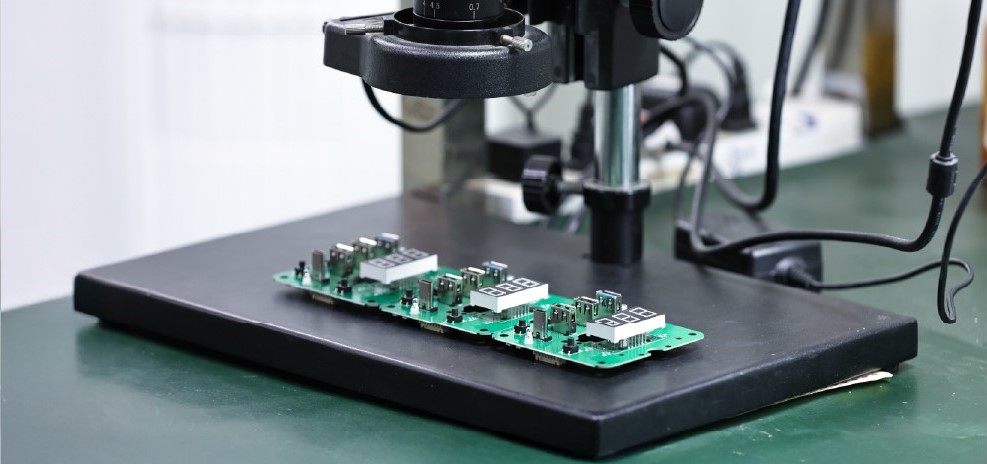
Prototype fabrication helps identify manufacturability issues before production. Engineers can evaluate trace geometry, via structures, layer stackups, material selection, and other PCB features before the design is finalized.
Lower Development Cost
Identifying potential issues during prototyping can reduce the need for major design changes during later production stages. This helps engineering teams control development costs and avoid unnecessary prototype or production iterations.
Faster Time-to-Market
A well-managed prototype cycle helps engineering teams validate their designs sooner and move to the next development stage faster. Quick-turn PCB fabrication can shorten iteration time and support a more efficient path toward production.
Why Choose Us

Why Choose MedPCB?

  • ISO 13485 Certified Manufacturing

    ISO 13485 Certified Prototyping Facility

    MedPCB operates an ISO 13485 quality management system for medical-related PCB manufacturing. Our prototype production follows documented engineering, fabrication, inspection, and traceability procedures to support the quality requirements of medical electronics development.

  • IPC-A-610 Class 3 Quality Acceptance

    Dedicated Quick-Turn Prototype Lines

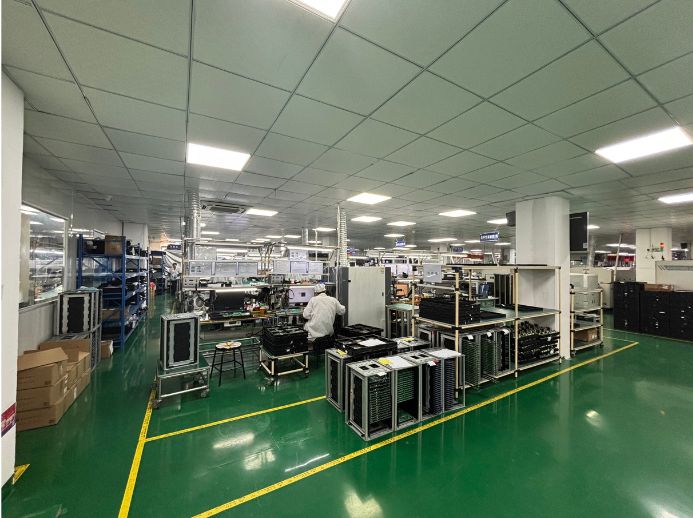
    We maintain dedicated manufacturing lines exclusively for rapid prototype fabrication. This infrastructure ensures that expedited bare board projects are processed independently from high volume production, facilitating accelerated delivery schedules for urgent medical electronics development.

  • Advanced Wave & Selective Soldering Technology

    Support Free DFM Review

    Our engineering team reviews your Gerber files and manufacturing requirements before fabrication. This helps identify and reduce potential design and manufacturability risks before production begins.

  • Advanced Prototype Manufacturing Capabilities

    Advanced Prototype Manufacturing Capabilities

    MedPCB utilizes advanced fabrication equipment to support high-density interconnect requirements, including ultra-fine trace routing and stacked microvia structures. These advanced capabilities ensure precision manufacturing for the intricate bare board specifications of cutting-edge medical technology.

  • In-House Material Inventory for Instant Prototyping

    In-House Material Inventory for Instant Prototyping

    We maintain a comprehensive internal inventory of premium medical-grade laminates and substrates. This immediate material availability eliminates procurement delays, enabling continuous, rapid initiation of bare-board prototyping for critical healthcare applications.

  • Hybrid and Rigid-Flex Prototype Capability

    Hybrid and Rigid-Flex Prototype Capability

    MedPCB possesses specialized capabilities for the fabrication of complex rigid-flex and hybrid printed circuit boards. Our manufacturing processes accommodate the strict physical flexibility and structural durability requirements inherent in modern medical wearables and implantable bare board applications.

Specs

Technical Specifications

Layer Count 1 to 40 Layers
Finished Board Thickness 0.2 mm to 10.0 mm
Maximum Board Size 1100 by 500 mm
Material Options FR4, Rogers, Polyimide, Aluminum Core
Minimum Trace and Space 3 mil / 3 mil
Impedance Control Tolerance Plus or minus 5 to 10 percent
Quality Standard ISO 13485, IPC Class 2 and Class 3
Via Technology Blind, Buried, and Stacked Microvias
Recommended Surface Finishes ENIG, ENEPIG, Immersion Silver, and Hard Gold
Lead Time 24 to 48 hours for rapid prototypes
Medical Prototype PCB
Capabillities

Our Medical Prototype PCB Manufacturing Process

Step 1: Engineering Review & DFM Analysis
After receiving your Gerber files, our engineering team reviews the submitted files and manufacturing requirements. Once the order is placed, our engineers issue an Engineering Query (EQ) if clarification is needed. We evaluate production feasibility and confirm key manufacturing details before releasing the job to production.
Step 2: Material Preparation & Circuit Imaging
Step 3: Lamination, Drilling & Copper Plating
Step 4: Surface Finish & Electrical Verification
Step 5: Final Inspection & Prototype Delivery
Quality Control

Materials Commonly Specified for Medical Prototype PCBs

  • FR4 (Standard & High-Tg)

    The base substrate for most external medical monitoring devices. We source Shengyi and Kingboard laminates to fit regular and harsh clinical thermal conditions.

    Standard FR-4: Cost-effective for medical electronics under standard temperature ranges.

    High-Tg FR-4: Improved thermal endurance for circuits facing frequent heat cycles, including Shengyi S1000-2 and Isola series.

  • Rogers High-Frequency Laminates (RO4000, RO3000, RT/duroid)

    For medical telemetry and high-precision imaging equipment requiring stable high-frequency signals.

    RO4000: Hydrocarbon ceramic material with solid signal integrity, compatible with standard PCB processes for medical RF prototypes.

    RO3000: PTFE ceramic composite with consistent electrical performance across temperature shifts, ideal for ultrasound phased array modules.

    RT/duroid: Low signal loss PTFE glass-microfiber laminates, suitable for implant telemetry and compact antenna assemblies.

  • Polyimide (Flex & Rigid-Flex)

    Durable bendable material for wearables and miniaturized internal medical sensors, stable at human body temperature.

    Flex PCB: Thin polyimide boards conform to curved surfaces for compact wearable monitors and biometric patches.

    Rigid-Flex PCB: Combines FR4 rigidity with polyimide flexibility to fit compact housings such as implant pacemakers.

  • Aluminum Core (Metal-Core PCB / MCPCB)

    Optimized thermal dissipation for high-power medical lighting and diagnostic scanning hardware.

    Aluminum Core: Efficient heat transfer for clinical LED panels and long-running diagnostic displays.

    Copper Core: Superior thermal conductivity for heavy-power medical circuits exceeding aluminum’s cooling limits.

Our Medical Prototype Assembly Process

Challenges

Common Challenges in Medical Prototype PCB Fabrication

Medical prototype PCB development faces several key issues for medical‑device projects:

Balancing fast turnaround with medical‑grade quality: Accelerated prototyping on standard production lines may introduce manufacturing defects and fail clinical tolerance requirements. We deploy dedicated equipment and experienced teams to maintain ISO 13485 compliance for quick‑turn orders.

HDI manufacturing under tight schedules: Shrinking medical PCBs require precise microvia and trace geometries. Our calibrated laser drilling and plating processes support stable HDI output within compressed timelines.

Specialty‑material supply risks: Sourcing niche medical laminates from outside suppliers can delay your R&D. Our broad in‑house stock of medical‑grade substrates allows production to start right after file review.

As a PCB manufacturer offering 24-hour rapid prototyping, MedPCB can help you quickly produce prototypes for your medical projects. Send us your Gerber files today.

Case Study

Medical Prototype PCB Cases

  • Rapid 4-Layer Flex Prototype for Wearable ECG Patch
    Rapid 4-Layer Flex Prototype for Wearable ECG Patch Rapid 4-Layer Flex Prototype for Wearable ECG Patch

    Rapid 4-Layer Flex Prototype for Wearable ECG Patch

    A client needed a highly flexible and skin-safe board for a new cardiac monitor. We turned around a 4-layer polyimide design in just 48 hours, allowing their software team to start critical testing over the weekend.

  • 8-Layer HDI Prototype for Handheld Ultrasound Beamformer
    8-Layer HDI Prototype for Handheld Ultrasound Beamformer 8-Layer HDI Prototype for Handheld Ultrasound Beamformer

    8-Layer HDI Prototype for Handheld Ultrasound Beamformer

    Handheld ultrasounds require incredible processing power in a tiny footprint. We built an 8-layer board with stacked microvias and tight impedance control, passing all signal integrity tests on the very first revision.

  • Aluminum-Core LED Board for Surgical Headlamp
    Aluminum-Core LED Board for Surgical Headlamp Aluminum-Core LED Board for Surgical Headlamp

    Aluminum-Core LED Board for Surgical Headlamp

    High thermal load represents a major design challenge for surgical headlamps. We supplied a custom aluminum‑core PCB prototype for thermal validation testing. The board efficiently dissipated heat during 10‑hour surgical simulation, help our client confirm stable performance for subsequent mass‑production hand‑off.

  • Rigid-Flex Implantable Neurostimulator Telemetry Prototype
    Rigid-Flex Implantable Neurostimulator Telemetry Prototype Rigid-Flex Implantable Neurostimulator Telemetry Prototype

    Rigid-Flex Implantable Neurostimulator Telemetry Prototype

    Implantable telemetry modules require reliable performance starting from early prototypes. We built a complex rigid‑flex PCB prototype to fit into the customer’s custom titanium housing. Accurate fabrication supported the customer’s preliminary telemetry testing, providing valid test data for their clinical‑trial preparation.

Faqs

Frequently Asked Questions

Our Medical Prototype PCB FAQ addresses essential questions regarding your rapid development and manufacturing requirements. We cover our capabilities for quick-turn fabrication, rapid design iterations, extensive material options, strict ISO 13485 quality standards, and seamless scalability from initial small test batches to mass production. For every medical prototype PCB project, we guarantee high-precision manufacturing tailored to accelerate your medical device development cycle without compromising on critical healthcare reliability.

1. Prototype PCB Service vs Production PCB Manufacturing
When moving through the medical device development cycle, it is incredibly important to understand the distinct goals of each manufacturing phase. Prototyping is completely driven by speed, rigorous testing, and rapid iteration across very small batches. Once your engineering team thoroughly validates the bare board layout, production manufacturing shifts the focus entirely toward massive volume, strict cost reduction, and fabricating perfectly locked in designs.
Feature Prototype PCB Service Production PCB Manufacturing
Primary Focus Speed, testing, and rapid iteration Massive volume and cost reduction
Batch Size Small test batches Large scale production runs
Design Status Fluid and highly iterative Perfectly locked in designs
2. What Is the Typical Lead Time for Medical Prototype PCBs?
We can deliver simple designs in 24 to 48 hours. More complex boards like rigid flex or HDI usually take a few days depending on your exact specifications.
3. How Do Prototype PCBs Differ from Production Medical PCBs?
Physically, they are identical in quality and reliability. The only real difference is the batch size and the rapid speed of the manufacturing cycle.
4. Are Medical Prototype PCBs Built Under ISO 13485?
Absolutely. We apply our rigorous ISO 13485 quality standards to every single medical board we touch, including all prototypes.
5. What Materials Are Available for Quick-Turn Medical Prototypes?
We stock everything from standard FR4 to advanced Rogers materials, polyimide for flex designs, and aluminum cores for heavy thermal management.
6. Can You Do Controlled Impedance on Quick-Turn Prototypes?
Yes we can. Our engineering team validates the stackup early and we use specialized testing equipment to verify the impedance before shipping anything to you.
7. What Surface Finishes Are Recommended for Medical Prototypes?
ENIG (Electroless Nickel Immersion Gold) is usually our top recommendation due to its perfectly flat surface and excellent oxidation resistance, making it ideal for complex medical components.
8. Do You Offer Rigid-Flex and Flex PCB Prototyping?
Yes, we have dedicated equipment and extensive experience manufacturing both flex and rigid flex boards for modern wearables and compact medical devices.
9. What Minimum Trace Width and Spacing Can You Achieve on Medical Prototype PCBs?
We can easily achieve 3 mil trace and space for standard HDI boards, and we can push even tighter depending on your specific design requirements.
10. Can You Assemble Medical Prototype PCBs?
Yes, we offer full turnkey services. We can fabricate the bare board and populate it with all components so it arrives at your lab completely ready to test.
11. How Do You Handle Design Revisions and Iterations?
We fully expect revisions. Our dedicated prototype team is structured to pivot quickly, updating files and pushing new iterations to the floor without any administrative delays.
12. What IPC Class Are Medical Prototype PCBs Manufactured To?
We typically manufacture medical boards to IPC Class 2 or IPC Class 3 standards, depending entirely on your specific reliability requirements and end use application.
13. How Do You Maintain Traceability in Medical Prototype PCB Production?
Every single board is tracked through our system. We maintain meticulous records of the exact materials used, operator logs, and testing results for full regulatory compliance.
14. Do You Provide Conformal Coating for Medical Prototype PCBs?
Yes we do. We can apply various conformal coatings to protect your prototype from moisture, dust, and chemical exposure during real world clinical testing.

Product Related