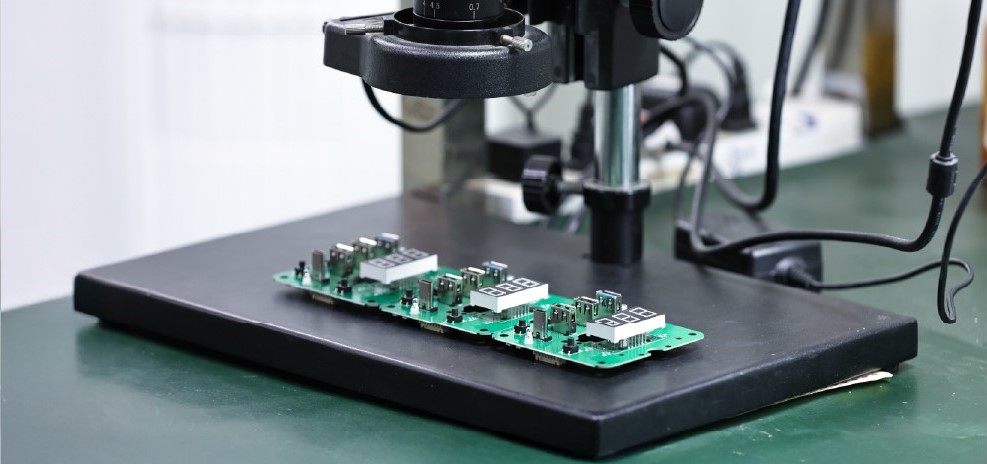

PCB Assembly in Modern Medicine: Process & Standards
-

-
August 16, 2026


Medical PCB assembly is used across a wide range of devices, from patient monitors and diagnostic equipment to implantable and life-supporting systems. For medical device manufacturers, PCB assembly must meet strict requirements for reliability, traceability, testing, and regulatory compliance.
This guide explains how medical PCBA is assembled, which standards and testing methods matter, and what to consider when choosing a manufacturing partner.
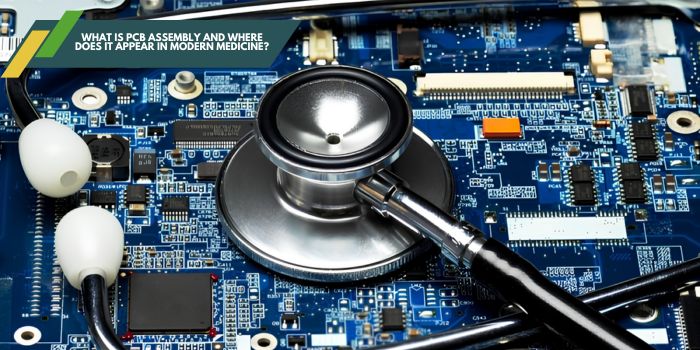
PCB assembly (PCBA) solders electronic components onto a bare board to create a functioning circuit through solder paste application, component placement, and reflow or wave soldering. For medical device PCB applications, assembly demands higher precision than commercial electronics. For example, soldering defects or missing components can affect the performance and safety of medical electronic devices.
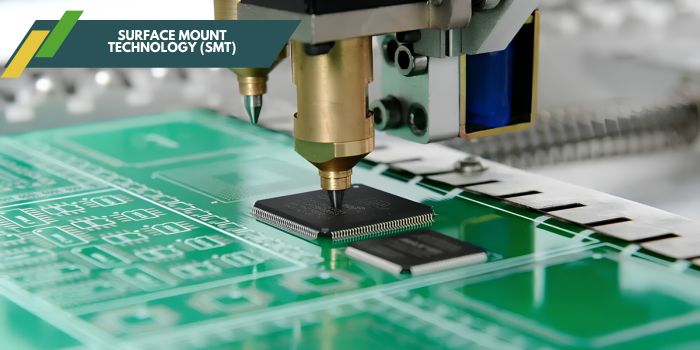
SMT mounts components directly onto the PCB surface. Solder paste goes down first through a stencil printer, then pick-and-place machines position tiny SMDs with micron accuracy, and a reflow oven forms permanent bonds. For medical electronics, controlled production environments, material handling, and process controls help reduce contamination and manufacturing risks. AOI catches placement errors immediately. The process supports ultra-miniature PCB assembly for wearable medical monitors and implantable designs where space is scarce, and reliability is non-negotiable.
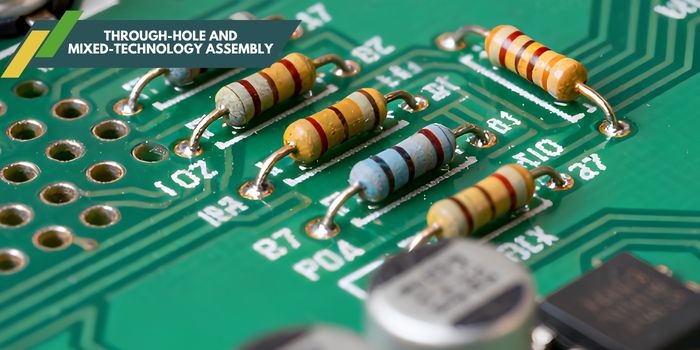
Through-hole assembly inserts leads into drilled holes and solders them from the opposite side. Through-hole assembly provides strong mechanical support and is often used for connectors, transformers, large components, and applications subject to higher mechanical or electrical loads. Mixed-technology medical PCBA combines both methods on one board. Many infusion pump PCB designs use SMT for digital control circuitry and through-hole for motor drivers and power regulation, balancing density with the ruggedness that clinical environments demand.
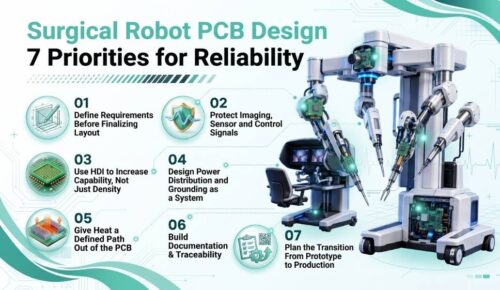
SMT offers the best balance of miniaturization, automation, and reliability for most medical device PCB applications; higher density, lower cost at volume, and better vibration performance make it ideal for portable and wearable medical PCB designs. But “best” depends on your application: through-hole still matters for high-stress connections in surgical robotics PCB assemblies, and mixed technology often serves Class III medical PCB designs requiring both density and power handling. The right partner evaluates your device classification and production volume before recommending a process.
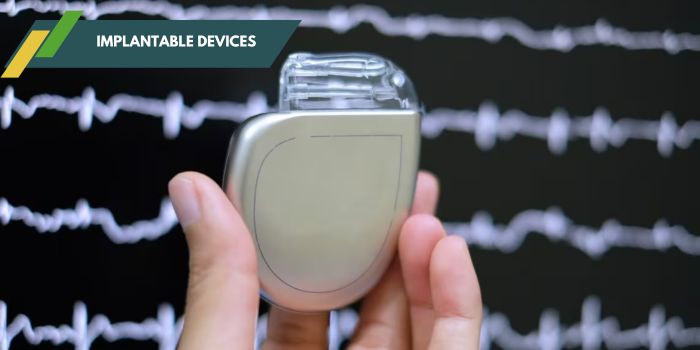
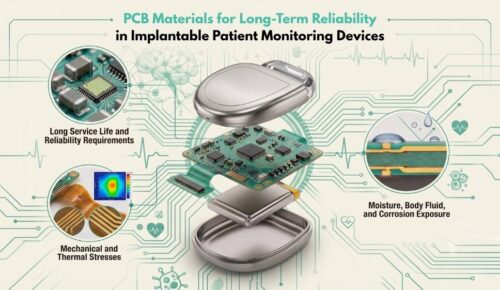
Implantable medical PCBs operate inside the human body for years without maintenance or access. For example, a pacemaker PCBA must survive saline environments, constant motion, and zero-failure conditions. Cochlear implant PCBs process audio signals and stimulate auditory nerves through microelectrode arrays, while neurostimulator PCBs deliver precisely timed electrical pulses to manage epilepsy, Parkinson’s disease, and chronic pain. Implantable devices require carefully selected materials, protective packaging, electrical reliability, and long-term validation appropriate to the device and its patient-contacting environment.
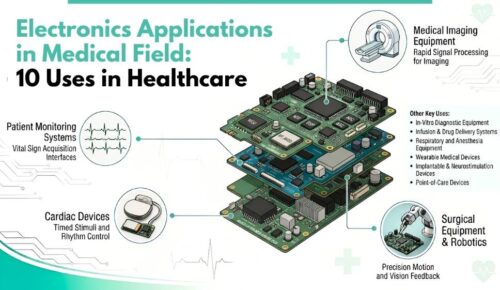
MRI systems need low-noise amplifier boards and gradient coil drivers. CT scanners depend on high-speed data acquisition PCBs that digitize detector signals. Ultrasound equipment uses sensitive transducer interface boards that generate and receive acoustic pulses, while X-ray detectors employ large-area sensor arrays. These imaging PCBs demand controlled impedance, high-voltage isolation, and exceptional signal integrity; These imaging applications may require controlled impedance, high-voltage isolation, low-noise design, and strong signal integrity. Component traceability in medical PCB assembly ensures that any field failure traces back to a specific batch, reel, or lot number.
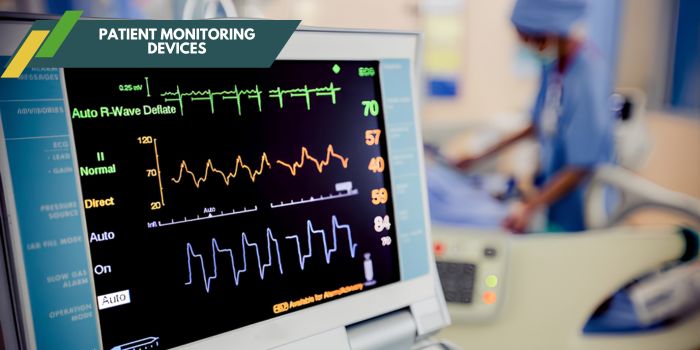
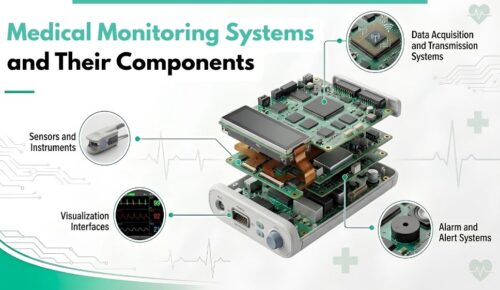
ECG monitors amplify microvolt-level cardiac signals while rejecting common-mode noise. Pulse oximeter PCBs drive LEDs and process photodetector signals to measure blood oxygen. Blood pressure monitor assemblies control pump inflation, valve release, and pressure sensor readout. Medical devices with patient-connected circuits may need to meet applicable IEC 60601 requirements for electrical safety and essential performance. Isolation barriers on the patient monitoring PCB prevent electrical shock even during component failure.
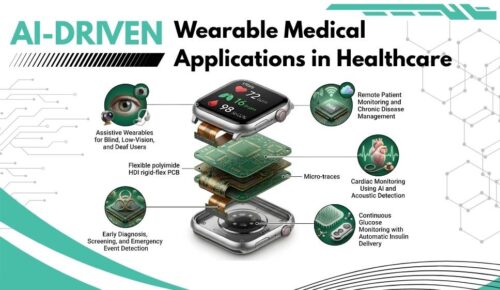
Wearable medical PCBs power continuous health monitoring outside clinical settings. Smart patches, continuous glucose monitors, and cardiac event recorders use flexible medical PCB designs that withstand skin contact, sweat, and daily activity. Portable analyzers and laboratory instruments, such as PCR machines and flow cytometers, use precision analog front-end PCBs for sample analysis. Each category demands specific material choices, power management strategies, and reliability validation.
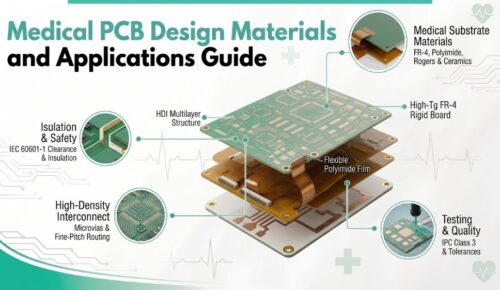
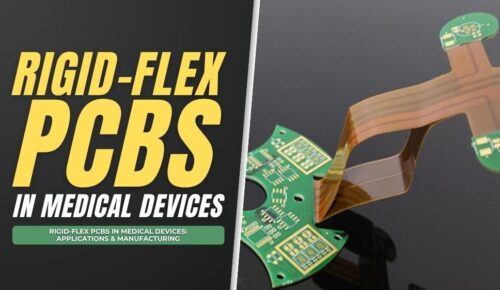
HDI technology packs more circuitry into smaller areas using laser-drilled microvias and fine traces. You must plan for HDI early; stackup, via aspect ratios, and component pitch all affect manufacturability, and design for manufacturability (DFM) in medical electronics catches yield-killers before prototyping. Rigid-flex medical PCBs combine component mounting sections with flexible interconnects, using biocompatible materials in flexible medical PCBs such as polyimide substrates and liquid crystal polymer films that protect both circuit and patient. Your design must account for bend radius and dynamic flex life.
Medical-grade PCB substrate materials balance electrical performance, thermal stability, and biological safety. High-Tg FR-4 resists delamination during multiple reflow cycles and extended operational heat, suiting most Class II medical PCB and non-implantable Class III designs. Ceramic substrates excel in RF telemetry PCBA for implantable medical devices, offering low dielectric loss, excellent thermal conductivity, and inherent biocompatibility. Alumina and aluminum nitride ceramics dominate high-power applications, while PTFE-based laminates serve microwave-frequency imaging. Your substrate choice directly impacts reliability, signal performance, and regulatory acceptance.
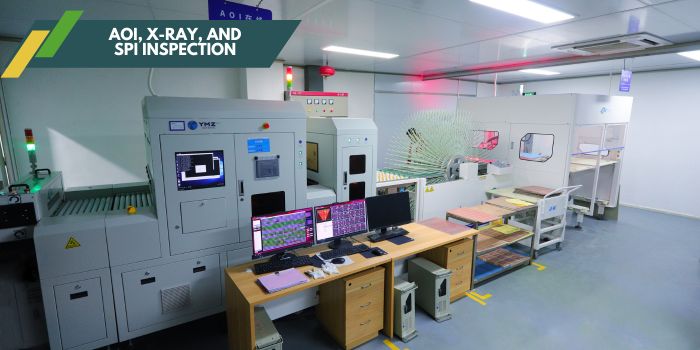
AOI scans every board for missing components, tombstoning, lifted leads, and solder bridges. SPI verifies paste volume and alignment before reflow. This prevents defects before they form. For BGA packages, QFN devices, and other hidden joints, X-ray inspection for high-reliability medical PCBA reveals voids, shorts, and insufficient solder invisible to optical systems. IPC Class 3 medical PCB assembly standards mandate these inspection methods. Batch testing alone cannot deliver the reliability implantable electronics demand.
ICT checks component values, shorts, and opens using a bed-of-nails fixture. Flying probe offers fixtureless testing for prototypes and low-volume medical device PCB runs. Functional testing simulates real-world operation. For example, a patient monitoring PCBA processes mock ECG signals to verify accurate heartbeat detection, while an infusion pump PCB drives a simulated motor load to confirm safe dosing control. These tests validate full system performance.
Component traceability in medical PCB assembly tracks every part from supplier to soldered board. If a supplier issues an alert, you identify affected devices in minutes. An ISO 13485 quality management system supports documented production records and traceability appropriate to the medical device manufacturer’s requirements. Auditors expect this evidence during regulatory submissions.
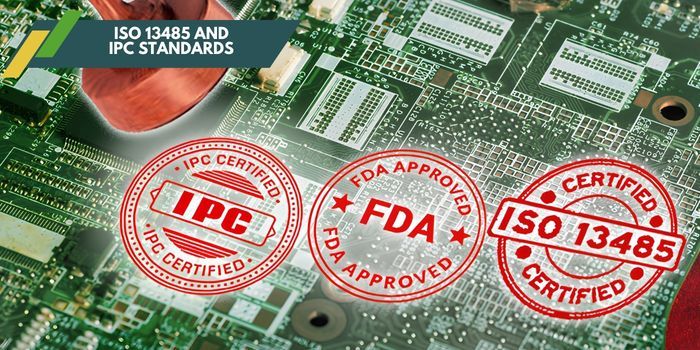
ISO 13485 defines quality management systems for medical device manufacturing. An ISO 13485-certified medical PCB assembly facility demonstrates documented process control and risk management targeting patient safety. IPC-A-610 Class 3 directs assembly workmanship for devices where failure risks patient harm. Implantable PCB assemblies, life-sustaining devices, and surgical electronics all require it.
The FDA classifies devices: Class I (low risk), Class II (moderate risk), and Class III (high risk). Class III medical devices generally face the most stringent regulatory requirements because they present higher potential risks. Your assembly partner becomes part of your FDA supply chain. Their process changes may require your re-validation. RoHS restricts hazardous substances; REACH governs chemical substances. Conformal coating for medical electronics adds moisture and contamination protection.
Ask about certifications: ISO 13485? FDA registered? IPC Class 3 capable? Verify traceability systems, in-house inspection, and handling of non-conforming material. US-based FDA-registered PCB assembly facilities offer regulatory alignment, IP protection, and faster logistics, while offshore manufacturing may lower unit costs but requires managing language barriers, time zones, and on-site audits.

MedPCB is an ISO 13485-certified one-stop PCB and PCBA supplier supporting medical electronics from PCB fabrication and component sourcing to PCB assembly. We provide professional engineering support, quality control, and traceability throughout the manufacturing process.
Our manufacturing and assembly capabilities include:
If you are developing medical electronics and need a reliable PCB/PCBA manufacturing partner, send us your Gerber files and BOM for a project review and quote.
A medical PCB is designed and manufactured according to the requirements of its intended medical application. These requirements may include controlled materials, documented processes, traceability, testing, and applicable quality and regulatory standards such as ISO 13485 and IPC-A-610.
ISO 13485 for quality management, IPC-A-610 Class 3 for workmanship, IEC 60601 for electrical safety, FDA QSR for finished devices, plus RoHS and REACH for environmental compliance.
They must survive inside the body for years without maintenance. They use biocompatible substrates, hermetic sealing, and ultra-low-power design under Class III standards with 100% inspection.
AOI, X-ray inspection, in-circuit testing, and functional testing that simulates real-world operation. Burn-in testing may apply for implants. Protocol depends on classification and risk.
Long-lifecycle medical devices face component discontinuation risks. Your partner should monitor lifecycles, alert you to end-of-life notices, and manage last-time buys to prevent production stoppages.
Medical PCB assembly demands a quality-first culture where every joint and inspection record matters. Choose an ISO 13485-certified, IPC Class 3-capable partner with proven AOI, X-ray, and functional test infrastructure.


Hello, I am Sony He, with extensive practical experience in medical PCB and PCBA manufacturing. Over the years, I have focused on medical circuit board manufacturing, rigid-flex PCB, SMT assembly, quality inspection and reliability compliance. I enjoy sharing hands-on expertise in medical PCB manufacturing and assembly through technical articles.



English

French

German

Japanese

Korean