High-Performance PCBs for Wearable Medical Devices

MedPCB manufactures and assembles compact, high-density PCBs for wearable medical electronics. We support flex, rigid-flex, and HDI PCB technologies from prototypes to volume production.

✓ Flex, Rigid-Flex & HDI PCB Manufacturing
✓ Full & Partial Turnkey PCB Assembly
✓ Fine-Pitch SMT & Miniature Component Assembly
✓ ISO 13485 Quality Management & IPC Class 2/3 Workmanship

High-Performance PCBs for Wearable Medical Devices
Case Study

Wearable Medical Devices Case Studies

  • Smart Ring
    Smart Ring PCB  Smart Ring

    Smart Ring PCB 

    MedPCB manufactured a compact 6-layer rigid-flex PCB for a wearable smart ring. The 18 mm × 15 mm board used 0.075 mm trace/space, laser-drilled microvias, and miniature SMT components to support sensor, power, and wireless functions within the limited enclosure.

  • Fitness Watch
    Fitness Watch PCB  Fitness Watch

    Fitness Watch PCB 

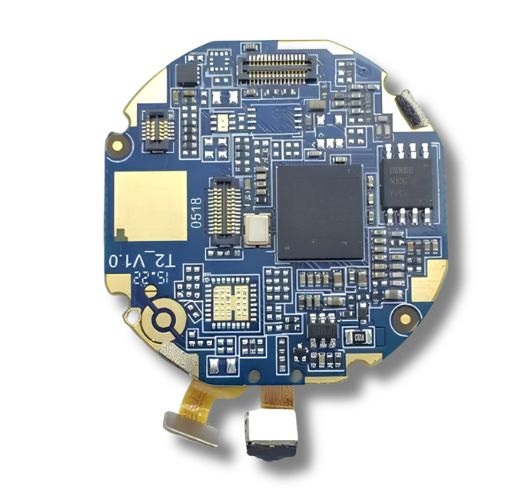
    For a multi-sensor smart watch, we fabricated an 8-layer flex-rigid board using low-loss Panasonic Megtron 6 and FR-4. Built to handle integrated optical sensors and wireless communication, the assembly involved fine-pitch BGA placing, conformal coating for sweat resistance, and 100% AOI inspection.

  • Continuous Glucose Monitor (CGM
    Continuous Glucose Monitor (CGM) PCB  Continuous Glucose Monitor (CGM) 

    Continuous Glucose Monitor (CGM) PCB 

    MedPCB manufactured a high-volume 4-layer flexible PCB for a compact continuous glucose monitoring device. The thin polyimide circuit used selective gold finishing, fine-line routing, and precision SMT assembly to support reliable sensor signal transmission in a space-constrained package.

  • Wearable ECG Monitor 
    Wearable ECG Monitor PCB  Wearable ECG Monitor 

    Wearable ECG Monitor PCB 

    For a long-term cardiac patch, we produced a 6-layer flex PCB engineered for continuous skin-contact telemetry. The design incorporated controlled impedance traces for precise bio-potential signal acquisition, low-temperature SMT assembly, and strict IPC Class 3 quality testing.

  • Smart Insulin Pump
    Smart Insulin Pump PCB Smart Insulin Pump

    Smart Insulin Pump PCBA 

    MedPCB provided turnkey assembly for a 10-layer rigid-flex control board used in an automated insulin delivery system. The project featured Isola high-Tg material, 0.10 mm microvias, mixed SMT+THT assembly, and functional testing for fail-safe drug delivery management.

  • Wearable Blood Pressure Monitor 
    Wearable Blood Pressure Monitor PCB  Wearable Blood Pressure Monitor 

    Wearable Blood Pressure Monitor PCB 

    For an optical blood-pressure bracelet, we manufactured a 6-layer HDI rigid-flex board with ±5% impedance control. Utilizing laser-drilled microvias and tight component spacing, the PCBA was assembled with automated optical and X-ray inspections for maximum signal accuracy.

  • Wearable Defibrillator
    Wearable Defibrillator PCB Wearable Defibrillator

    Wearable Defibrillator PCB 

    Designed for a life-critical personal defibrillator, MedPCB built a 12-layer heavy-copper PCB (3oz inner layers) on high-Tg FR-4. The board supported high-voltage energy storage alongside sensitive control circuits, complete with double-sided SMT placement and full functional burn-in testing.

Wearable Medical Device PCBs for Continuous Health Monitoring
introduction

Wearable Medical Device PCBs for Continuous Health Monitoring

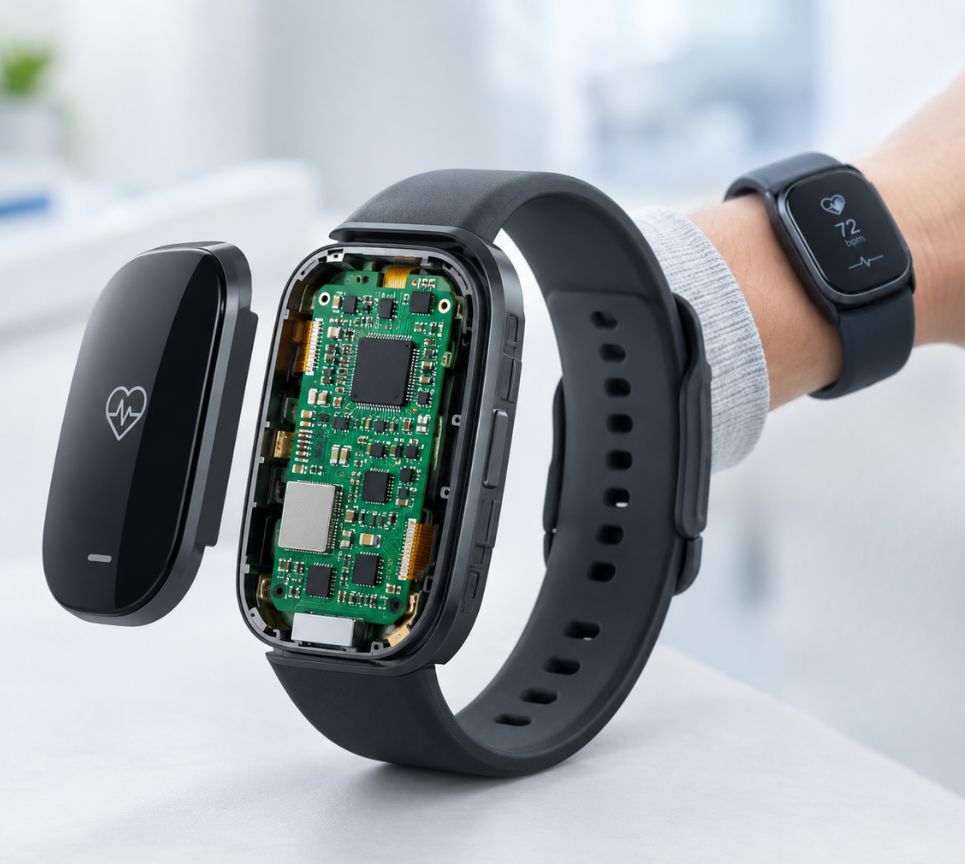
Wearable medical device PCBs are used in body-worn electronics designed to monitor physiological signals, support diagnosis, or deliver therapy. Typical applications include ECG patches, continuous glucose monitors, wearable blood pressure monitors, medical smartwatches, and drug-delivery devices.

Wearable medical electronics operate directly on or near the human body, where space constraints, body movement, moisture, and signal accuracy directly impact device performance. PCB materials and stack-ups must be selected based on the device's form factor, durability requirements, and continuous sensing function.

MedPCB manufactures and assembles flex, rigid-flex, and HDI PCBs for wearable medical devices from prototypes to full production. We comply with ISO 13485 and IPC Class 2/3 standards. Need a PCB for your wearable medical device? Send us your Gerber files and BOM for a manufacturing review and quotation.

Specs

Why Choose MedPCB for Wearable Medical PCBs

  • Flex & Rigid-Flex Manufacturing

    Flex & Rigid-Flex Manufacturing

    MedPCB manufactures flexible and rigid-flex PCBs for compact wearable medical devices. These PCB types support compact layouts, curved mechanical spaces, and flex interconnections while maintaining reliable electrical connections. We support fine lines, microvias, controlled impedance, stiffeners, and complex flex-to-rigid transitions according to project requirements.

  • Turnkey PCB Assembly

    Turnkey PCB Assembly

    MedPCB provides full and partial turnkey assembly, including component sourcing, SMT/THT assembly, inspection, functional testing, and conformal coating where required. This gives you one manufacturing partner from bare PCB fabrication through final PCBA production.

  • Free DFM & DFA Review

    Free DFM & DFA Review

    Our engineering team reviews your Gerber file and BOM before production begins. The review helps identify issues with component placement, board layout, clearances, and assembly processes. Early design feedback can help reduce production delays, rework, and unnecessary manufacturing costs.

  • ISO 13485 Quality Management

    ISO 13485 Quality Management

    MedPCB follows ISO 13485 quality management practices for medical PCB manufacturing and assembly. Our controlled processes support consistent production, material traceability, inspection, and quality documentation. This helps wearable medical device manufacturers maintain reliable PCBAs for regulated applications.

Design

Key Manufacturing & Assembly Challenges for Wearable Medical PCBs

Wearable medical PCBs must meet demanding requirements for size, flexibility, reliability, and electrical performance. MedPCB addresses these challenges with specialized manufacturing and assembly capabilities.

Get Instant Quote
  • Miniaturization
    Miniaturization

    Miniaturization

    Wearable medical devices require smaller PCBs to fit into compact housings without sacrificing performance. High component density, fine-pitch packages, and limited routing space can make PCB fabrication and assembly more demanding.

    MedPCB Solution:
    MedPCB supports HDI, fine-line routing, microvias, and high-density component placement for space-constrained designs. Our DFM and DFA review also helps identify manufacturability and assembly risks before production.

  • Flex Reliability
    Flex Reliability

    Flex Reliability

    Wearable devices can experience repeated bending, twisting, and movement during normal use. Flexible PCB designs must withstand these mechanical stresses while maintaining stable electrical connections and reliable solder joints.

    MedPCB Solution:
    MedPCB manufactures flexible and rigid-flex PCBs with controlled material selection,  flex stackup construction, copper routing requirements, and flex-to-rigid transitions. We also apply assembly processes suited to flexible circuits to support long-term reliability.


  • Fine-Pitch Assembly
    Fine-Pitch Assembly

    Fine-Pitch Assembly

    Wearable medical PCBs often use small packages and closely spaced components to fit more functionality into limited board space. Fine-pitch assembly requires accurate component placement and tight solder process control.

    MedPCB Solution:
    MedPCB has 8 precise SMT assembly lines, solder paste inspection, AOI, and X-ray inspection where needed. These processes help verify solder joints and component placement on high-density assemblies.

  • Moisture Protection
    Moisture Protection

    Moisture Protection

    Wearable devices are exposed to sweat, humidity, and other sources of moisture during daily use. Moisture can affect PCB materials, solder joints, and sensitive electronic components if the assembly is not properly protected.

    MedPCB Solution:
    MedPCB can support moisture-resistant PCBs and protective assembly processes based on your device requirements. Material selection, surface finish, controlled processing, and conformal coating can help improve protection against environmental exposure.

  • Signal Integrity
    Signal Integrity

    Signal Integrity

    Wearable medical devices may contain sensitive analog, digital, wireless, or sensor circuits in a very small PCB area. Tight routing, electromagnetic interference, and uncontrolled impedance can affect signal quality and measurement accuracy.

    MedPCB Solution:
    MedPCB controls impedance, stackup construction, dielectric thickness, copper thickness, and trace geometry according to your approved fabrication requirements. Our engineering review verifies manufacturability against specified impedance, stackup, and fabrication requirements before production.

Materials

PCB Technologies We Support for Wearable Medical Devices

MedPCB supports four advanced manufacturing capabilities for compact and flexible wearable medical electronics

  • HDI & Microvia PCB
  • Flex PCB
  • Rigid-Flex PCB
  • Fine-Pitch SMT Assembly
HDI & Microvia PCB
MedPCB manufactures HDI and microvia PCBs for wearable medical devices that require high circuit density in a compact footprint. Fine-line routing and microvias allow more connections to fit within limited board space while supporting dense interconnections and compact component layouts.
Flex PCB
Rigid-Flex PCB
Fine-Pitch SMT Assembly
Capabilities

Our Testing & Quality Control for Wearable Medical PCBs

  • SPI & AOI Inspection

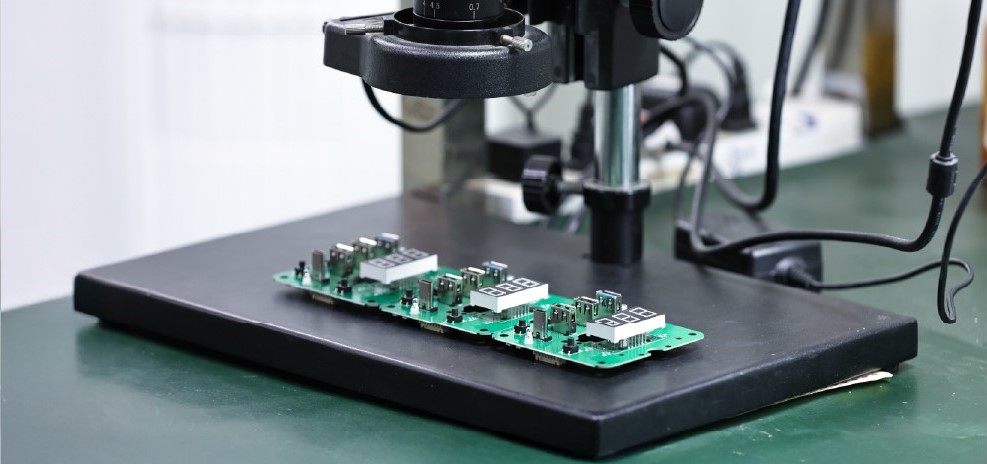
    MedPCB uses solder paste inspection (SPI) and automated optical inspection (AOI) to verify PCB assembly quality. SPI checks solder paste volume and placement, while AOI inspects component placement, polarity, solder joints, and other visible assembly defects.

    Get Instant Quote
    SPI & AOI Inspection
  • X-Ray Inspection

    X-ray inspection helps examine solder joints and connections that cannot be seen through standard optical inspection. MedPCB uses X-ray inspection for applications such as BGA and other hidden solder joints where internal assembly quality must be verified.

    Get Instant Quote
    X-Ray Inspection
  • Electrical & Functional Testing

    Electrical and functional testing helps confirm that each PCB assembly performs according to its design requirements. MedPCB can support tests for electrical connectivity, component operation, and device-specific functions based on your testing specifications.

    Get Instant Quote
    Electrical & Functional Testing
  • Traceability & Quality Control

    MedPCB maintains controlled manufacturing and inspection processes to support consistent quality throughout PCB production and assembly. Material and production traceability helps you track key manufacturing information and maintain quality records for wearable medical electronics.

    Get Instant Quote
    Traceability & Quality Control
Specs

Technical Specifications

Capability

Rigid-Flex PCB Manufacturing and Assembly Capability

Layer Count

Standard: 2–12 layers (up to 10 flex layers)

Advanced: 13–20 layers (up to 18 flex layers)

PCB Technologies

Single, Double, Multi-Layer Flex & Rigid-Flex, Ultra-Thin HDI

Order Quantities

Prototypes (≥1 PCS), Low-Volume, Mass Production

Board Dimensions

Min: 10 mm × 15 mm | Max: 406.4 mm × 736.6 mm

Surface Finishes

ENIG, ENEPIG, Soft/Hard Gold, OSP, ENIG+OSP, Gold Fingers

Soldering Technology

High-Precision SMT, Low-Temp Reflow, Selective Soldering

Component Support

0201/01005 Micro-SMD, Fine-Pitch BGAs, QFNs, Precision Biosensors

Solder Chemistry

Lead-Free (RoHS), No-Clean, Low-Outgassing Systems

Mechanical Reinforcement

Polyimide/FR4 Stiffeners, Stainless Steel, 3M PSA Adhesives

Protection Services

Conformal Coating, Hydrophobic Encapsulation, Depaneling

Quality Inspection

High-Mag Visual, 3D AOI, 3D X-Ray (AXI), First Article (FAI)

Technical Specifications
Faqs

Frequently Asked Questions

Our Wearable Medical PCB FAQ addresses essential questions regarding your flex and rigid-flex manufacturing requirements. We cover our capabilities for wearble device PCBs, material selection, thermal stability, strict ISO 13485 quality standards, and compliance with RoHS and REACH regulations. For every medical PCB project, we guarantee high-precision fabrication tailored for critical healthcare applications.

1. Can You Provide Full Turnkey Assembly For Wearable Medical Devices?
Yes. MedPCB offers complete turnkey assembly for wearable medical electronics, managing every step from medical-grade component sourcing and PCB fabrication to high-precision SMT assembly, testing, and box build.
2. Can Flexible PCBs Have Both Signal And Power Layers?
Yes. Multilayer flex and rigid-flex designs routinely feature dedicated inner power planes alongside signal layers, using solid copper routing and strategic stack-ups to maintain low noise and mechanical flexibility.
3. What Surface Finish Options Are Recommended For Wearable PCBs?
ENIG (Electroless Nickel Immersion Gold) and ENEPIG are recommended for medical wearables. They provide flat surfaces for fine-pitch sensors, superior wire bonding capability, high oxidation resistance, and safe contact for biosensors.
4. Can Sensors Be Integrated Into Flexible PCBs?
Yes. Optical, thermal, bio-impedance, and motion sensors can be directly soldered or embedded onto flexible circuit boards, allowing continuous health monitoring in compact form factors.
5. How Do Trace Width And Spacing Affect PCB Flexibility In Wearables?
Thinner traces and wider spacing allow the PCB substrate to bend more freely with less mechanical stress, reducing the risk of trace cracking and maintaining circuit integrity during repeated body movement.
6. What Is An AFE In A Wearable Medical Device?
An Analog Front End (AFE) is a specialized circuit chip that amplifies, filters, and digitizes weak biosignals such as heart rhythms or optical pulse data from wearable sensors before sending them to the main microcontroller.
7. Why Use Rigid-Flex For A Wearable Medical PCB?
Rigid-flex circuit boards fit into small, ergonomically curved enclosures without internal wiring connectors. They allow delicate components to sit on stable rigid sections while flexible regions bend reliably during daily wear.
8. Can You Support Prototype and Volume Production?
Yes. MedPCB supports wearable medical PCB production from early prototypes through volume manufacturing. We can produce low-quantity prototypes for design validation and testing, then transition approved designs into repeat production with controlled fabrication, assembly, inspection, and testing processes.
9. Do You Provide Conformal Coating for Wearable Medical PCBAs?
Yes. MedPCB can provide conformal coating for wearable medical PCBAs when additional protection from moisture, humidity, sweat, and environmental exposure is required. Coating materials and application methods can be selected based on the device enclosure, operating environment, component requirements, and expected service conditions.