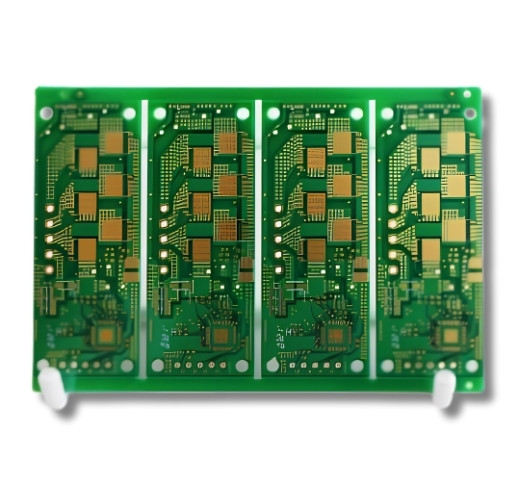
Shengyi SH260 Medical PCB Manufacturer

Medical PCBs fabricated with genuine Shengyi SH260 high-performance polyimide laminate for long-term high-temperature medical applications.

• Tg >250°C for High-Temperature Medical PCB Applications
• Low Z-Axis CTE for Reliable Plated Through-Holes
• Halogen-Free Polyimide System for Lead-Free Processing
• Supports multilayer rigid PCB up to 40 layers
• ISO 13485 & IPC Class 3 Manufacturing

Shengyi SH260 Medical PCB Manufacturer
Certifications
What Is Shengyi SH260?
introduction

What Is Shengyi SH260?

Shengyi SH260 is a halogen-free rigid polyimide copper-clad laminate. It is built for printed circuit boards that operate continuously at high temperatures. The system pairs SH260 rigid cores with SH260B prepreg, so a full multilayer polyimide PCB comes from one qualified resin family.

Medical device projects select SH260 for its outstanding thermal robustness. Unlike standard epoxy‑based substrates, it resists performance degradation caused by sustained high‑heat operation, repeated sterilization cycles, and extended burn‑in testing. MedPCB fabricates HDI and multilayer PCBs built with genuine Shengyi SH260 material for high-reliability medical projects.

advantages

Key Advantages of Medical-Grade SH260 PCBs

  • Ultra-High Tg for Long-Term High-Temperature Operation
  • Low Z-Axis CTE for Plated Through-Hole Reliability
  • Stable Bonding Strength at Elevated Temperatures
  • Tough Resin System for Reliable Multilayer Construction
  • Halogen-Free Chemistry for Lead-Free Assembly
Ultra-High Tg for Long-Term High-Temperature Operation
With a Tg above 250°C, SH260 provides high thermal stability for PCB designs exposed to sustained elevated temperatures. The high Tg helps maintain mechanical integrity and electrical stability during extended thermal operation, making the material suitable for demanding medical equipment and burn-in applications.
Low Z-Axis CTE for Plated Through-Hole Reliability
Stable Bonding Strength at Elevated Temperatures
Tough Resin System for Reliable Multilayer Construction
Halogen-Free Chemistry for Lead-Free Assembly
Why Choose Us

Why Choose MedPCB for SH260?

  • ISO 13485 Certified TC350 PCB Production

    ISO 13485 Certified SH260 PCB Production

    MedPCB operates under an ISO 13485-certified quality management system and ISO 9001 quality management system. We manufacture SH260 PCBs to IPC Class 2/3 requirements, with controlled production processes and documented quality records for your medical device projects.

  • Free DFM Review with RF Stackup & Material Consultation

    Free DFM Review for Your SH260 PCB Project

    Our engineering team provides a free DFM review before production. We check your PCB layout, stackup, material selection, drill design, trace geometry, annular rings, and other manufacturing requirements to identify potential issues early. For SH260 projects, we can also provide recommendations on material construction and stackup based on your operating requirements and target PCB performance.

  • Rogers TC350 Material Sourcing

    Verified Shengyi SH260 Material Sourcing

    We source genuine Shengyi SH260 laminate and SH260B prepreg through qualified supply channels. Material part numbers, thickness, copper weight, and lot information are verified before production to support material consistency and traceability throughout the manufacturing process.

  • Advanced Hybrid Multilayer Capability with PTFE Laminates

    Advanced Multilayer & HDI Build Capability

    MedPCB supports multilayer SH260 rigid PCB fabrication with sequential lamination, blind and buried vias, and laser-drilled microvias. Our engineering and production teams also support HDI rigid PCB requirements with application-specific process planning and tooling.

  • Quality Control, Testing & Material Traceability

    In-House Quality Assurance & Full Material Traceability

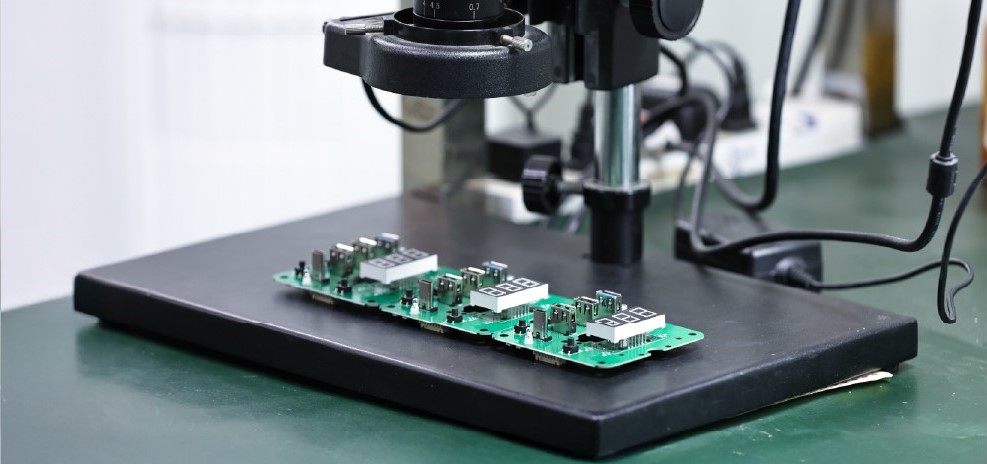
    We perform full-layer AOI and E-test (flying probe / fixture) for continuity and isolation.
    We offer impedance testing, microsection analysis, solderability and dimensional inspection per project specs.
    All boards meet IPC-A-600 and IPC-6012. Thermal stress coupons are provided upon PO request, with lot-level records retained.

Specs

Technical Specifications

Item Rigid PCB
Base Material Shengyi SH260 laminate with SH260B prepreg
Layer Count 1-40 layers
Finished Board Thickness 0.2-10 mm
Copper Thickness Min 1/3 oz, Max 10 oz
Min Line/Space, Inner Layer 3/3 mil (1/2 oz copper)
Min Line/Space, Outer Layer 3.5/3.5 mil (1/2 oz copper)
Max Aspect Ratio (PTH) 20:1
Laser Via Diameter 4-6 mil
HDI Structure 1+n+1 to 3+n+3 (buried vias ≤ 0.3 mm)
Max Board Size 1100 × 500 mm (43" × 19")
Impedance Control ±5Ω (< 50Ω), ±10% (≥ 50Ω)
Surface Treatment ENIG, ENEPIG, Hard/Soft Gold, Immersion Tin, OSP
Medical SH260 PCB
Process

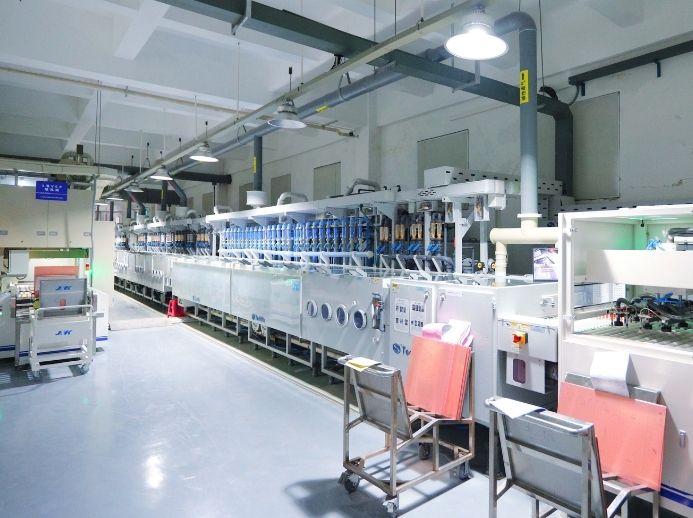
Our SH260 Manufacturing Process & Traceability

Step 1: Engineering Review & Material Verification
We conduct a full manufacturability review against your supplied Gerber, drill files, and stack‑up documentation. Our review validates layer sequence, dielectric thickness, copper distribution, and drill‑to‑copper clearances. We raise engineering queries for requirements outside our process capabilities. We cross check incoming SH260 laminate and SH260B prepreg against part numbers and lot certificates. Each material lot ID is logged and linked to the corresponding work order.
Step 2: Inner Layer Imaging & Lamination
Step 3: Drilling & Hole Preparation
Step 4: Copper Plating & Outer Layer Fabrication
Step 5: Surface Finish & Final Inspection
challenges

Common Challenges in SH260 PCB Manufacturing

  • Moisture Absorption & Pre-Bake Control

    Moisture Absorption & Pre-Bake Control

    Polyimide absorbs atmospheric moisture more readily than epoxy, and trapped moisture vaporises at lamination or reflow temperature. The resulting pressure causes measling, blistering, or delamination that often passes electrical test and appears only at thermal stress or assembly.

    Our Solution: We bake SH260 laminate and prepreg before lamination, before drilling, and again before solder mask, retaining the oven charts. Conditioned material sits in controlled humidity storage under time-out-of-bake limits, and microsection after lamination confirms no voiding.

  • Extended Cure & Post-Bake Lamination Cycles

    Extended Cure & Post-Bake Lamination Cycles

    Polyimide needs a longer, hotter cure than epoxy to reach full crosslink density. An undercured stack holds a lower transition temperature and weaker bond strength, which surfaces later as interlayer separation or pad lifting during rework.

    Our Solution: We run a dedicated polyimide press programme with controlled heat-up, extended dwell, and a separate post-cure bake, logging platen temperature and pressure per book. Cure adequacy is confirmed on production material by transition temperature verification and microsection review before the lot moves to drilling.

  • Drill Wear & Hole Wall Quality Control

    Drill Wear & Hole Wall Quality Control

    Polyimide and its glass reinforcement wear drill bits faster than epoxy laminate. A dulled bit adds heat and produces rough walls, nail-heading, and heavy smear, which cause plating voids that pass continuity test and fail during thermal cycling.

    Our Solution: We set bit life limits specifically for polyimide and control chip load, retraction rate, and entry and backup material selection. Wall roughness and nail-heading are assessed on first-article microsections against IPC-A-600, and the drill programme is adjusted before production panels are committed.

  • Desmear Chemistry Selection for Polyimide Resin

    Desmear Chemistry Selection for Polyimide Resin

    Polyimide resists permanganate desmear chemistry tuned for epoxy, so a standard cycle can leave smear at the inner layer interface. Residual smear creates connections that read continuous at test and open under thermal load, while an aggressive cycle causes glass fibre protrusion and wicking.

    Our Solution: We use a desmear process qualified for polyimide, holding swell solvent concentration, permanganate strength, bath temperature, and immersion time to defined limits. Smear removal and etch-back are verified by microsection at the barrel-to-innerlayer interface on every production lot.

Shengyi SH260 Material Specifications
Specifications

Shengyi SH260 Material Specifications

The table below lists published typical values for Shengyi SH260 laminate and SH260B prepreg. Testing follows IPC-TM-650 on 1.6 mm specimens unless otherwise noted.

Property Shengyi SH260 Method / Condition
Material Type Halogen-free polyimide copper clad laminate and prepreg SH260 laminate / SH260B prepreg
Specification IPC-4101D /40, /41
Glass Transition Temperature (Tg) >250°C TMA, 2.4.24
Decomposition Temperature (Td) 429°C 5% wt. loss, TGA, 2.4.24.6
Time to Delamination (T300) >60 min TMA, 2.4.24.1
CTE (X/Y-axis) 12~15 ppm/°C 50-260°C, 2.4.24
CTE (Z-axis) 45 ppm/°C (α1, below Tg) / 1.20% 50-260°C, 2.4.24
Dielectric Constant (Dk) 4.12 1 GHz, C-24/23/50, 2.5.5.9
Dissipation Factor (Df) 0.007 1 GHz, C-24/23/50, 2.5.5.9
Electrical Strength 85 kV/mm D-48/50 + D-0.5/23, 2.5.6.2
Water Absorption 0.26% D-24/23, 2.6.2.1
Flammability UL 94 HB C-48/23/50
Halogen Content Halogen-free, RoHS and WEEE compliant
Lead-Free Process Compatible Yes Non-MDA cured resin system

Need a Shengyi SH260 polyimide PCB for a high-temperature medical program? Send Your Gerber Files for a Free DFM Review.

industries

Applications of Medical SH260 PCBs

More Industries

Case Study

Medical SH260 PCB Case Studies

  • Reusable Handpiece Board for Repeat Autoclave Cycles
    Reusable Handpiece Board for Repeat Autoclave Cycles Reusable Handpiece Board for Repeat Autoclave Cycles

    Reusable Handpiece Board for Repeat Autoclave Cycles

    A surgical instrument programme needed a compact four-layer board for a reusable handpiece rated for repeated steam autoclave exposure. We fabricated it on SH260 with SH260B prepreg, using an extended polyimide press cycle and a controlled pre-bake at each thermal step. ENIG was selected for storage stability between sterilization cycles. Before shipment we microsectioned thermal stress coupons to check for delamination and barrel cracking, and dimensional inspection verified outline and hole position.

  • 12-Layer SH260 PCB for Medical Sterilization Controller
    12-Layer SH260 PCB for Medical Sterilization Controller 12-Layer SH260 PCB for Medical Sterilization Controller

    12-Layer SH260 PCB for Medical Sterilization Controller

    This medical sterilizer controller required a 12‑layer SH260 polyimide PCB with mixed‑signal and power planes for continuous high‑temperature cabinet operation. We fabricated the multilayer stack‑up in a single lamination cycle, applying shrinkage‑based etch compensation and building PTH vias to IPC Class 3 requirements, with microsection validation and full‑net flying‑probe testing implemented for reliability. The finished boards delivered stable electrical performance under the device’s repeated thermal cycling conditions.

  • Burn-In Board for Implantable Device ASIC Validation
    Burn-In Board for Implantable Device ASIC Validation Burn-In Board for Implantable Device ASIC Validation

    Burn-In Board for Implantable Device ASIC Validation

    An implantable device programme needed a burn-in fixture board that would hold socket coplanarity through extended operation at temperature. We produced it on SH260 with increased inner copper cross-section for current distribution and a symmetrical stackup to control warp. Hard gold went on the contact areas to withstand repeated socket insertion. Flatness was measured after final bake against our advanced warp and twist window, gold thickness was verified by X-ray fluorescence, and continuity testing ran at full coverage.

  • Class 3 Polyimide Assembly with Full Traceability
    Class 3 Polyimide Assembly with Full Traceability Class 3 Polyimide Assembly with Full Traceability

    Class 3 Polyimide Assembly with Full Traceability

    A diagnostic equipment manufacturer required bare boards released against IPC-6012 Class 3, with documentation suited to its device master record. We built them under our ISO 13485 system, recording laminate and prepreg lot identifiers against each work order. Press, plating, and bake records were retained per panel. Acceptance covered AOI on all layers, microsection review against IPC-A-600 Class 3 criteria, and E-test, with the certificate of conformance and microsection report supplied at shipment.

Faqs

Frequently Asked Questions

Our Medical SH260 PCB FAQ addresses key questions regarding Shengyi SH260 polyimide laminate properties and fabrication standards. We cover thermal stability, high Tg performance, UL 94 HB flammability ratings, hybrid stackups, IPC Class 3 compliance, pre-bake requirements, and sterilization considerations. For every medical SH260 PCB project, we guarantee high-precision manufacturing engineered for critical healthcare applications.

1. Is SH260 the Same as SH260B Prepreg?
No. SH260 is the copper clad laminate and SH260B is the matching prepreg, and Shengyi publishes both under one data sheet. Multilayer builds use SH260 cores bonded with SH260B prepreg, so both part numbers belong on your fabrication drawing.
2. What Is the Tg and Td of Shengyi SH260 Laminate?
Tg is above 250°C by TMA and Td is 429°C at 5 percent weight loss by TGA. Time to delamination at 300°C exceeds 60 minutes.
3. Is SH260 Halogen-Free and RoHS Compliant?
Yes. Shengyi lists SH260 as halogen-free and RoHS/WEEE compliant. For medical projects, we can provide the applicable material and product compliance documentation.
4. What Is the UL 94 Flammability Rating of SH260?
SH260 carries a UL 94 HB rating, not V-0. Polyimide built to IPC-4101D /40 and /41 reaches its thermal performance without added flame retardants. If your specification requires V-0, we will raise it during DFM review and discuss alternatives.
5. What Is the Difference Between SH260 And High-Tg FR-4?

SH260 is a polyimide system and high-Tg FR-4 is an epoxy system, and the difference matters most in sustained high-temperature service rather than in a single reflow event. The table below sets out the practical distinctions.

Characteristic Shengyi SH260 (Polyimide) High-Tg FR-4 (Epoxy)
Glass Transition Temperature >250°C (TMA) Typically 170-180°C
Z-Axis Expansion, 50-260°C 1.20% Higher, greater barrel strain
Time to Delamination at 300°C >60 min Shorter
Dielectric Constant at 1 GHz 4.12 Broadly comparable
Water Absorption 0.26%, pre-bake required Lower, pre-bake advisable
Flammability UL 94 HB UL 94 V-0
Relative Material Cost Higher Lower
Typical Application Burn-in boards, sterilizers, electrosurgical, aerospace General medical and commercial electronics

Requirements outside these windows are reviewed case by case: send your operating temperature profile and we will advise which system fits.

6. Can SH260 Be Combined with FR-4 in Hybrid Stackups?
Yes, and hybrid stackups let you place polyimide only where thermal performance is needed. The two systems differ in cure requirement and expansion behaviour, so press profile, layer order, and copper balance must be set for the combination. Send the proposed stackup and we will confirm feasibility during DFM review.
7. Can SH260 PCBs Be Built to IPC Class 3 Requirements?
Yes. MedPCB manufactures SH260 PCBs to IPC-6012 Class 3 requirements, with applicable workmanship and inspection criteria based on IPC-A-600.
8. What Is the Dielectric Constant of SH260 At 1 GHz?
The published typical value is 4.12 at 1 GHz, with a dissipation factor of 0.007. Both were measured after C-24/23/50 conditioning on a 1.6 mm specimen. Values shift with glass style and resin content in thinner cores, so send your stackup and we will confirm modelled impedance.
9. Does SH260 Require Pre-Bake Before Assembly?
Yes. Water absorption of 0.26 percent is higher than epoxy laminate, so a pre-bake prevents moisture-driven blistering at peak reflow temperature. We bake boards before packaging and ship in moisture barrier bags with desiccant. The recommended pre-bake condition is supplied with the documentation on request.
10. Can SH260 PCBs Survive Autoclave, EtO, And Gamma Sterilization?
SH260 provides high thermal stability, but compatibility with autoclave, EtO, or gamma sterilization depends on the complete PCB construction. Medical sterilization requirements should be validated at the finished-device level.

Product Related