Blood Glucose Meters PCB

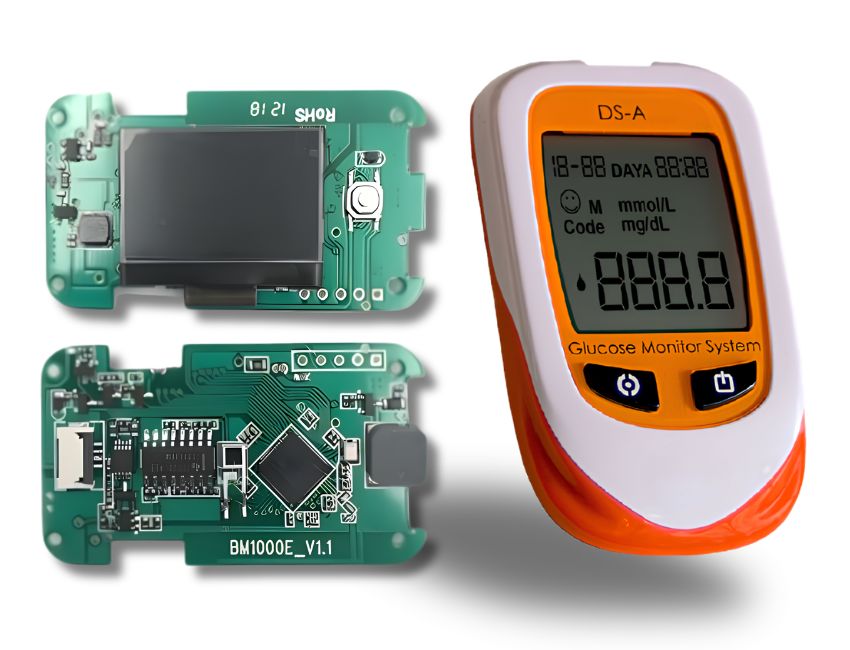
Blood glucose meter PCBs support electrochemical sensing, signal processing, power management, and display control. These boards require accurate signal transmission, low power consumption, compact construction, and stable performance. MedPCB manufactures and assembles medical-grade PCBs for blood glucose meters and continuous glucose monitoring (CGM) devices.

✓ Rigid, HDI & Rigid-Flex PCB Options for Compact Devices
✓ Ultra-fine pitch SMT assembly for compact glucose monitors
✓ 100% Electrical Testing, AOI, 3D X-Ray, And Functional Testing            
✓ ISO 13485 Manufacturing & IPC Class 2/3 Support

Blood Glucose Meters PCB
Certifications
What is Blood Glucose Meters PCB
introduction

What is Blood Glucose Meters PCB?

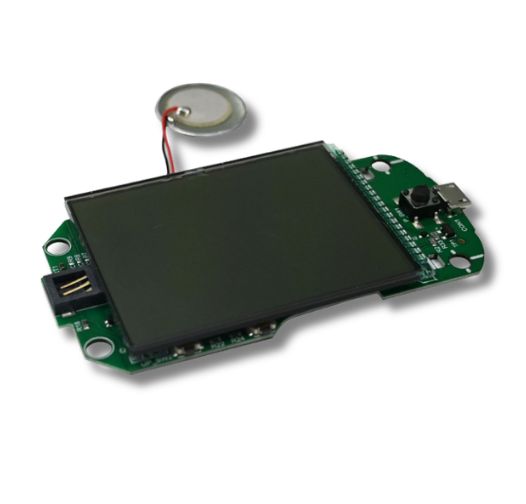
A blood glucose meter PCB is a specialized circuit board used inside blood glucose meters and continuous glucose monitoring (CGM) devices. It controls key electronic functions, including sensor signal processing, power management, data processing, and display control.

Blood glucose meter PCBs must process small electrochemical signals with high accuracy. The PCB needs stable electrical performance, low noise, low power consumption, and reliable signal transmission. Compact devices may also require HDI technology, fine-pitch components, and multilayer PCB construction.

MedPCB manufactures and assembles medical-grade PCBs for blood glucose meters and CGM devices. We support HDI, multilayer, rigid, and compact PCB designs for prototypes, low-volume production, and volume manufacturing. 

Products

Features of Blood Glucose Meters PCB

  • Signal Detection and Conditioning
  • Data Processing
  • User Interface Control
  • Power Management
Signal Detection and Conditioning
Blood glucose meter PCBs process the small electrical signals generated by glucose test strips or sensors. Signal-conditioning circuits amplify and process low-level sensor signals while helping control electrical noise before downstream data processing.
Data Processing
User Interface Control
Power Management
Why Choose Us

Why Choose MedPCB for Blood Glucose Meter PCB Manufacturing?

  • ISO 13485 Certified Manufacturing

    ISO 13485-Certified Medical PCB Manufacturing

    MedPCB manufactures medical PCBs under an ISO 13485 quality management system and supports IPC Class 2 and Class 3 requirements. Controlled production, inspection, and traceability help maintain consistent quality for blood glucose meters and CGM devices.

  • HDI PCB Manufacturing for Blood Glucose Meter PCBs

    HDI PCB Manufacturing for Blood Glucose Meter PCBs

    We manufacture HDI and multilayer PCBs for compact blood glucose meters and wearable glucose monitoring devices. Fine traces, microvias, and high-density layouts help fit sensing, processing, and power circuits into small device enclosures.

  • Full Turnkey Capability for Blood Glucose Meter PCBs

    Full Turnkey Capability for Blood Glucose Meter PCBs

    MedPCB provides PCB fabrication and assembly, including component sourcing, SMT and THT assembly, inspection, and functional testing. This supports complete PCBA production for prototypes and volume manufacturing.

  • Free DFM _ DFA Check for Blood Glucose Meter PCBs

    Free DFM / DFA Check for Blood Glucose Meter PCBs

    Our engineering team reviews the PCB layout, stackup, trace spacing, component placement, drilling, and assembly requirements before production. This helps identify manufacturing and assembly risks before production.

Specs

Technical Specifications

Technical Parameter

Manufacturing Capability

Order Quantity

≥ 1 PCS, No MOQ

Quality Grade

IPC-6012 Class 2 & Class 3, ISO 13485

Board Size

Standard: up to 500 × 600 mm; Advanced: up to 1100 × 500 mm

Layer Count

Rigid PCB: 1–40 layers
Flex PCB: 1 to 8 Layers

Rigid Flex PCB: Standard: 2–12 layers (up to 10 flex layers), Advanced: 13–20 layers (up to 18 flex layers)

Assembly Technologies

Surface Mount (SMT), Through-Hole (THT/DIP), and Mixed-Technology

Component Sourcing

Full Turnkey, Partial Turnkey, or Consigned (access to 300,000+ genuine parts)

Component Range

From 01005 packages to 0.2 mm fine-pitch BGAs

Placement Accuracy

±0.035 mm via automated component placement

Board Thickness

0.2–10.0 mm (Standard: 0.2–3.2 mm; Advanced: 3.4–10.0 mm)

Min. Trace Width / Spacing

Internal: 3/3 mil (0.075 mm); External: 3/3 mil advanced, 3.5/4 mil standard

Surface Finish

ENIG, ENEPIG, Lead-Free HASL, OSP, Immersion Silver, Immersion Tin, Soft/Hard Gold,

Impedance Tolerance

±5 Ω for <50 Ω; ±10% for ≥50 Ω (Precise ±5% available for biosensor lines)

Materials

High-Tg FR-4, Polyimide (Flex), Rogers, Megtron 6, and biocompatible medical-grade substrates

Blood Glucose Meter PCB
Capabillities

Blood Glucose Meter PCB Manufacturing on MedPCB

Step 1: Engineering Review & DFM/DFA
We review your blood glucose meter PCB design before production. Our engineers check the layout, pad design, trace spacing, component placement, and assembly details. This helps identify potential manufacturing problems early.
Step 2: PCB Fabrication & Component Sourcing
Step 3: IQC Incoming Quality Inspection
Step 4: SMT & THT Assembly
Step 5: Inspection, Testing & Traceability
Quality Control

Challenges in Blood Glucose Meter PCB Manufacturing

  • Low-Level Signal Circuit Manufacturing

    Low-Level Signal Circuit Manufacturing

    Challenge: Blood glucose meters process low-level electrical signals from glucose sensors. Contamination, leakage paths, manufacturing variation, and assembly defects can affect the electrical performance of signal-sensitive circuits.

    Our Solution: MedPCB manufactures low-level analog circuits according to the customer-approved PCB and assembly requirements. Controlled fabrication, solder paste printing, component placement, reflow, cleaning, and inspection help maintain manufacturing consistency in signal-sensitive areas.

  • Miniature Component Assembly

    Miniature Component Assembly

    Challenge: Blood glucose meters require compact PCBs with small components and dense layouts. Fine-pitch parts and limited board space can increase assembly risks.

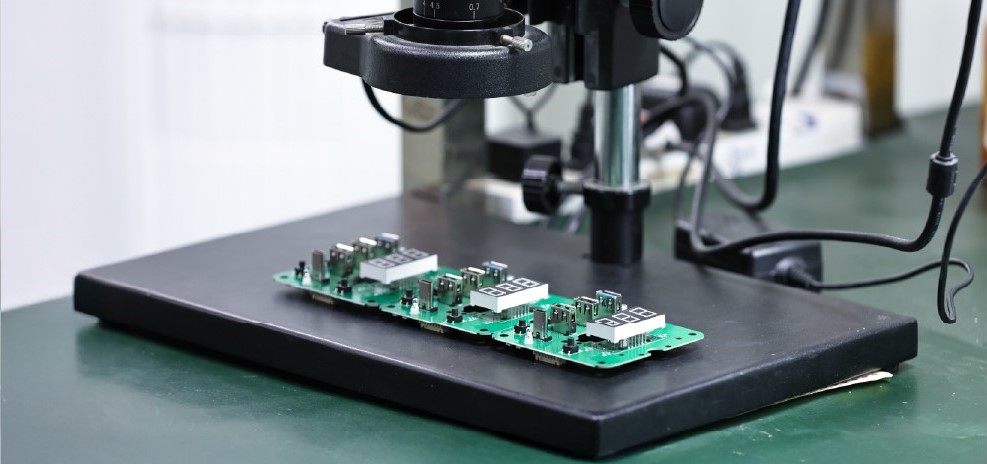
    Our Solution: MedPCB supports fine-pitch SMT assembly for compact medical PCBs. SPI and AOI inspect solder paste, component placement, and solder joints. X-ray inspection can be used for hidden connections such as BGA packages.

  • Wireless & Mixed-Signal Manufacturing

    Wireless & Mixed-Signal Manufacturing

    Challenge: Some blood glucose meters include wireless communication, digital control, and analog sensor circuits on the same PCB. Poor layout or assembly quality can cause signal interference and unstable performance.

    Our Solution: MedPCB manufactures and assembles mixed-signal PCBs with controlled fabrication and assembly processes. We support RF and wireless circuits, fine-pitch SMT, and electrical and functional testing based on your design and test requirements.

  • Environmental Reliability 

    Environmental Reliability 

    Challenge: Portable and wearable glucose monitoring devices may be exposed to moisture, contamination, handling, and changing environmental conditions. Residues or contamination on signal-sensitive assemblies can also affect long-term electrical performance.

    Our Solution: MedPCB controls PCBA cleaning and handling according to the assembly requirements. Conformal coating and other post-assembly protection processes are available when specified, while ESD-controlled handling is applied during component storage and assembly to protect sensitive electronic components.

Our Quality Control for Blood Glucose Meter PCB & PCBA
Quality Control

Our Quality Control for Blood Glucose Meter PCB & PCBA

MedPCB implements full quality control across our PCB fabrication and PCBA assembly workflows.

Bare PCB Inspection & Testing 
We inspect bare PCBs and run electrical tests to validate dimensions, layer stackup, drilling, copper features, surface finish and solder mask. We verify continuity and isolation against your approved specifications. AOI and electrical tests are deployed at key production stages, and we perform additional inspections as required by your PCB project.

PCBA Process Inspection 
During SMT assembly, we use SPI to monitor solder paste deposition and AOI to check component placement and visible solder defects. We conduct X-ray inspection for BGAs, QFNs and other components with hidden solder joints. We also perform functional testing as your custom test specifications.

Need reliable Blood Glucose Meter PCB & PCBA? Send your Gerber files, BOM, and assembly files to sales@medicalpcb.com for a free DFM/DFA review.

Case Study

Blood Glucose Meter PCB Case Studies

  • Finger-Prick Blood Glucose Meter
    Finger-Prick Blood Glucose Meter PCB Finger-Prick Blood Glucose Meter PCB

    Finger-Prick Blood Glucose Meter 

    The customer required a compact, ultra-low-power blood glucose meter PCB for portable testing. The PCB used a 4-layer high-Tg FR-4 construction with 0201 components and manufacturing controls for fine-pitch, signal-sensitive circuitry. The finished boards passed full functional and electrical continuity testing.

  • Continuous Glucose Monitor (CGM)
    Continuous Glucose Monitor (CGM) PCB Continuous Glucose Monitor (CGM)

    Continuous Glucose Monitor (CGM) 

    For continuous skin-worn sensing, the customer needed a flexible, miniature blood glucose meter PCB. MedPCB fabricated a high-density rigid-flex PCB featuring microvias, and ultra-fine trace spacing. The completed boards passed bend-reliability and 3D X-ray inspections.

  • Flash Glucose Monitor
    Flash Glucose Monitor PCB Flash Glucose Monitor 

    Flash Glucose Monitor 

    The project demanded a low-profile blood glucose meter PCB with integrated NFC wireless communication. MedPCB produced an 8-layer HDI PCB using high-frequency Megtron 6 laminates with precise RF antenna matching, 0201 SMT components, and power-gating circuitry. The finished boards passed RF signal integrity and functional sleep-mode testing.

  • Bluetooth Blood Glucose Meters
    Bluetooth Blood Glucose Meters PCB Bluetooth Blood Glucose Meters

    Bluetooth Blood Glucose Meters 

    The customer required a reliable blood glucose meter PCB with stable Bluetooth telemetry for real-time mobile syncing. MedPCB manufactured a multi-layer board with optimized ground plane shielding to isolate wireless interference from sensitive biosensing lines. 

  • Handheld Blood Glucose Meter 
    Handheld Blood Glucose Meter PCB Handheld Blood Glucose Meter

    Handheld Blood Glucose Meter 

    For durable everyday self-monitoring devices, the customer needed a thermally stable blood glucose meter PCB. MedPCB produced a high-reliability 4-layer FR-4 (UL 94V-0) PCB using fine-pitch QFN ICs components for small-footprint assembly. The completed boards passed environmental burn-in and electrical testing.

Faqs

Frequently Asked Questions

Our Blood Glucose Meter PCB FAQ addresses essential questions regarding your manufacturing requirements. We cover our capabilities for single-sided, double-sided, and high-density multilayer circuits, material selection, signal integrity and noise minimization for high-precision electrochemical biosensors, strict ISO 13485 quality standards, and seamless scalability from quick-turn prototypes to mass production. For every blood glucose meter PCB project, we guarantee micro-precision fabrication tailored for critical low-power and highly accurate healthcare applications.

1. Can MedPCB Handle Complete Turnkey PCB Manufacturing And Assembly For Glucose Monitors?
Yes. MedPCB delivers full turnkey medical services, including substrate fabrication, component sourcing, fine-pitch SMT assembly, protective conformal coating, and final functional testing.
2. Which PCB Materials Are Best For Blood Glucose Monitoring Devices?
High-Tg FR-4, Polyimide (for flexible circuits), and low-loss substrates like Rogers or Megtron 6 are ideal. They provide thermal stability, minimize electrical noise for micro-current biosensors, and support compact, durable builds.
3. Why Choose Rigid-Flex PCBs For Wearable Glucose Monitors?
Rigid-flex designs eliminate internal wire connectors, reduce overall device size, and improve resistance to mechanical wear. This makes continuous glucose monitors (CGMs) smaller, lighter, and more reliable for daily use.
4. What Challenges Does Adding Bluetooth Or NFC Bring To Glucose Meter PCB Layouts?
Wireless modules introduce high-frequency RF signals that can disturb sensitive nanoampere biosensing circuits. This calls for dedicated RF antenna matching, multi-layer shield planes, and strict analog-digital trace separation.
5. Does MedPCB Provide DFM/DFA Review for Medical PCBAs?
Yes. MedPCB provides free DFM and DFA review for medical PCBs and PCBAs. We check the PCB layout, component placement, manufacturing details, and assembly requirements before production.
6. How Does MedPCB Verify The Quality And Reliability Of Medical PCBs?
We run 100% electrical testing and AOI for bare medical PCBs. For your assembled PCBAs, 3D X-ray inspection covers fine-pitch components. We perform functional testing (FCT) strictly based on your supplied test procedures.

Product Related