Implantable Device PCB

MedPCB provides precision PCB manufacturing and assembly for compact implantable medical electronics. We support HDI, ultra-thin flex, rigid-flex, miniature component assembly, and controlled production under an ISO 13485 quality management system.

✓ HDI, Ultra-Thin Flex & Rigid-Flex PCB Manufacturing
✓ Miniature Components & Fine-Pitch SMT Assembly
✓ Component Sourcing, Inspection & Functional Testing
✓ ISO 13485 Manufacturing & IPC Class 2/3 Support

Implantable Device PCB
Certifications
What is Implantable Device PCB
introduction

What is Implantable Device PCB?

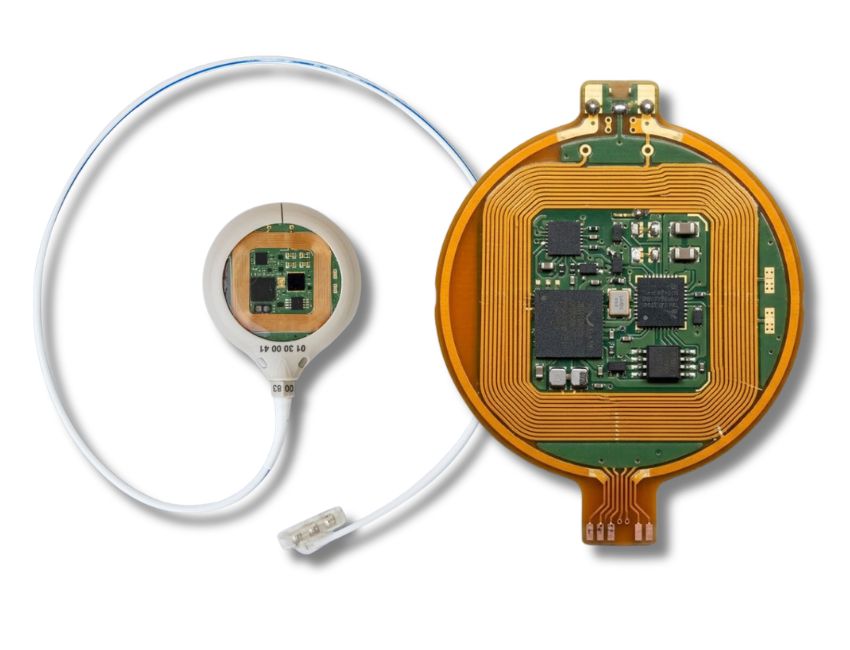
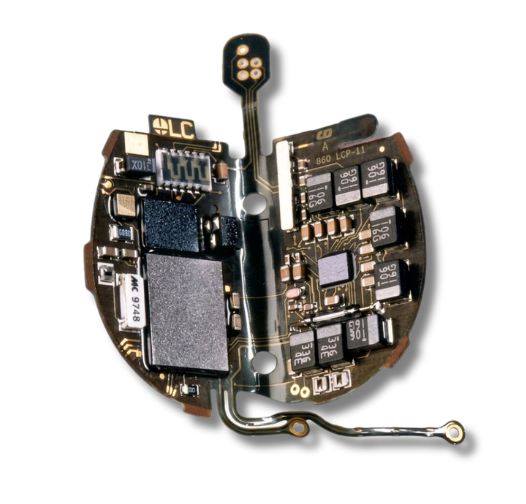
An implantable device PCB is a specialized circuit board used inside electronic medical implants. It provides electrical connections between components and supports functions such as sensing, power management, signal processing, communication, and device control.

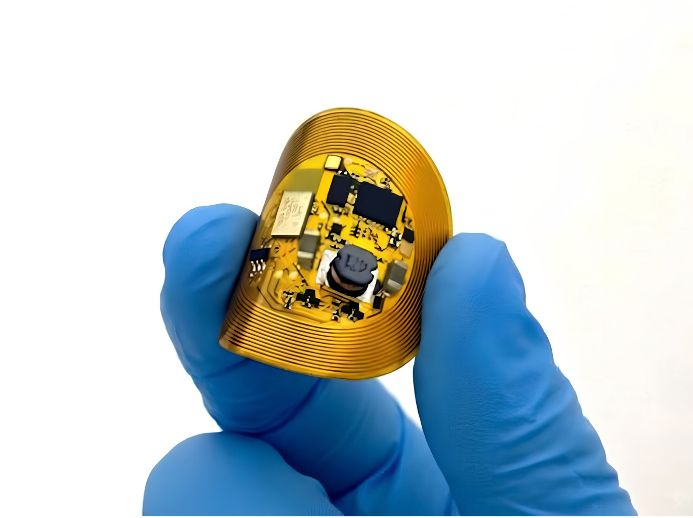
Implantable device electronics must fit into small spaces and maintain stable performance. Depending on the device design, the PCB may require compact layouts, fine-pitch components, flexible or rigid-flex construction, and suitable material options for the application.

MedPCB manufactures and assembles medical-grade PCBs for implantable medical devices. We support HDI, rigid, flex, and rigid-flex PCB manufacturing, with precision SMT, fine-pitch assembly, component inspection, and testing. We support prototypes, low and high-volume manufacturing.

Products

Key Features of Implantable Device PCB & PCBA

  • Ultra-Compact & High-Density Construction
  • Long-Term Electrical Reliability
  • Thin & Flexible PCB Construction
  • Material & Interconnection Stability
Ultra-Compact & High-Density Construction
Implantable electronics often have strict size and thickness requirements. HDI structures, microvias, fine-line fabrication, and miniature component assembly support high component density within limited board space.
Long-Term Electrical Reliability
Thin & Flexible PCB Construction
Material & Interconnection Stability
Why Choose Us

Why Choose MedPCB for Implantable Device PCB Manufacturing & Assembly?

  • ISO 13485 Certified Manufacturing

    ISO 13485 PCB & PCBA Manufacturing

    MedPCB manufactures and assembles medical-grade PCBs under an ISO 13485 quality management system. Our process supports controlled production, material traceability, and inspection from prototypes to volume manufacturing.

  • Controlled PCB Materials & Traceability

    Controlled PCB Materials & Traceability

    MedPCB supplies PCB materials from approved suppliers based on the required board design and application. Material options can include high-Tg FR-4, polyimide, Rogers, and other materials suitable for medical electronics. We maintain material and component traceability throughout production and can suggest alternative materials during DFM review when needed.

  • Flex & Rigid-Flex PCB Manufacturing

    Flex & Rigid-Flex PCB Manufacturing

    We manufacture flex and rigid-flex PCBs for compact medical devices that require flexible circuit sections. These constructions support compact layouts and reliable connections in applications with movement or limited space.

  • Precision PCBA & Turnkey Component Sourcing

    Precision PCBA & Turnkey Component Sourcing

    MedPCB provides precision SMT, THT, and mixed-technology PCBA for implantable device electronics. Our 8 SMT assembly lines support small components, fine-pitch packages, and compact PCB layouts. Turnkey assembly includes component sourcing, PCB assembly, inspection, and testing based on your requirements.

  • Free DFM / DFA Check

    Free DFM / DFA Check

    Our engineering team reviews PCB layout, component placement, spacing, vias, materials, and assembly requirements before production. This helps identify manufacturing issues early and supports reliable implantable device PCB production.

Specs

Technical Specifications

Technical Parameter

Manufacturing Capability

Order Quantity

≥ 1 PCS, No MOQ

Board Size

Standard: up to 500 × 600 mm; Advanced: up to 1100 × 500 mm

Layer Count

Rigid PCB: 1–40 layers

Flex PCB: 1–8 layers

Rigid-Flex PCB: Standard: 2–12 layers (up to 10 flex layers); Advanced: 13–20 layers (up to 18 flex layers)

PCB Types

Rigid, Flex, Rigid-Flex, HDI, Heavy Copper, Metal Core, and Aluminum PCB

Assembly Technologies

Surface Mount (SMT), Through-Hole (THT/DIP), and Mixed-Technology

Component Sourcing

Full Turnkey, Partial Turnkey, or Consigned; access to 300,000+ genuine traceable components

Component Range

01005 packages to 0.2 mm fine-pitch BGA

Placement Accuracy

±0.035 mm via automated component placement

Board Thickness

0.2–10.0 mm; Standard: 0.2–3.2 mm; Advanced: 3.4–10.0 mm

Min. Trace Width / Spacing

Internal: 3/3 mil (0.075 mm); External: 3/3 mil advanced, 3.5/4 mil standard

Surface Finish

ENIG, ENEPIG, Lead-Free HASL, OSP, Immersion Silver, Immersion Tin, Soft/Hard Gold

Impedance Tolerance

±5 Ω for <50 Ω; ±10% for ≥50 Ω

Materials

Polyimide, Ceramic, High-Tg FR-4, Rogers, Megtron 6, and other qualified materials for implantable device PCBs.

Get Instant Quote
Technical Specifications
Capabilities

Implantable Device PCB Manufacturing and Assembly at MedPCB

Step 1: Engineering Review & DFA/DFM

We manufacture your PCBs according to the approved design and fabrication specifications. Production includes imaging, etching, drilling, plating, lamination, surface finishing, and electrical testing, as applicable to the PCB construction. Meanwhile, BOM components are sourced through qualified supply channels. Any proposed component alternatives require customer approval before procurement.

Step 2: PCB Fabrication & Component Sourcing
Step 3: IQC Incoming Quality Inspection
Step 4: SMT & THT Assembly
Step 5: Inspection, Testing & Traceability
Quality Control

Challenges in Implantable Device PCB Manufacturing and Assembly

  • Mechanical Stress & Material Fatigue

    Mechanical Stress & Material Fatigue

    Challenge: Implantable devices may experience repeated movement and mechanical stress inside the body. Rigid circuits can develop cracks or connection failures when used in areas that require flexibility.

    Our Solution: MedPCB manufactures flex and rigid-flex PCBs using suitable flexible materials such as polyimide. Proper layer construction, bend areas, and component placement help support reliable operation under mechanical movement.

  • Miniaturized HDI Fabrication

    Miniaturized HDI Fabrication

    Challenge: Implantable devices have limited space for electronics. Dense circuits may require fine traces, microvias, small pads, and closely spaced features. These designs require precise PCB fabrication to maintain electrical connections and board reliability.

    Our Solution: MedPCB supports HDI PCB fabrication with fine-line circuitry, microvias, and compact multilayer structures. Our manufacturing process includes controlled drilling, imaging, plating, and inspection for small and dense PCB features.

  • Miniature Component Assembly

    Miniature Component Assembly

    Challenge: Implantable PCBAs may use 01005 components, fine-pitch BGAs, miniature sensors, and other small packages. Small solder joints require accurate placement and controlled soldering to reduce assembly defects.

    Our Solution: MedPCB supports 01005 SMT assembly and fine-pitch BGA placement with placement accuracy up to ±0.035 mm. 3D SPI, AOI, 3D X-ray, electrical testing, and functional testing can be applied based on the PCBA requirements.

  • Cleanliness & Manufacturing Traceability

    Cleanliness & Manufacturing Traceability

    Challenge: Implantable electronics require controlled manufacturing and careful handling. Residues, contamination, or incomplete component records can affect product reliability and make production records difficult to review.

    Our Solution: MedPCB manufactures medical PCBs and PCBAs under an ISO 13485 quality management system. We maintain material and component traceability and use controlled inspection processes throughout production. Cleaning and inspection requirements can be defined based on the device and assembly requirements.

Quality Control for Implantable Device PCB & PCBA in MedPCB
Quality Control

Quality Control for Implantable Device PCB & PCBA in MedPCB

PCB Inspection & Electrical Testing
We inspect implantable medical PCBs during fabrication using AOI, dimensional inspection, and electrical testing. Critical board features, materials, and fabrication details are checked against approved specifications.

PCBA Process Inspection
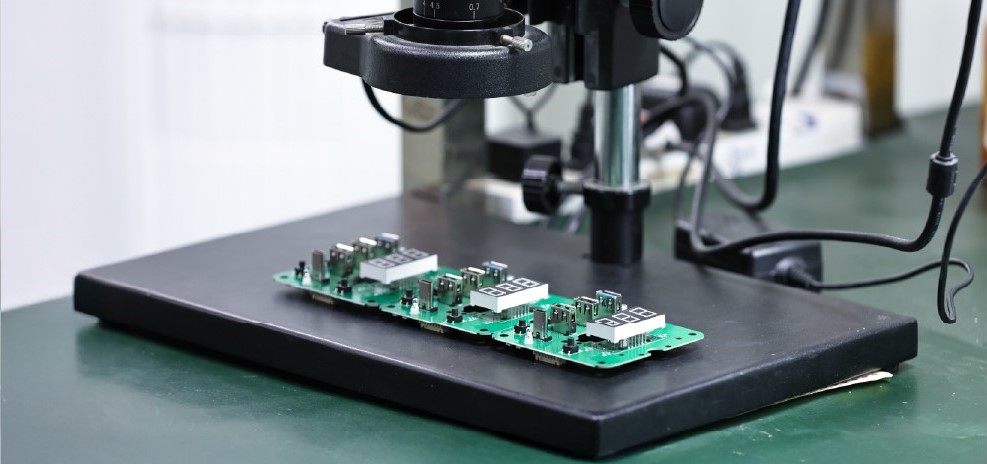
We inspect component placement, solder joints, and assembly quality throughout production. 3D SPI checks solder paste before placement. AOI verifies component position, polarity, and visible solder defects. 3D X-ray inspects hidden connections on BGAs, QFNs, and other fine-pitch components.

Functional Testing & Traceability
We perform electrical and functional testing based on the approved test requirements. Tests can cover power circuits, sensor interfaces, signal transmission, communication circuits, and other device functions. Production and inspection records are maintained for component and process traceability.

Need reliable Implantable Medical PCB & PCBA? Send your Gerber files, BOM, and assembly files to sales@medicalpcb.com for a free DFM/DFA review.

Case Study

Implantable Device PCB Case Studies

  • Pacemaker Control & Sensing
    Pacemaker Control & Sensing PCBA Pacemaker Control & Sensing

    Pacemaker Control & Sensing PCBA

    The customer required a compact HDI multilayer PCB for heart rhythm sensing and pulse generation. MedPCB manufactured the multilayer HDI PCB with 01005 components and fine-pitch assembly for the sensor and control circuits. Our precise SMT placement supports the small component spacing and compact layout.

  • Cochlear Implant Signal Processing
    Cochlear Implant Signal Processing PCBA Cochlear Implant Signal Processing

    Cochlear Implant Signal Processing PCBA

    The customer required a rigid-flex PCB for sound processing and electrode control in a compact implantable assembly. MedPCB manufactured the board with multilayer rigid-flex construction, polyimide flex sections, fine-line circuitry, and microvias. The PCBA used fine-pitch ICs and miniature SMT components, using ±0.035 mm via automated component placement.

  • Neurostimulator Control
    Neurostimulator Control PCBA Neurostimulator Control

    Neurostimulator Control PCBA

    The customer required a compact multilayer PCB for pulse generation, battery management, and multi-channel stimulation. MedPCB manufactured the board with controlled-impedance traces, fine-line routing, microvias, and high-Tg PCB materials based on the approved design. We applied selective conformal coating to specified PCBA areas for extra environmental protection.

  • Implantable Drug Delivery Control
    Implantable Drug Delivery Control PCBA Implantable Drug Delivery Control

    Implantable Drug Delivery Control PCBA

    The customer required a low-power, high-reliability PCB for micro-pumps, fluidic sensors, and wireless programming circuits. We manufactured the board using ultra-thin multilayer substrates. Fine-pitch SMT assembly supports the compact layout, while conformal coating was applied to selected areas where additional moisture protection was required.

  • Implantable Continuous Glucose Monitor (CGM)
    Implantable Continuous Glucose Monitor (CGM) PCBA Implantable Continuous Glucose Monitor (CGM)

    Implantable Continuous Glucose Monitor (CGM) PCBA

    The customer required a flexible, ultra-miniature PCB for electrochemical biosensors, micro-controllers, and Bluetooth transmission circuits. MedPCB manufactured the board using thin-film flexible polyimide substrates to withstand mechanical movement. High-precision SMT assembly and low-leakage circuit designs ensure continuous, accurate sensor monitoring and battery performance.

Faqs

Frequently Asked Questions

Our Implantable Device PCB FAQ addresses key questions about PCB manufacturing and assembly for implantable medical electronics. We cover rigid, flex, and rigid-flex PCB fabrication, biocompatible materials, compact multilayer designs, fine-pitch SMT assembly, and controlled component placement for space-limited devices. We also cover ISO 13485 manufacturing, material traceability, protective coatings, encapsulation requirements, and inspection from prototypes to volume production. For every implantable device PCB project, we provide controlled fabrication and assembly based on the device size, circuit density, power requirements, and long-term operating conditions.

1. What Makes Implantable Device PCBs Different From Standard PCBs?
Implantable PCBs require controlled materials, compact designs, high reliability, and stricter inspection. Materials and protective packaging must also meet the requirements of the specific implant application.
2. What Certifications Are Needed For Implantable PCB Manufacturing?
Requirements depend on the finished medical device and target market. MedPCB manufactures under ISO 13485 and supports required PCB standards, testing, traceability, and documentation.
3. Can Flexible PCBs Be Used In Implantable Medical Devices?
Yes. Flexible and rigid-flex PCBs can fit compact and irregular spaces while reducing connectors and wiring. Additional encapsulation may be required for long-term protection and biocompatibility.
4. What Surface Finish Works Best For Medical PCB Connectors?
ENIG is commonly used for PCB pads because it provides a flat, uniform surface. Hard gold is suitable for connectors and contacts that require higher wear resistance.
5. How Long Does It Take To Manufacture A Medical-Grade PCB?
Lead time depends on the layer count, materials, HDI features, rigid-flex construction, and testing requirements. MedPCB confirms the production schedule based on the final PCB and PCBA specifications.

Product Related